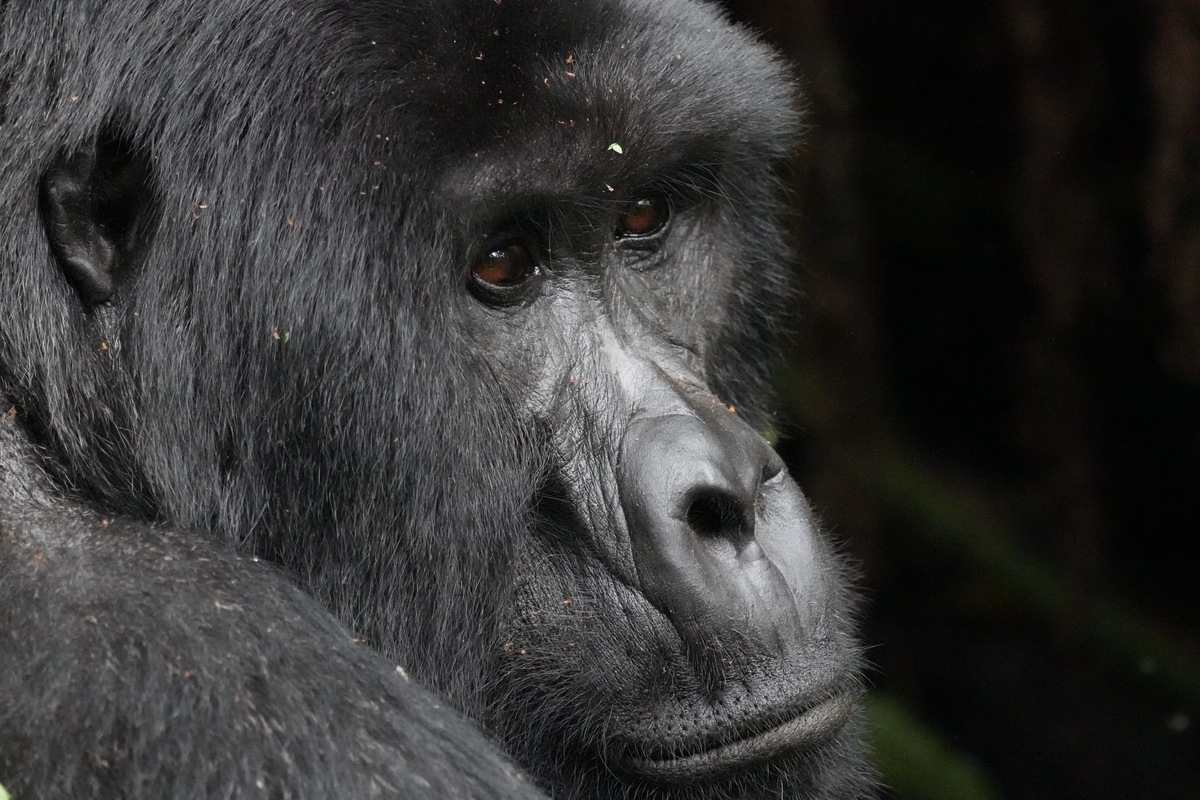

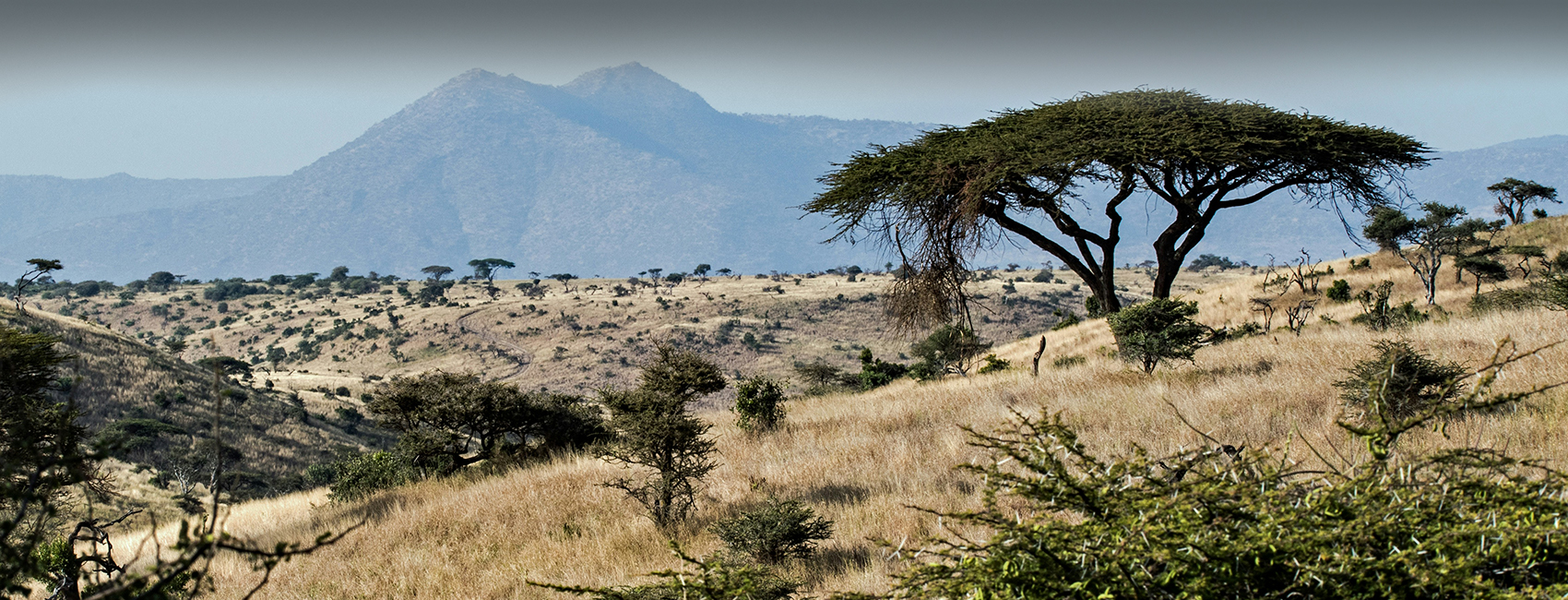
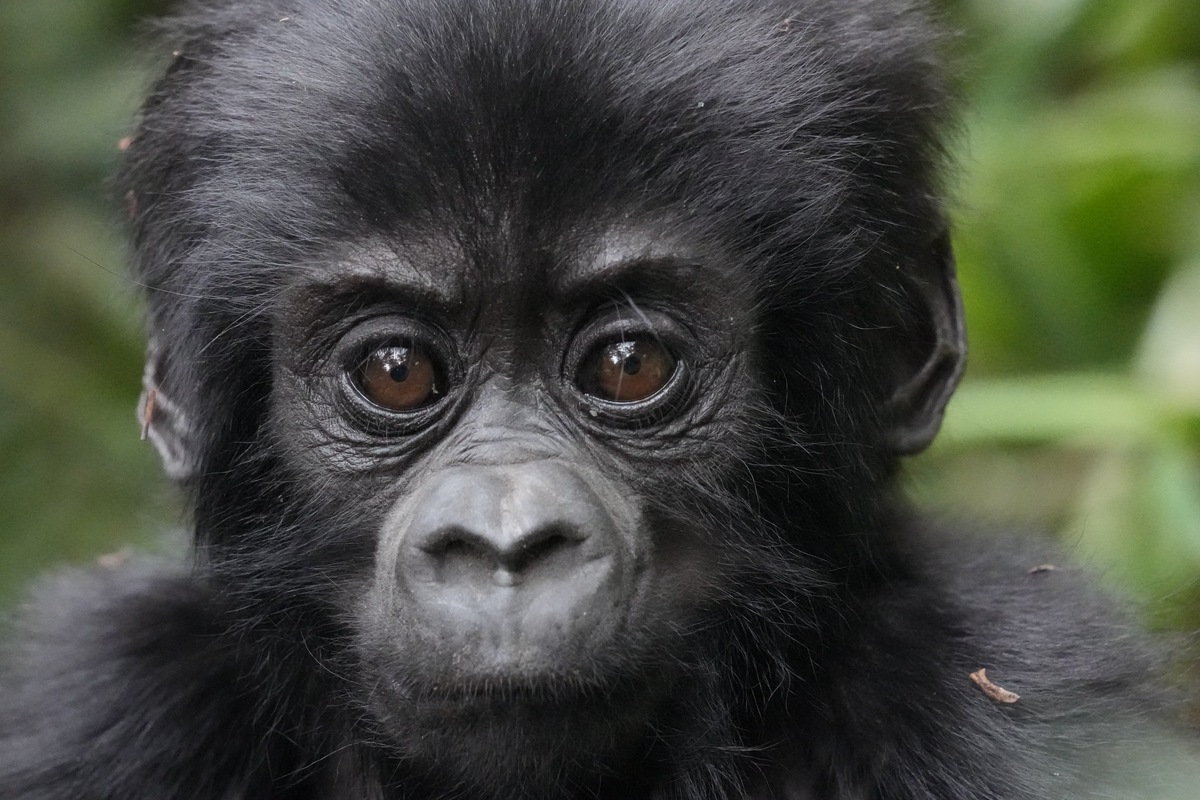
Gorilla Trekking in Bwindi Impenetrable from Kigali, Rwanda
Gorilla Trekking in Bwindi Impenetrable from Kigali, Rwanda, Gorilla trekking in Bwindi Impenetrable National Park is one of the main reasons travellers visit Uganda. Yet reaching the forest does not always require flying into Entebbe and driving across the country. For visitors who are already in Rwanda, or who want to combine gorilla trekking with a stay in Kigali, travelling from Kigali to Bwindi can be a practical alternative.
The journey crosses an international border before entering south-western Uganda, where steep hills, small farming communities and thick forest gradually replace the busy streets of Kigali. The route can save considerable driving time compared with travelling from Entebbe, particularly for visitors heading to the southern gorilla trekking sectors.
However, a successful trip depends on more than choosing the shortest route. Your gorilla permit, trekking sector, border crossing, accommodation and onward transport all need to fit together. This guide explains how to plan gorilla trekking in Bwindi from Kigali, Rwanda, including what to expect on the day, how much time to allow and which details to confirm before travelling.
Why travel from Kigali to Bwindi for gorilla trekking?
Bwindi Impenetrable National Park lies in south-western Uganda, close to the borders with Rwanda and the Democratic Republic of Congo. It protects a large area of montane and lowland forest and is home to several habituated mountain gorilla families visited by tourists.
For travellers coming from Rwanda, Kigali provides a useful starting point. Instead of driving from Entebbe through much of Uganda, visitors can travel north towards the Ugandan border and continue to their booked trekking sector.
This option is particularly worth considering for people combining a Rwandan holiday with gorilla trekking in Uganda. It can also suit travellers whose itinerary includes Kigali, Volcanoes National Park or other destinations in Rwanda.
The main advantage is geographical convenience, but the journey still involves road travel and immigration formalities. Border queues, road conditions, weather and the location of your lodge can affect the total journey time. It is best to plan around your confirmed gorilla permit rather than assume that every part of the journey will run to schedule.
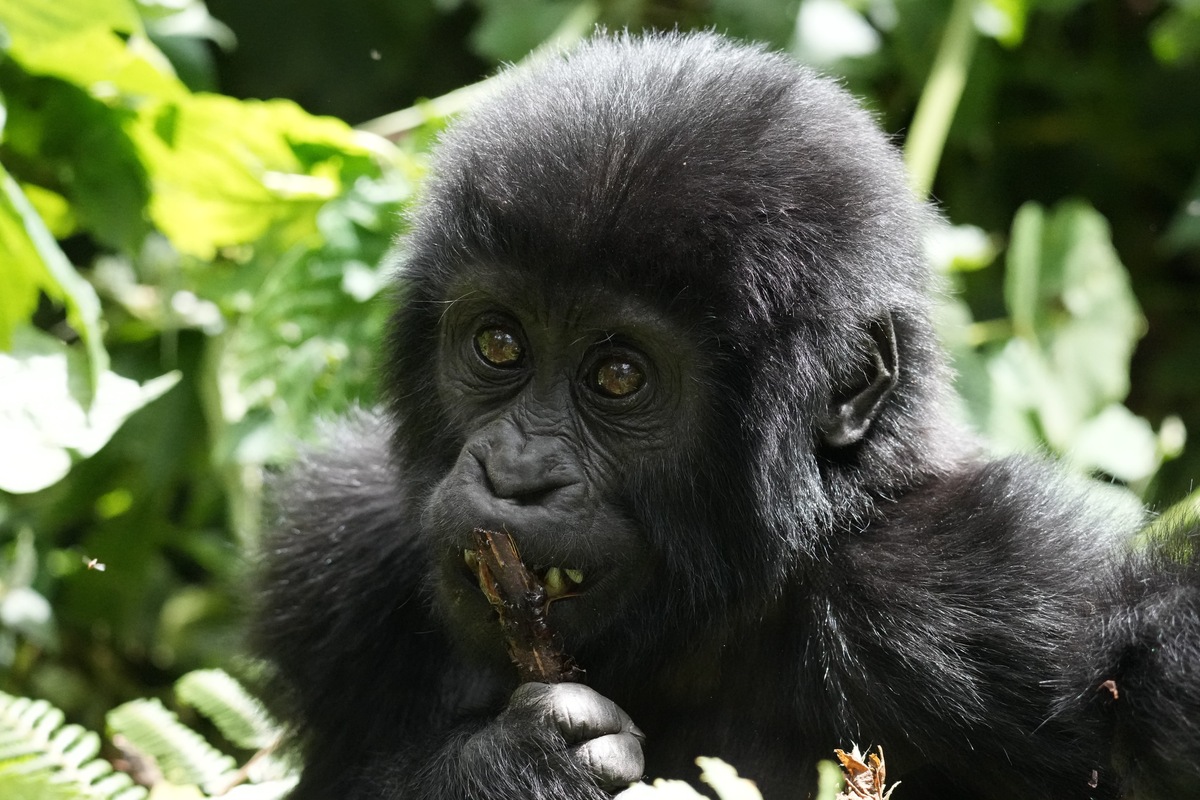
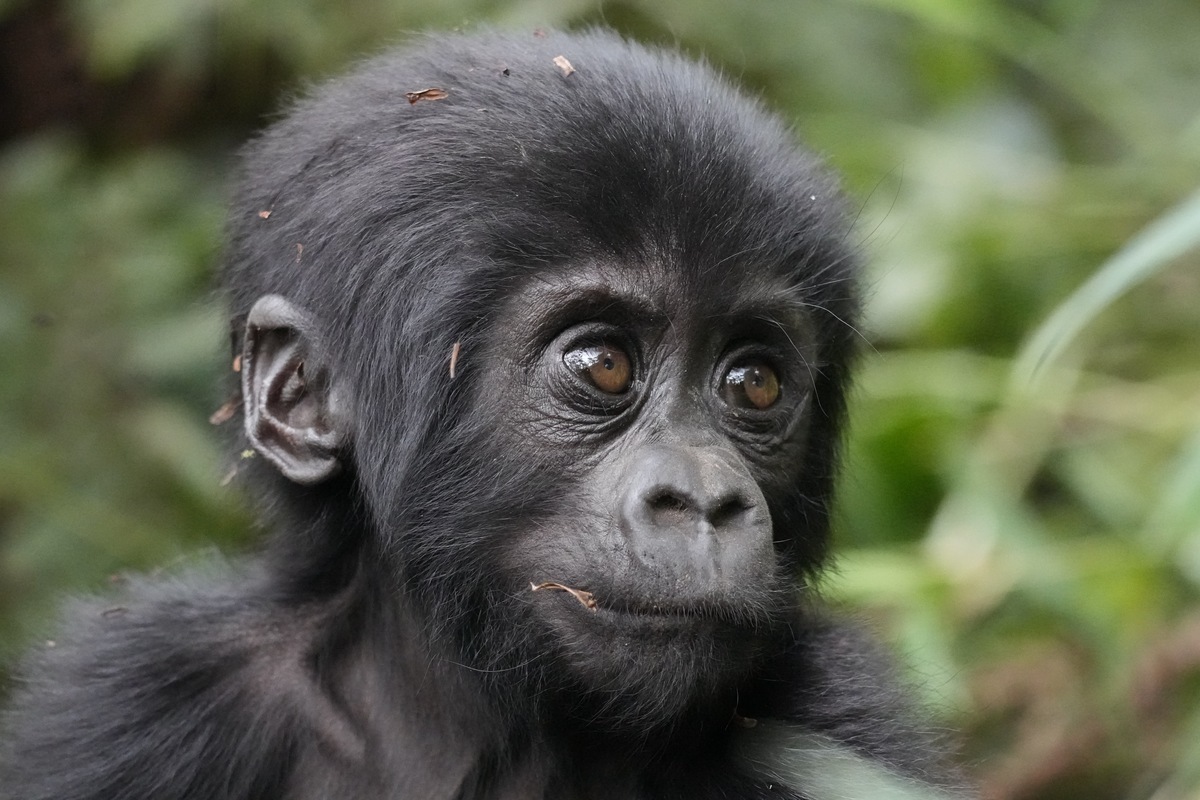
Juvenile gorilla in Bwindi
Which part of Bwindi should you visit?
Bwindi has four main gorilla trekking sectors: Buhoma, Ruhija, Rushaga and Nkuringo. Your permit is linked to a particular sector, so choosing where to trek is an important part of planning your journey from Kigali.
Rushaga
Rushaga is in the southern part of Bwindi and is one of the sectors commonly considered by travellers approaching from Kigali. It has habituated gorilla families available for tourism, subject to permit availability. The surrounding area is hilly, and accommodation ranges from simpler guesthouses to more comfortable forest lodges.
Nkuringo
Nkuringo lies in the south-western part of Bwindi. It offers forest scenery and views across the surrounding highlands, although the terrain can be demanding. Travellers should ask about the exact lodge location and the morning transfer to the trekking briefing point.
Ruhija
Ruhija is in the eastern part of Bwindi. It may suit itineraries approaching through the Katuna/Gatuna border route, depending on the final road itinerary and lodge location. Its elevation and forest environment mean that conditions can be cool and damp, particularly in the early morning.
Buhoma
Buhoma is in the northern part of Bwindi and has a well-established selection of accommodation and visitor services. It is often more convenient for itineraries that continue towards northern Bwindi or other destinations in Uganda, although reaching it from Kigali can take longer than reaching the southern sectors.
Which sector is best? There is no single answer for every traveller. The best choice depends on where your permit is available, your accommodation preferences, the road route and what you plan to visit next. Secure the permit first, then arrange the route and lodge around it.
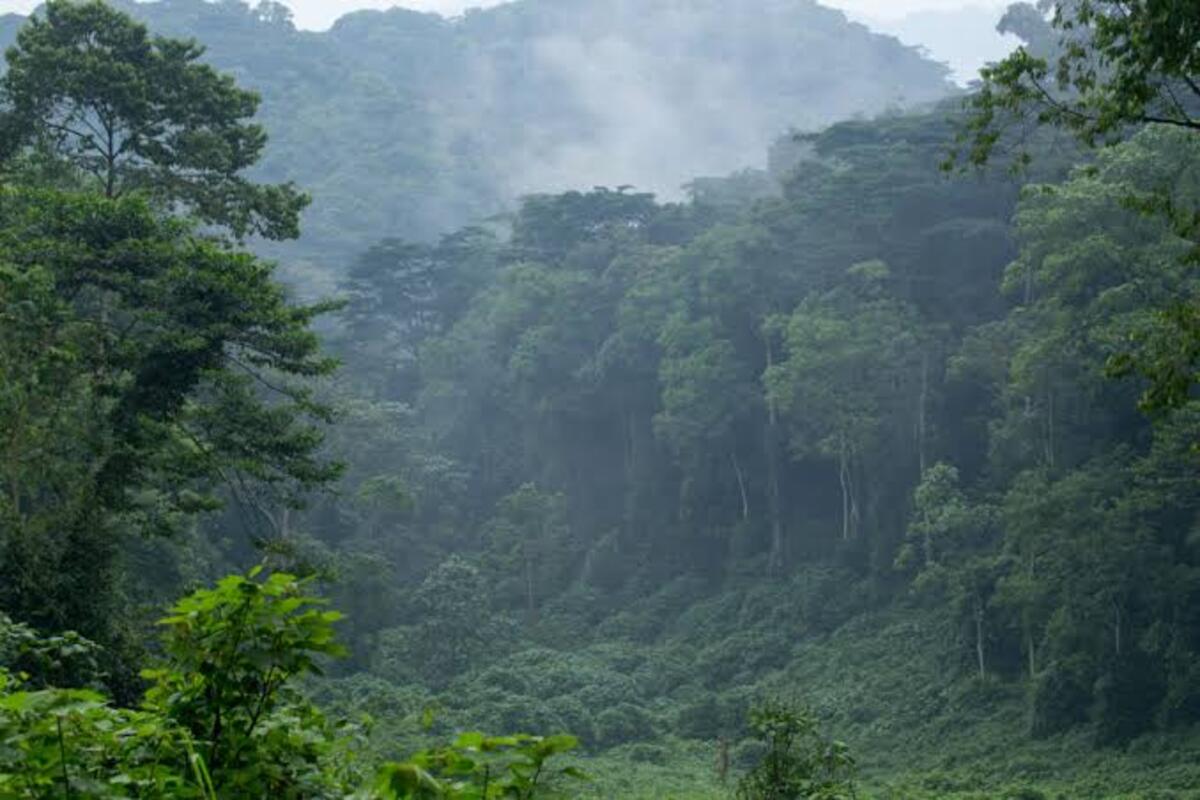
Morning mist settling over the forest canopy in Bwindi
How long does it take to drive from Kigali to Bwindi?
The drive from Kigali to Bwindi depends on your destination sector, the border crossing, road conditions and traffic. As a general planning estimate, the journey to Rushaga or Nkuringo can take around four to five hours, while reaching Buhoma may take around six to seven hours. These are approximate road-travel estimates, not guaranteed arrival times.
The journey includes crossing from Rwanda into Uganda. You should allow additional time for immigration, possible queues, stops and the final drive to your lodge. The last section can involve winding, hilly roads, so the distance alone does not tell you how long the journey will take.
Two commonly used border options are Cyanika and Katuna/Gatuna. The most suitable crossing depends on your starting point, trekking sector and current road arrangements. Confirm the route with your safari operator before departure rather than choosing a border crossing based only on a map.
If your gorilla trek is scheduled for the morning after arrival, aim to reach your lodge with enough time to check in, eat and prepare. Arriving late at night after a long journey can make an early briefing more tiring. Where possible, travel to Bwindi the day before your trek.
Gorilla permits: cost, availability and booking
A gorilla permit is essential for visiting a habituated mountain gorilla family. Permits are limited, and availability can be particularly tight during popular travel periods. You should confirm the permit for your chosen date and sector before making non-refundable accommodation or transport arrangements.
Currently, the standard foreign non-resident permit at US$800 per person. Permit prices and eligibility for seasonal offers can change, so check the current Uganda Wildlife Authority tariff when booking. Do not assume that a discounted rate is available for your travel dates.
April, May and November have been associated with low-season offers in some tariff periods, but the applicable dates, prices and conditions must be confirmed directly against the current tariff. A lower permit price is only useful if the dates and sector suit your itinerary.
For peak travel periods, especially July to September, it is sensible to enquire several months in advance. January and February can also be busy, and December to March attracts many visitors. Last-minute availability is possible, but it should not be the foundation of a fixed international itinerary.
When booking, confirm:
- The trekking date and assigned sector.
- The permit price and what it covers.
- The name and details required for the permit.
- The meeting point and reporting time.
- The cancellation, amendment and refund conditions.
A safari operator can help coordinate permits, accommodation and transport, but the permit should never be treated as confirmed until its status has been verified.
What happens on the day of gorilla trekking?
Gorilla trekking usually starts early in the morning. Visitors report to the designated briefing point, where park staff explain the rules, allocate groups and provide guidance about the forest and the gorilla family being visited.
After the briefing, you walk into the forest with authorised guides and trackers. The time needed to find the gorillas varies. Some groups find them relatively quickly; others walk for several hours over steep, uneven or muddy ground. A trek can take much of the morning or extend into the afternoon.
Once the group reaches the gorillas, visitors generally have one hour to observe them under the standard trekking arrangement. The guides explain how to behave and where to stand. The gorillas are wild animals, and their movements cannot be predicted or directed for photographs.
Keep a respectful distance as instructed, remain quiet, avoid sudden movements and follow the guide’s directions. Do not touch the gorillas, feed them or attempt to attract their attention. If a gorilla approaches, listen to your guide and follow the recommended behaviour.
The experience is not a zoo visit. The forest is their natural habitat, and the trek takes place on their terms.
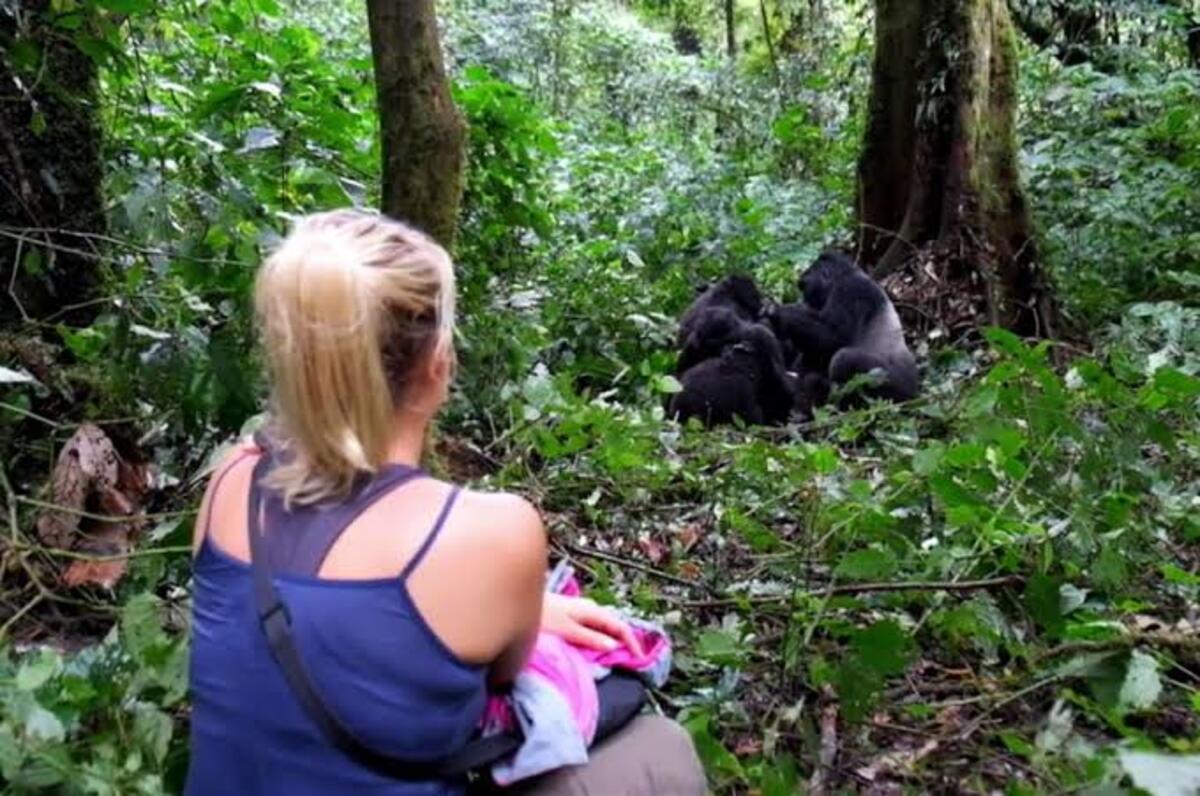
Visitors quietly observing gorillas through natural vegetation
How fit do you need to be?
You do not need to be an athlete to go gorilla trekking, but you should be comfortable walking outdoors for several hours. Bwindi’s terrain can be steep, slippery and physically demanding. Mud, dense vegetation, humidity and changes in elevation can make a relatively short walk feel strenuous.
Prepare with regular walking before your trip, ideally including hills or uneven paths. Wear sturdy hiking boots with good grip and take breaks when needed. A walking stick can help with balance, and porters are available at trekking areas for visitors who want assistance carrying a daypack or navigating difficult sections. Confirm arrangements and fees locally.
If you have concerns about mobility, stamina or an existing limitation, discuss them with your operator before booking. Trek difficulty varies, and no sector can guarantee a short or easy encounter. Ask what assistance is available and what the park can realistically accommodate.
Where should you stay?
Staying near your assigned sector makes an early start easier. Accommodation around Bwindi ranges from basic guesthouses to comfortable lodges and higher-end forest retreats. The best choice depends on your budget, preferred comfort level and the location of your permit briefing.
When comparing properties, look beyond the name of the sector. Ask how far the lodge is from the actual briefing point, whether transport is provided and how early breakfast can be arranged. Some properties advertised as being in Bwindi may still require a substantial morning drive to the meeting point.
For travellers arriving from Kigali, it is usually more practical to sleep near the relevant sector than to attempt a long transfer on the morning of the trek. If your wider itinerary includes other Ugandan parks, your accommodation plan should also account for the next day’s driving distance.
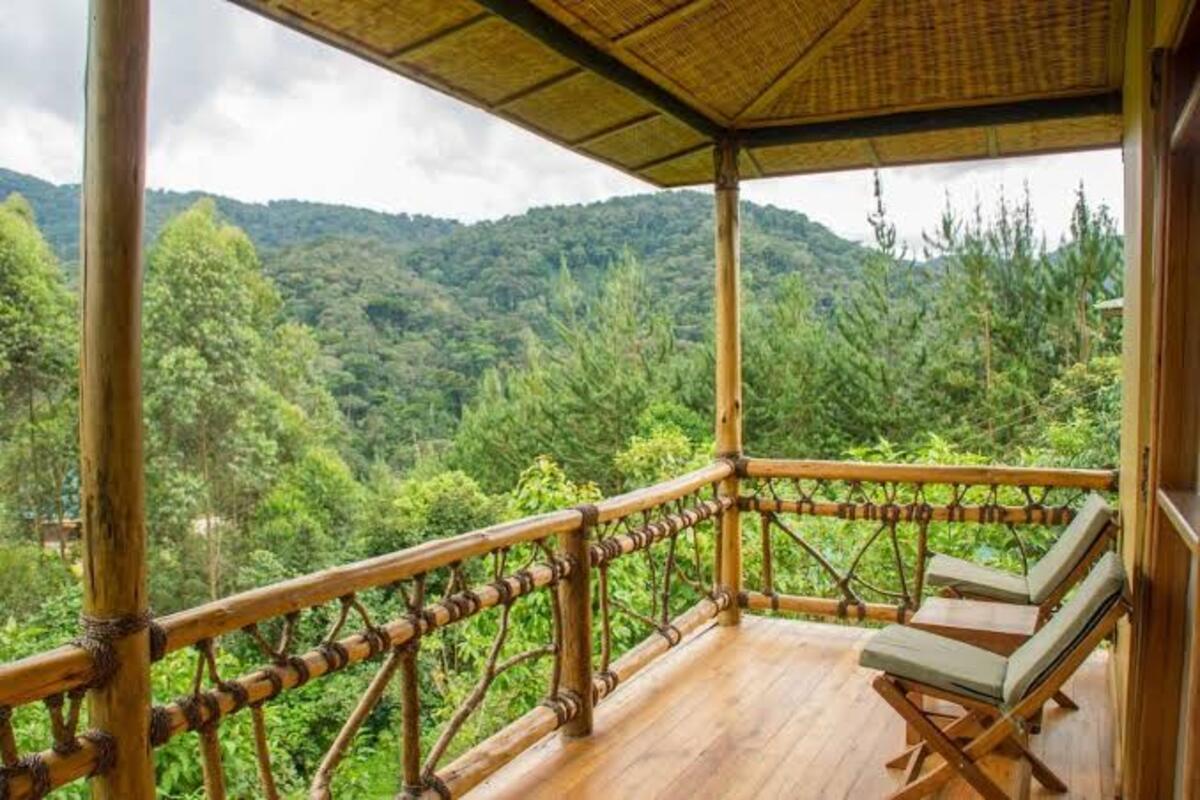
Accommodation in Bwindi
What should you pack?
Bwindi’s forest conditions can change quickly. Even in relatively dry weather, trails may be muddy, and rain can arrive without much warning. Pack for walking rather than relying on the weather forecast alone.
Useful items include:
- Sturdy, waterproof hiking boots with good grip.
- Long trousers and a long-sleeved top to protect against vegetation.
- A lightweight waterproof jacket.
- Gardening or trekking gloves for holding vegetation where permitted.
- Drinking water and a small daypack.
- Insect repellent, sunscreen and personal medication.
- A camera or phone, spare battery and a protective cover.
- Cash in small denominations for tips or local purchases.
Keep your equipment manageable. A large bag can become uncomfortable on steep trails, and valuable electronics should be protected from moisture. Follow your guide’s advice about where to walk and what vegetation you may touch.
Photography and responsible gorilla viewing
Photography is allowed during gorilla trekking, subject to park rules and the guide’s instructions. A camera with a versatile zoom lens can be useful because you may not be able to move closer to the gorillas. In the forest, light can be limited, so a camera that performs well in low light may help.
Avoid using flash unless park staff explicitly permit it; follow the instructions given during your briefing. Keep your camera ready before reaching the gorillas so you spend less time adjusting settings and more time observing them. Do not push through the group or obstruct another visitor’s view to get a photograph.
Responsible viewing also means following the health and distance rules. Mountain gorillas are vulnerable to human respiratory infections, and the park’s instructions are intended to reduce risks to the animals and visitors. If you feel unwell before the trek, seek guidance from the relevant authorities or your operator instead of concealing symptoms.
Tourism contributes to conservation and local livelihoods, but it also brings responsibilities. Respect the forest, avoid leaving rubbish and follow local guidance throughout the visit.
Tipping, local etiquette and practical arrangements
Tipping is a personal choice, not a condition of taking part in the trek. Some travellers choose to tip guides, trackers or porters in recognition of their work. If you plan to do so, carry small amounts of cash and ask your operator about customary arrangements rather than assuming a fixed amount.
Porters can provide valuable assistance on difficult trails and help support livelihoods around the park. If you need help carrying a bag or managing steep sections, hiring a porter can be a practical option.
For the international border crossing, check passport validity, entry requirements, visa arrangements and any applicable health documentation well before departure. Requirements depend on your nationality and travel circumstances, and permission to enter Rwanda does not automatically mean you can enter Uganda. Confirm current requirements through official immigration sources.
Keep your passport and essential travel documents accessible, allow time for border procedures and confirm that your driver is authorised and prepared for the cross-border journey. Your operator should explain the planned route and where any vehicle or driver arrangements change.
Can you combine Bwindi with other destinations?
Yes. A Kigali-to-Bwindi itinerary can form part of a wider Rwanda and Uganda trip. Some travellers spend time in Kigali before crossing into Uganda for gorilla trekking; others continue to additional Ugandan destinations after visiting Bwindi.
The right combination depends on the number of days available. Adding chimpanzee tracking in Kibale or wildlife viewing in Queen Elizabeth National Park requires additional road travel, so it is important not to underestimate distances. A route that looks compact on a map may involve several hours of driving between parks.
If your main priority is seeing mountain gorillas, give the trek enough time and avoid squeezing too many activities into the same day. If you want to experience both countries, plan the border crossing and onward transport as part of the itinerary from the beginning.
Frequently asked questions
Is it better to trek gorillas in Uganda from Kigali or Entebbe?
Kigali can be a convenient starting point for Bwindi, particularly the southern sectors, because it avoids the longer drive from Entebbe. Entebbe may make more sense if your itinerary focuses on other parts of Uganda. Compare the full route, permit sector and onward travel before deciding.
How long is the drive from Kigali to Bwindi?
As a broad estimate, allow around four to five hours to reach Rushaga or Nkuringo and around six to seven hours for Buhoma. Border formalities, road conditions, stops and the precise lodge location can increase the total journey time.
How long does gorilla trekking take?
The trek may take a few hours or much longer, depending on where the gorilla family is located and the terrain. Visitors generally spend one hour with the gorillas once they are found under the standard trekking arrangement.
What is the minimum age for gorilla trekking in Uganda?
The minimum age is generally 15 years. Confirm the current rules and documentation requirements when booking, particularly when travelling with children.
Can I book gorilla trekking at the last minute?
It is sometimes possible, but permits are limited and popular dates can sell out well in advance. Booking early gives you a better chance of securing the date and sector that fit your travel plans.
Do I need to stay overnight in Bwindi?
An overnight stay near your trekking sector is strongly recommended. The early start and uncertain journey time make travelling from Kigali on the same morning a risky plan.
Plan your Bwindi gorilla trek from Kigali
Gorilla trekking in Bwindi from Kigali offers a practical way to combine Rwanda with one of Uganda’s most remarkable wildlife experiences. The key is to plan the journey around the permit and trekking sector, allow enough time for the border crossing and choose accommodation close to the briefing point.
At Naseeb Safaris Uganda, we help travellers organise private, tailored journeys in Uganda and Rwanda, including gorilla permits, accommodation and road transfers. If you are considering travelling from Kigali, share your dates, group size and preferred comfort level so the route can be planned around your actual requirements.
The most rewarding itinerary is not necessarily the one with the most stops. It is the one that gives you enough time to reach the forest prepared, follow the rules and experience the gorillas responsibly.