
Best National Parks in Uganda for a Big Five Safari
Best National Parks in Uganda for a Big Five Safari, For many travellers planning their first safari, the Big Five: lion, leopard, elephant, Cape buffalo and rhinoceros are an obvious starting point. Uganda is not usually the first country people associate with a Big Five safari, but its savannah parks offer genuine opportunities to see four of these species, while rhino tracking at Ziwa Rhino Sanctuary can complete the list.
The important thing to understand before planning, however, is that Uganda does not have one national park where you can see all five. Rhinoceros are found at Ziwa Rhino Sanctuary rather than in a national park, while lion, leopard, elephant and buffalo occur in several of Uganda’s major savannah parks.
That makes a Ugandan Big Five safari more of a route-planning exercise than a single-destination experience.
And that is part of what makes the country interesting. A journey can move from open grasslands and the Nile to crater lakes, wetlands and tropical forest, with the possibility of adding chimpanzee tracking or mountain gorilla trekking along the way.
So which parks make the most sense?
Murchison Falls National Park: Best for a Classic Safari Route
Murchison Falls National Park is Uganda’s largest national park and one of the country’s strongest choices for a traditional savannah safari.
The northern sector has broad grasslands and woodland, creating the kind of open landscape where game drives can cover considerable ground while searching for wildlife. Elephants and buffalo are regularly encountered, while lions are among the predators visitors look for during morning and afternoon drives.
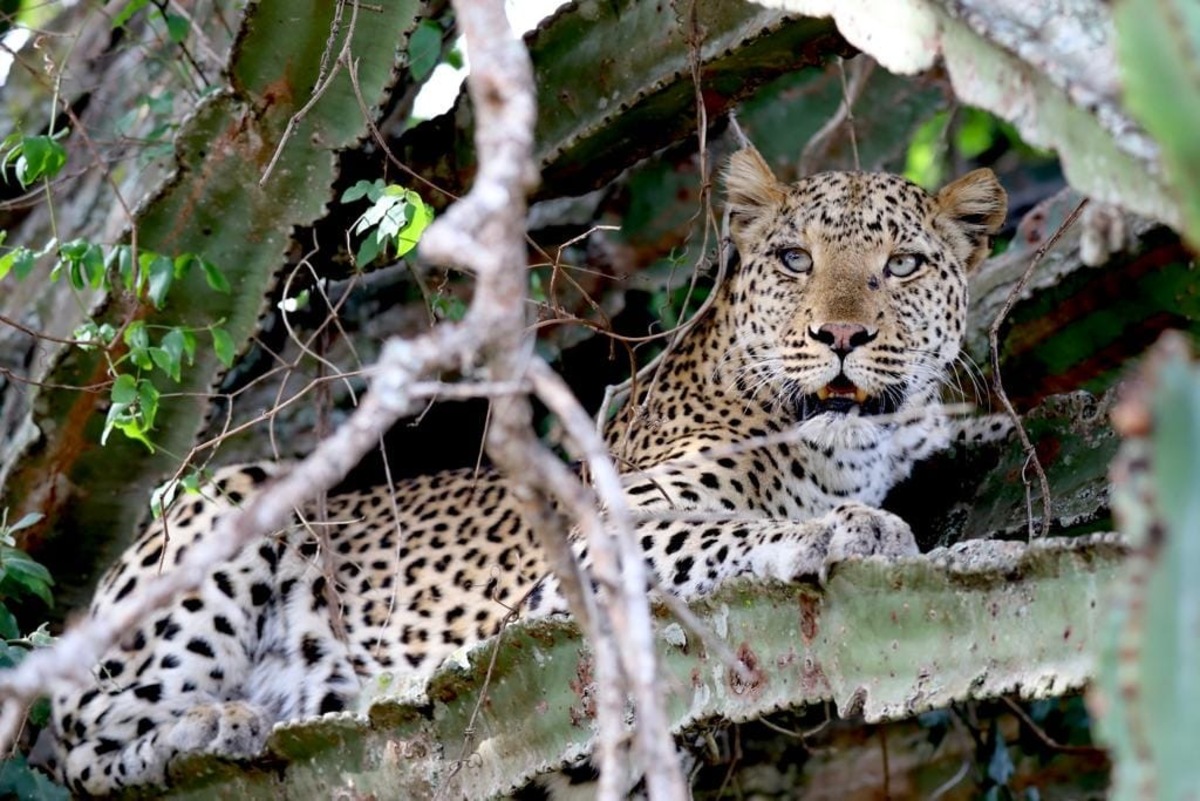
Leopards also occur here, although they are much less predictable. Finding one depends on habitat, animal movements, the time of day and, quite often, patience.
The park’s other great advantage is the Nile.
A boat cruise towards the base of Murchison Falls provides a completely different perspective from a game drive. Hippos gather in the water, Nile crocodiles lie along the banks, and elephants and buffalo may be seen coming down to drink.
For travellers hoping to experience the Big Five, Murchison Falls combines particularly well with Ziwa Rhino Sanctuary. Rhino tracking takes place on foot with guides, providing the opportunity to add the fifth member of the Big Five to an itinerary.
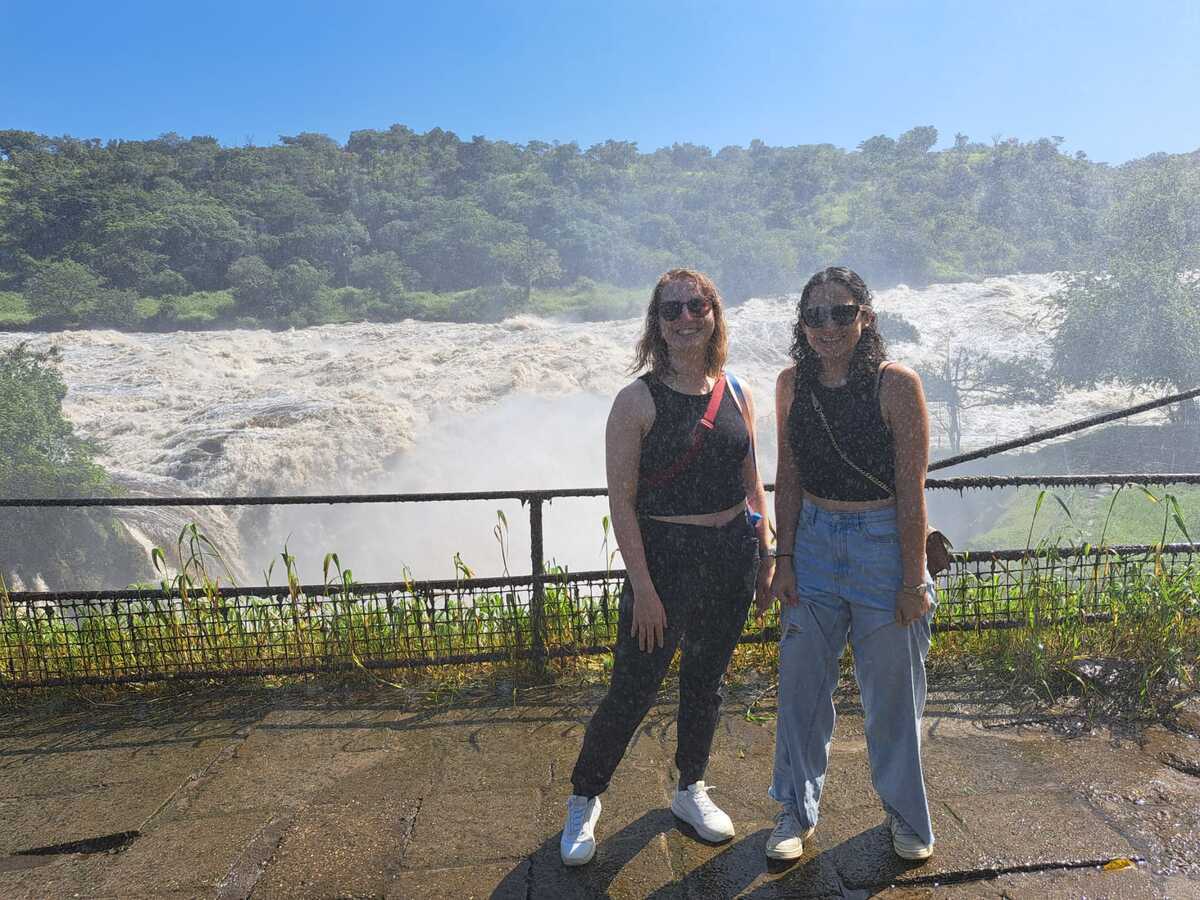
View from the top of Murchison falls
Who should choose Murchison Falls?
It is particularly suitable for travellers who want:
- Classic African savannah scenery
- Several opportunities for game drives
- A Nile boat cruise
- Lion, elephant and buffalo viewing
- A practical combination with Ziwa Rhino Sanctuary
- A northern Uganda safari route
Queen Elizabeth National Park: Wildlife, Water and Forest in One Journey
Queen Elizabeth National Park is one of the most versatile choices for a Uganda safari.
Its landscapes include savannah, woodland, wetlands, lakes and forest, so the experience changes considerably depending on where you spend your time.
The park supports lion, leopard, elephant and buffalo, making it another important Big Four destination.
The Kasenyi Plains are well known for game drives, while the Ishasha sector in southern Queen Elizabeth is associated with its famous tree-climbing lions. Seeing a lion resting in a tree is never guaranteed, but when conditions are right, it offers a very different wildlife-viewing experience from watching predators on the open plains.
Then there is the Kazinga Channel.
A boat cruise here brings you close to hippos and provides opportunities to see elephants, buffalo and numerous waterbirds along the shoreline like kingfishers. Rather than simply repeating what you see from a vehicle, the cruise changes the pace of the safari and allows you to observe wildlife from the water.
The park is also useful for travellers who want to combine savannah wildlife with primates. Kyambura Gorgeprovides an opportunity for chimpanzee tracking without requiring a major detour to another region.
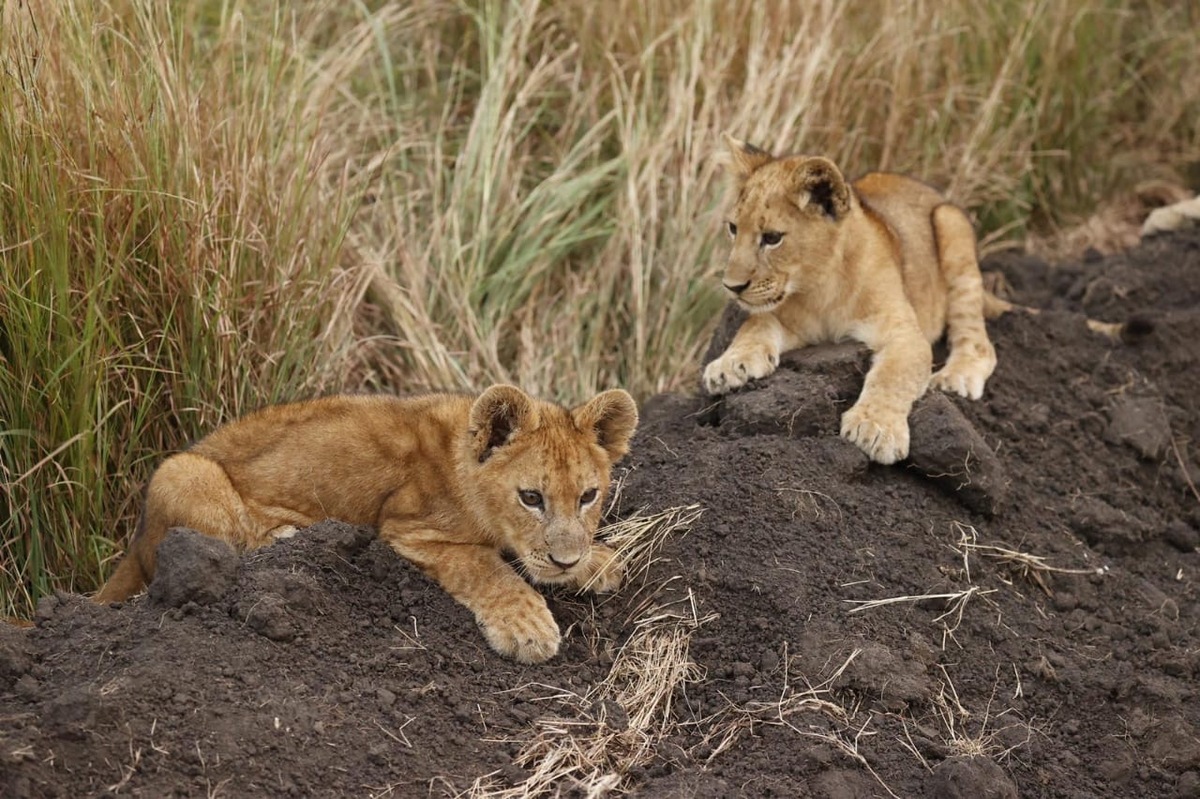
Lion cubs spotted during a big five safari
Who should choose Queen Elizabeth?
This park works especially well if you want to combine:
- Big Four game viewing
- The Kazinga Channel boat cruise
- Ishasha and its tree-climbing lions
- Chimpanzee tracking
- A southwestern Uganda itinerary
- Gorilla trekking in the wider region
Kidepo Valley National Park: For a More Remote Safari
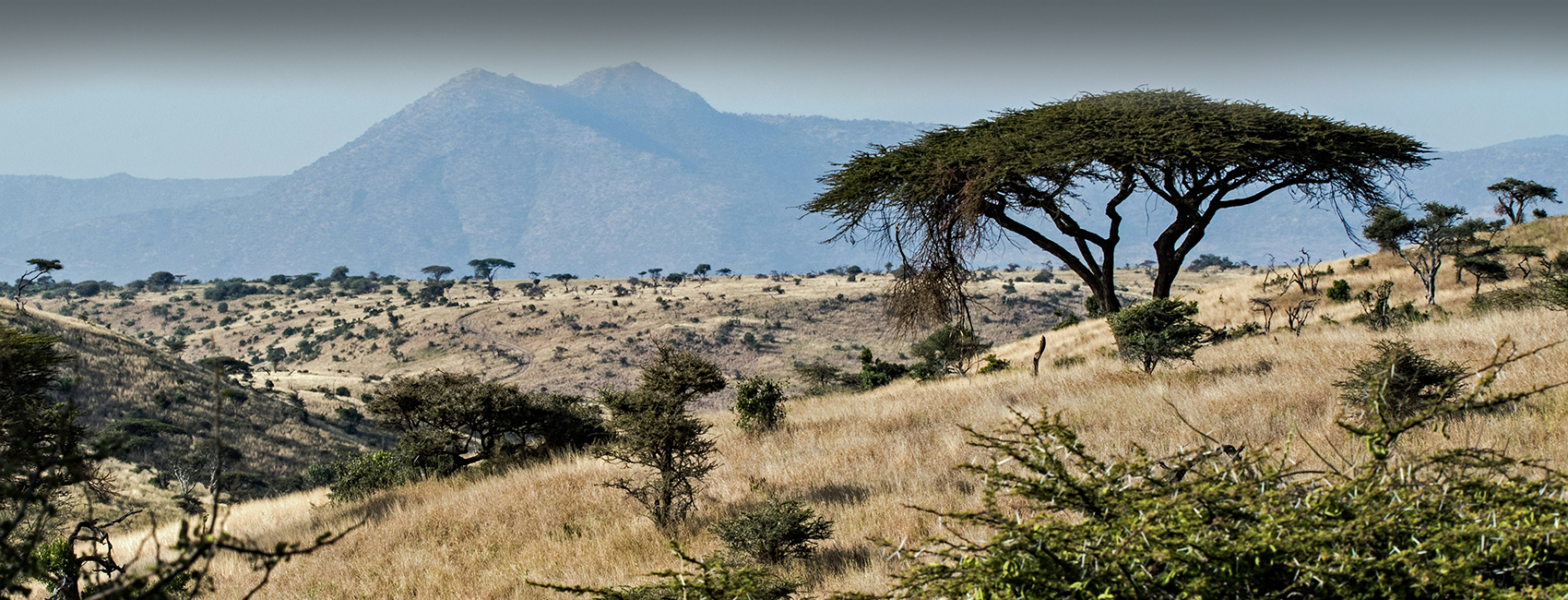
In northeastern Uganda, Kidepo Valley National Park offers a very different safari experience.
The journey here is considerably longer than travelling to Murchison Falls or Queen Elizabeth, but the reward is a landscape of broad valleys framed by rugged mountains. The sense of space is one of Kidepo’s defining characteristics.
Lions, elephants and buffalo are among the major species found here, while leopards occur but can be difficult to locate.
Kidepo also brings wildlife that may not feature prominently on a conventional southern Uganda itinerary, including cheetahs and ostriches. For travellers with enough time, that makes the park more than simply another place to search for the same Big Four animals.
The main consideration is logistics.
A road journey to Kidepo involves substantial travel time from central and southern Uganda. Domestic flights can reduce that considerably, but they also add another element to the trip.
For a short safari, concentrating on destinations along one route often makes more sense. For a longer Uganda journey, Kidepo can add a completely different landscape and wildlife experience.
Lake Mburo National Park: A Convenient Addition to a Longer Safari
Lake Mburo National Park is considerably smaller than Murchison Falls or Kidepo, but its location makes it particularly useful.
Situated between Kampala and southwestern Uganda, it can fit naturally into itineraries travelling towards destinations such as Bwindi or Queen Elizabeth.
The park supports leopard, buffalo, as well as zebra, impala, eland and giraffe.
Its smaller scale can also make it a comfortable introduction to Uganda’s savannah wildlife, particularly for travellers who do not want every day of a trip to involve long drives.
Another advantage is variety. Depending on the arrangements available, visitors can experience the park by vehicle, on foot or from the water.
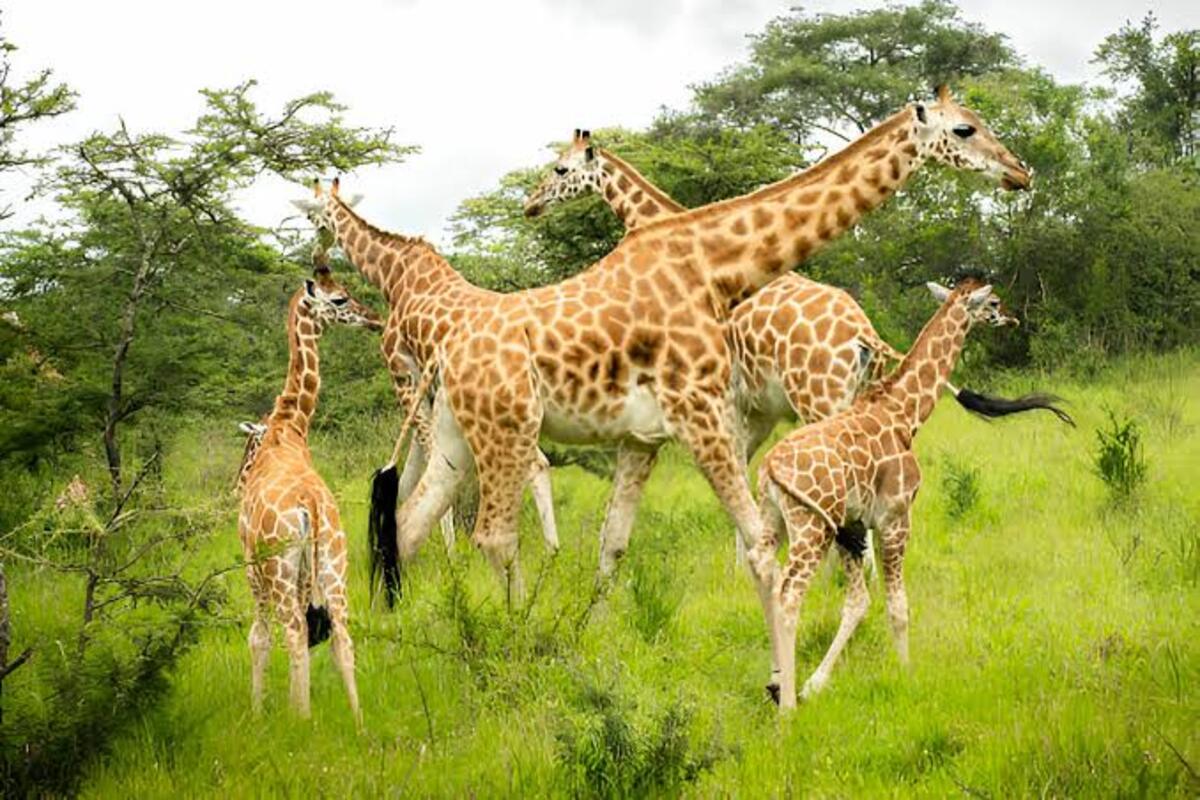
A tower of giraffes in Lake Mburo
Where Can You See All Five Big Five Animals in Uganda?
The simplest answer is: by combining destinations.
A practical Big Five itinerary usually involves:
- Ziwa Rhino Sanctuary for rhinoceros
- Murchison Falls National Park for lion, leopard, elephant and buffalo
- Queen Elizabeth National Park as another strong option for the Big Four
- Kidepo Valley National Park for a more remote wildlife experience
Ziwa and Murchison Falls form one particularly logical combination for travellers whose main objective is completing the Big Five.
Ziwa can also be combined with Queen Elizabeth, especially if the wider journey includes chimpanzee tracking or gorilla trekking in southwestern Uganda.
The key is to adjust expectations.
You are not driving into one park and automatically finding five species in a single morning. Wildlife moves freely, sightings change from day to day, and some animals are much harder to locate than others.
Leopards are especially elusive, while rhino tracking involves a very different experience from searching for animals during a vehicle-based game drive.
When Is the Best Time for a Big Five Safari in Uganda?
Uganda works as a safari destination throughout the year, but the experience changes with the seasons.
The generally drier periods of June to August and December to February are often preferred for savannah game viewing. With less dense vegetation in many areas, wildlife can be easier to observe, and animals may spend more time around available water sources.
That does not mean the wetter months are a poor choice.
The landscapes become greener, bird activity can be excellent and visitor numbers may be lower. The trade-off is that rain can affect unpaved roads and make some overland journeys slower.
If you are combining a Big Five safari with gorilla trekking, the decision becomes more nuanced because conditions in the savannah and rainforest do not always favour the same months.
How Difficult Is a Big Five Safari?
A conventional game drive does not require a high level of fitness. You spend much of the time seated in the safari vehicle, although long journeys between parks can be tiring.
The bigger consideration is often road travel.
Uganda’s parks are spread across the country, and reaching them can involve several hours on uneven roads. Travellers who experience motion sickness should prepare for this, while anyone with mobility concerns should discuss the proposed route before travelling.
Rhino tracking at Ziwa is different because it takes place on foot.
And if gorilla or chimpanzee trekking is added, fitness becomes more important because forest trails can involve steep or muddy sections.
A useful rule is not to judge the difficulty of a Uganda safari only by the amount of walking involved. Driving time, road conditions, heat and repeated early starts can also affect how tiring the trip feels.
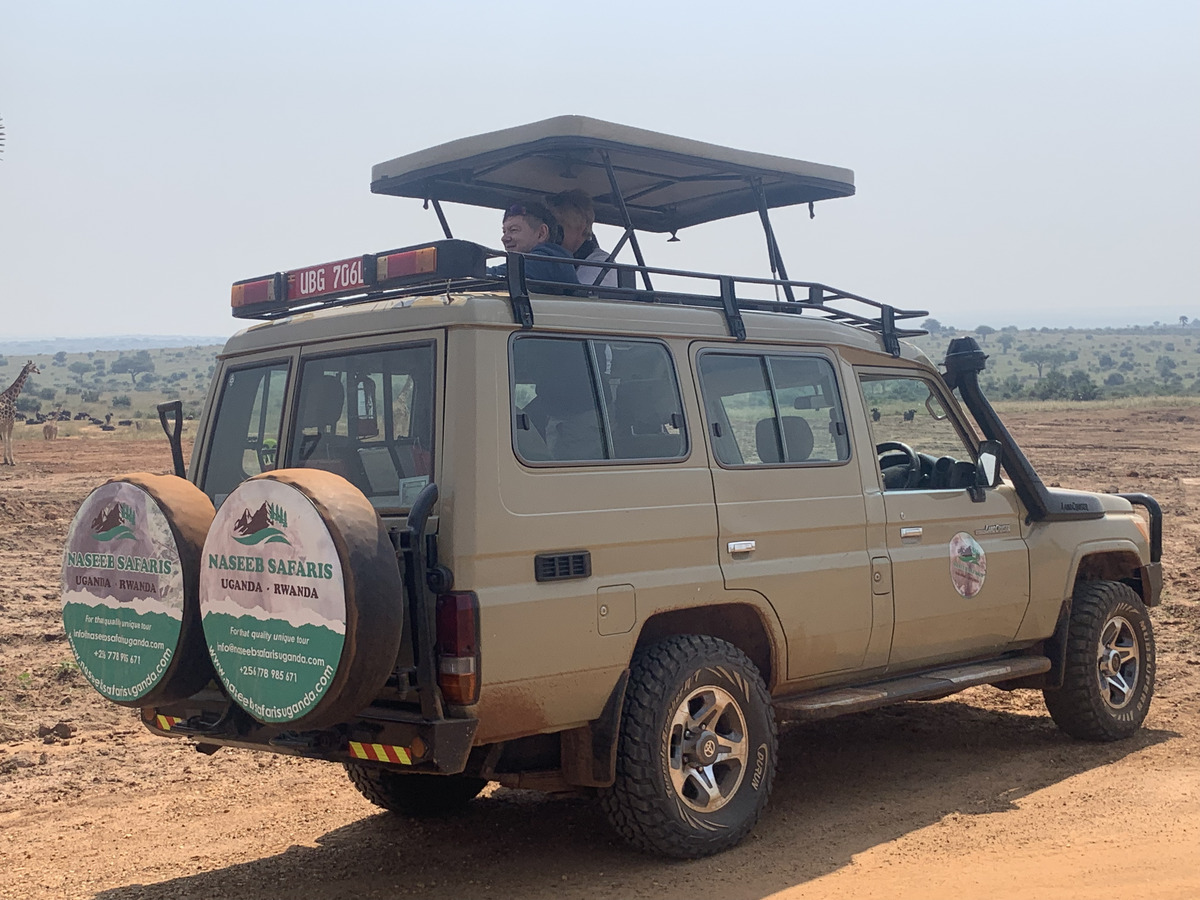
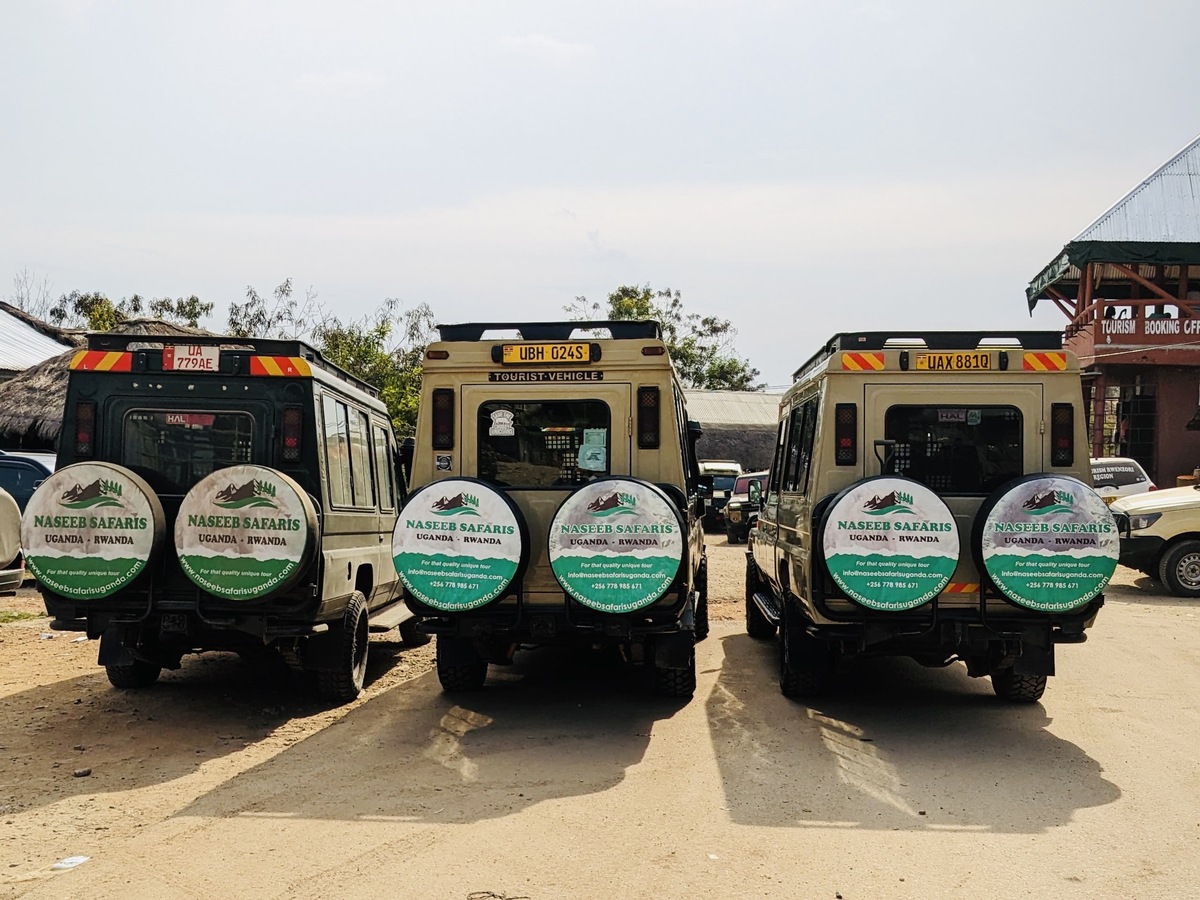
big five safari in a Jeep
What Should You Pack for a Uganda Big Five Safari?
You do not need an enormous amount of specialist equipment.
Useful items include:
- Lightweight, breathable clothing
- A warm layer for early mornings
- Hat and sunglasses
- Sunscreen
- Insect repellent
- Comfortable closed shoes
- Reusable water bottle
- Binoculars
- Camera and spare batteries
- Power bank
- Small daypack
Binoculars are particularly worthwhile. A leopard lying some distance away or a herd of animals across a plain can look very different through good magnification.
For photography, a telephoto lens is useful because wildlife does not always come close to the vehicle.
Try not to judge the quality of a safari by how close an animal comes to your camera. Keeping a respectful distance is part of responsible wildlife viewing.
How Many Days Do You Need for a Big Five Safari in Uganda?
There is no single answer because the ideal length depends on what else you want to see.
A focused wildlife safari can be relatively short, but adding several parks means accepting considerable travel time.
If your trip also includes gorilla trekking, chimpanzee tracking or both, around 8–12 days can provide a more comfortable framework, depending on the route and number of destinations selected.
One of the most common planning mistakes is trying to fit too many parks into too few days.
Uganda may look compact on a map, but its major wildlife areas are widely separated. A day spent driving between parks is still part of your holiday.
A slower itinerary often gives you more time to enjoy each destination and less time feeling as though you are constantly checking out of one lodge and heading to another.
Should You Combine the Big Five With Gorillas or Chimpanzees?
For many international visitors, this is where a Uganda safari becomes particularly distinctive.
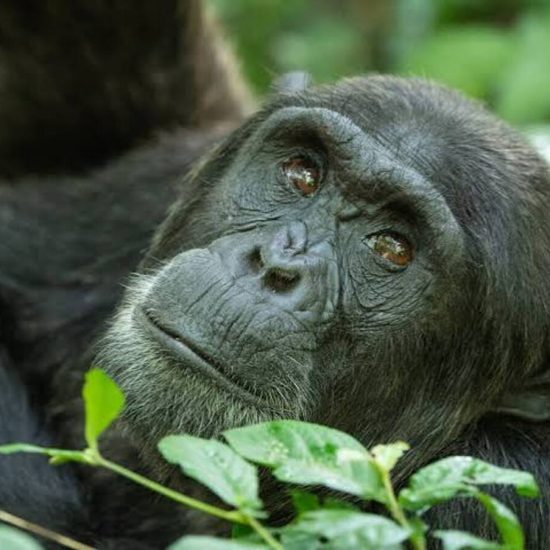
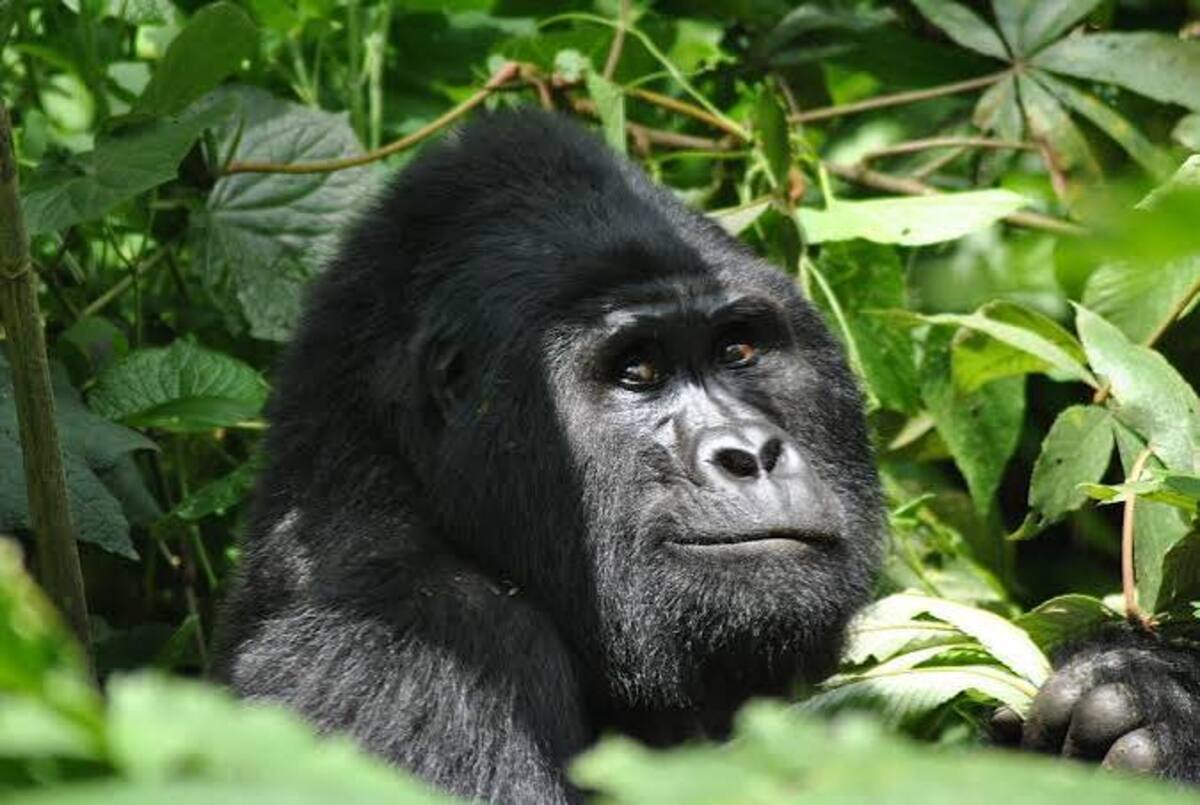
After spending a morning looking for lions and elephants on open savannah, you can eventually find yourself walking beneath a dense forest canopy in search of chimpanzees or climbing into the forested mountains of Bwindi to track mountain gorillas.
The two experiences demand completely different ways of observing wildlife.
On safari, you scan open landscapes from a vehicle. In the forest, you listen. A call from the canopy, movement in leaves or distant sounds from unseen animals can become part of the experience.
Kibale Forest is an important chimpanzee destination, while Bwindi is one of the country’s principal destinations for mountain gorilla trekking.
That contrast is one reason travellers often choose Uganda for a broader wildlife journey rather than a safari focused only on the Big Five.
Common Mistakes to Avoid on a Uganda Big Five Safari
Trying to see everything
Uganda rewards a well-paced itinerary. Adding every major park can leave you spending more time on the road than experiencing the destinations.
Expecting guaranteed sightings
No reputable guide can guarantee that you will see a leopard, lion or any other wild animal. Guides can use their knowledge of habitats and recent movements to improve your chances, but wildlife remains unpredictable.
Treating the Big Five as the entire safari
Uganda offers far more than five large mammals. Chimpanzees, gorillas, hippos, crocodiles, giraffes, zebras, antelopes and hundreds of bird species can all add depth to the journey.
Ignoring travel time
Distances between parks matter. Before adding another destination, ask how many hours it adds to the route and whether that trade-off is worthwhile.
Choosing a route before deciding what matters most
A traveller interested mainly in classic game viewing may prefer Murchison Falls. Someone wanting wildlife plus chimpanzees and gorillas may find Queen Elizabeth more logical. A traveller with more time and a preference for remote landscapes may prioritise Kidepo.
The best route is therefore not necessarily the one with the most parks. It is the one that fits your priorities and available time.
Frequently Asked Questions About Big Five Safaris in Uganda
Can you see all the Big Five in one Ugandan national park?
No. Uganda’s national parks do not currently contain all five Big Five species. Rhinoceros are found at Ziwa Rhino Sanctuary, while lion, leopard, elephant and buffalo occur in several savannah parks.
Which national park is best for the Big Five in Uganda?
There is no single park that guarantees the complete Big Five. Murchison Falls and Queen Elizabeth are practical choices for searching for four species, while Kidepo offers a more remote wildlife experience. Ziwa is required for the rhino component.
Are there rhinos in Uganda’s national parks?
The principal rhino tracking experience described in this itinerary is at Ziwa Rhino Sanctuary, rather than in Uganda’s national parks. Guided tracking provides the opportunity to see rhinos on foot.
Are Big Five sightings guaranteed in Uganda?
No. Wildlife is free-ranging and sightings depend on animal movements, habitat and conditions. Leopards are particularly difficult to find, and even commonly seen animals may not appear on every game drive.
How many days should I spend on a Big Five safari in Uganda?
Several days can work for a focused safari, but a longer itinerary becomes useful when combining multiple parks. If you also want gorilla trekking or chimpanzee tracking, around 8–12 days can provide a more comfortable trip depending on the route.
Is Uganda suitable for a first-time safari?
Yes, provided the itinerary is planned around realistic travel times and the type of experience you want. Murchison Falls, Queen Elizabeth and Lake Mburo can all work within relatively conventional safari routes, while Kidepo is better suited to travellers with more time.
A Big Five Safari Is About More Than Five Animals
The Big Five are a useful starting point, but they do not tell the whole story of a Uganda safari.
A game drive can begin among open grasslands and end beside the Nile. A boat cruise can bring hippos and crocodiles into view while elephants gather along the shoreline. Days later, the landscape can change completely as you enter a forest in search of chimpanzees or mountain gorillas.
That variety is one of Uganda’s strongest advantages.
Rather than building an itinerary around the number of animals you can tick off a list, think about how you want the journey to feel. Decide how much time you have, how much driving you are comfortable with, whether primates matter to you, and whether you prefer a classic safari circuit or a more remote experience.
The best Big Five safari is not necessarily the one that visits the most parks. It is the one that gives you enough time to appreciate where you are.
If you are unsure which combination of parks makes sense for your available days, wildlife interests and wider Uganda itinerary, Naseeb Safaris can help you plan a route around the experiences that matter most to you, whether that means Big Five game viewing, rhino tracking, chimpanzee tracking or gorilla trekking.