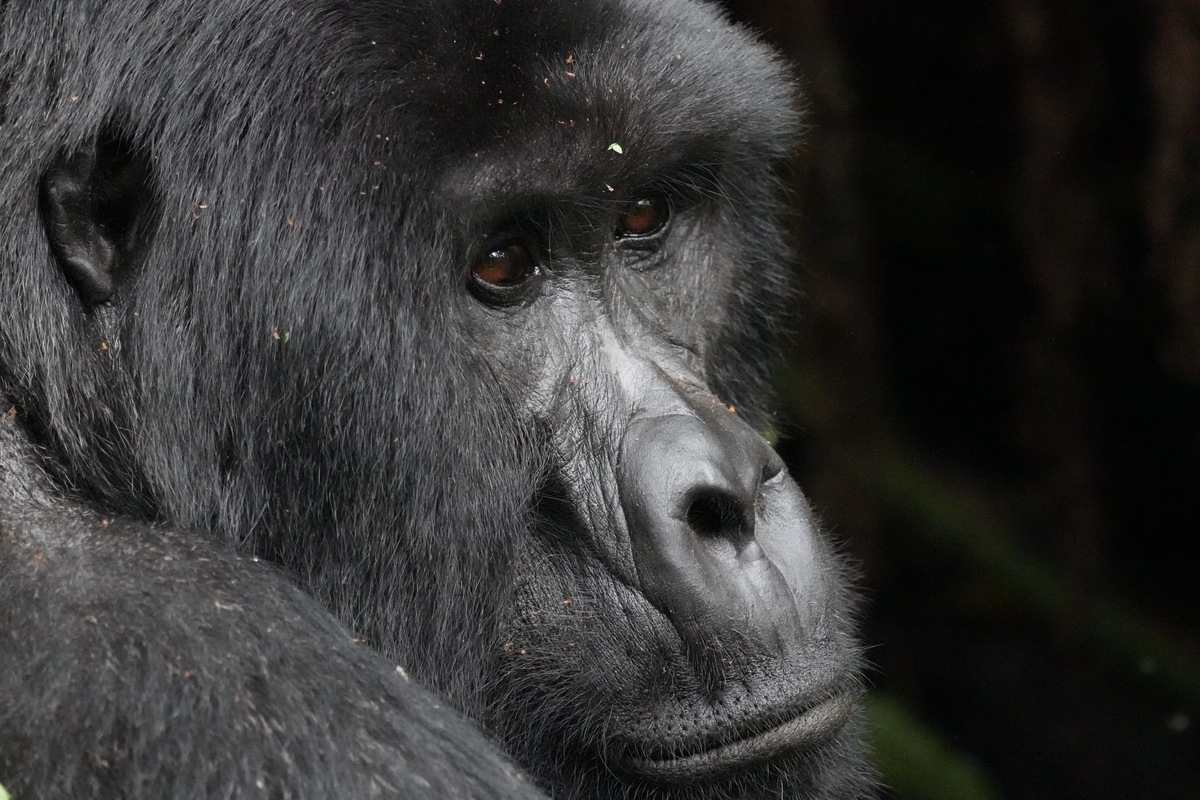

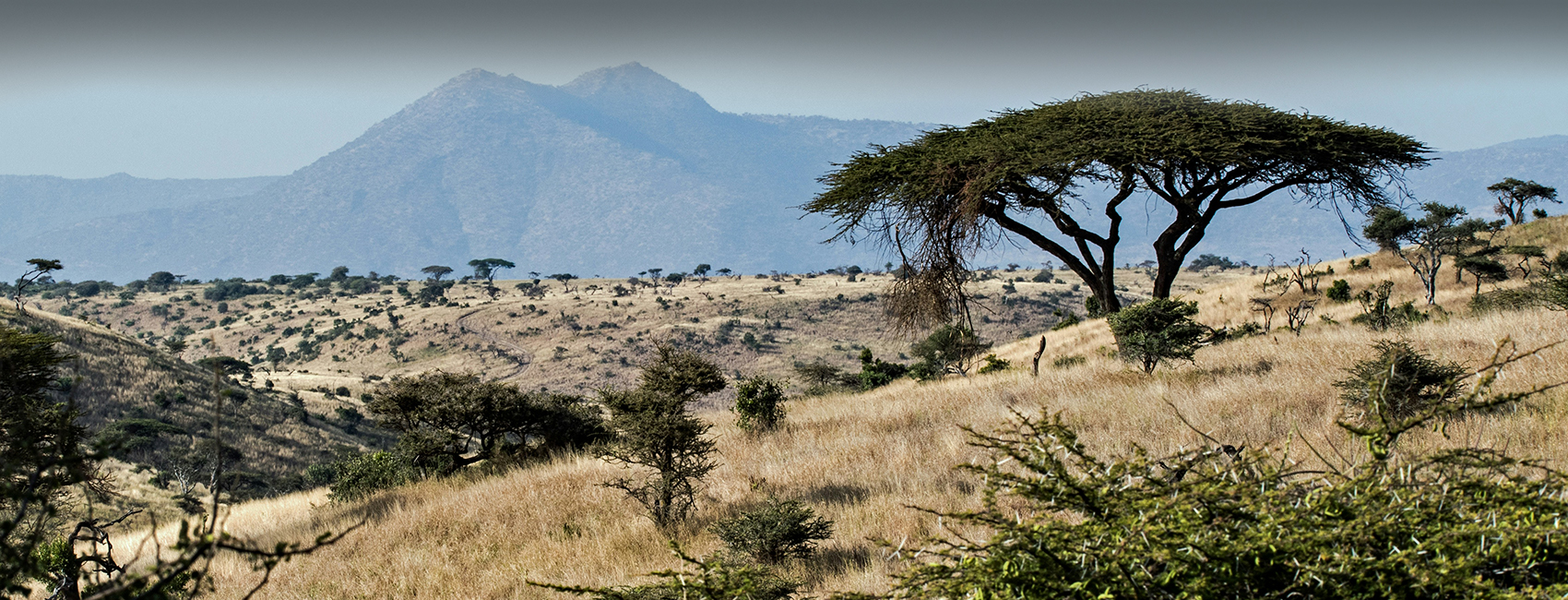
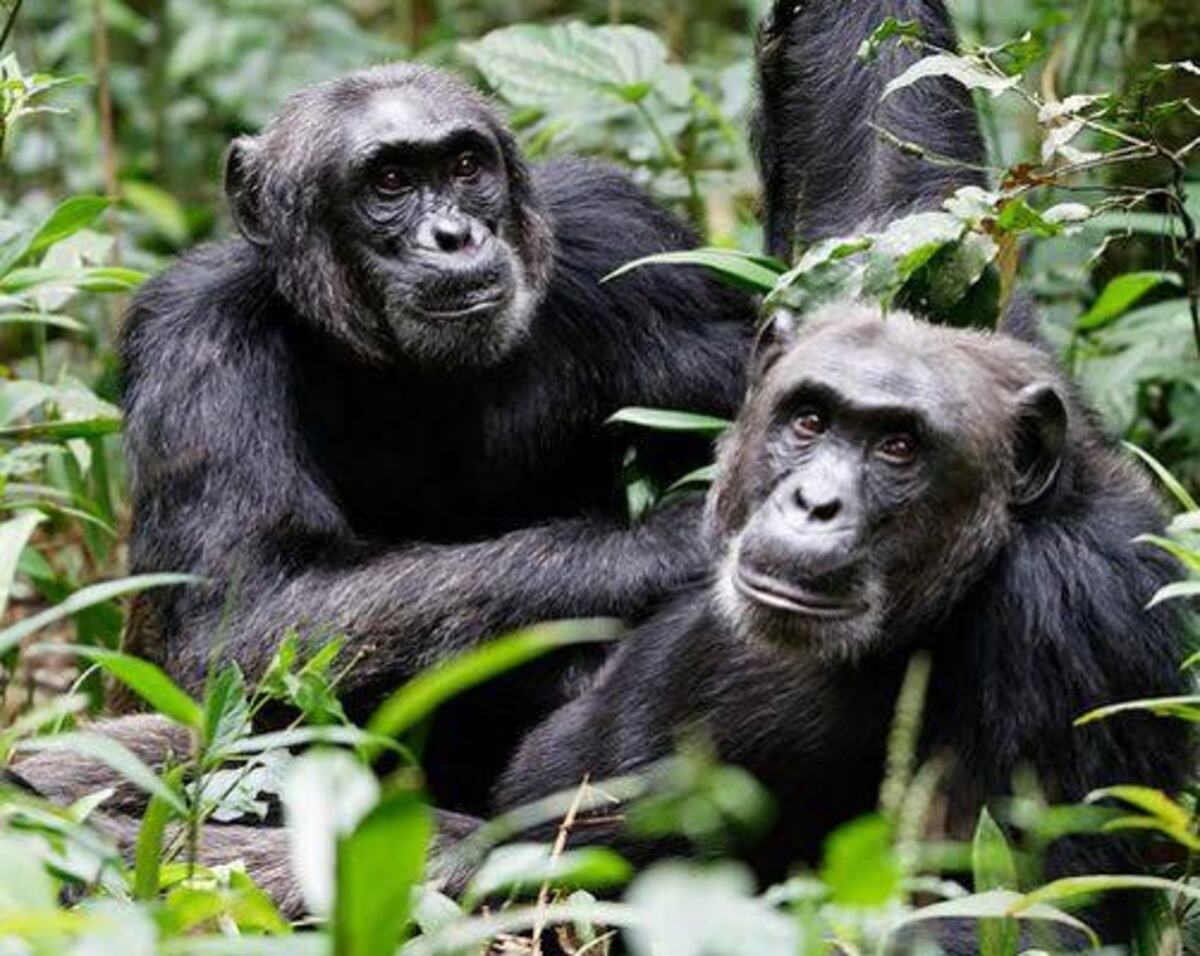
Chimpanzee Tracking in Kibale National Park Uganda
Chimpanzee Tracking in Kibale National Park Uganda, Deep in western Uganda, the forest of Kibale National Park is alive with movement. Monkeys call from the canopy, birds move through the undergrowth and, somewhere beyond the trail, chimpanzees communicate with loud pant-hoots that can carry surprisingly far through the trees.
For travellers interested in primates, this is one of Uganda’s defining wildlife experiences. Chimpanzee tracking in Kibale offers the opportunity to follow a habituated chimpanzee community through its natural forest habitat and spend time observing animals whose social behaviour can seem remarkably familiar.
Kibale is home to one of Uganda’s largest concentrations of chimpanzees, with UWA estimating around 1,500 individuals in the park. The Kanyanchu area is the main starting point for visitor tracking, and the forest is also known for its exceptional diversity of other primates.
What Is Chimpanzee Tracking in Kibale Like?
Chimpanzee tracking is different from a conventional safari game drive. There is no vehicle following a predictable route and no guarantee that the animals will remain in one location. Instead, you enter the forest with a trained guide and follow the movements of the chimpanzee community.
The experience begins at the Kanyanchu Visitor Centre with registration and a briefing. UWA’s current guidelines provide for morning and afternoon tracking, with normal tracking beginning at 8:00am or 2:00pm. The forest walk can take several hours depending on where the chimpanzees have moved, weather and terrain. Once the animals are located, visitors may spend up to one hour observing them.
The anticipation is part of the experience. You may hear chimpanzees before you see them. A series of calls from somewhere in the canopy can suddenly give the forest a different character, while trackers and guides work out where the community is moving.
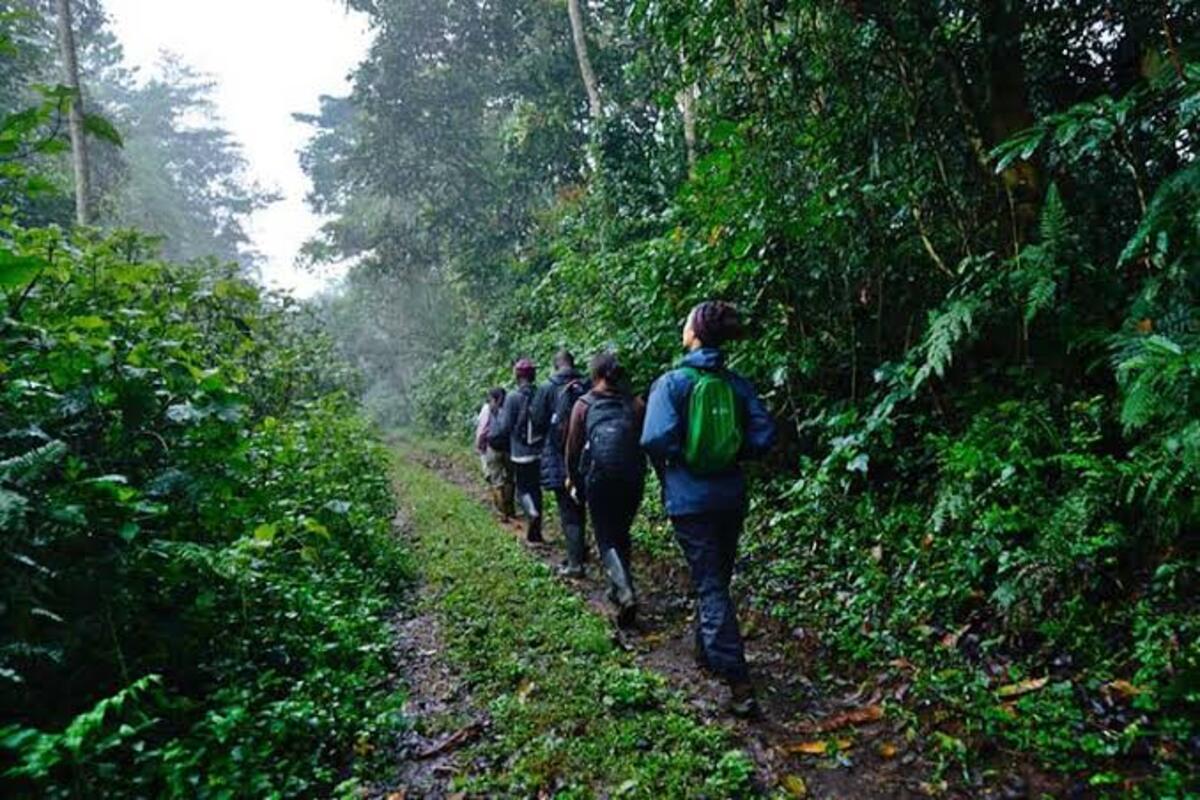
A small group of visitors trekking to find chimpanzees
What Can You Expect to See?
Chimpanzees spend much of their day feeding, travelling, resting and interacting with members of their community. Depending on where they are when you arrive, you might see individuals feeding on fruit, grooming one another, climbing between branches or resting high above the trail.
They do not always stay at eye level. A good sighting may involve looking upwards into the canopy, sometimes through dense foliage. This is why patience and a pair of binoculars can be more valuable than expecting every photograph to be a close-up.
Kibale’s chimpanzees are also surrounded by an impressive community of other primates. Red-tailed monkeys, black-and-white colobus monkeys, blue monkeys and grey-cheeked mangabeys, Olive baboons, pottos are among the species associated with the Kanyanchu forest experience.
The forest itself is therefore part of the attraction. Even when the chimpanzees are moving beyond immediate view, the walk provides opportunities to notice birds, insects, plants and other forest wildlife like forest elephants spotted from time to time.
How Long Does Chimpanzee Tracking Take?
A normal tracking excursion can take roughly two to five hours, although the exact duration depends on the movements of the chimpanzees and conditions in the forest. The time spent actually viewing the chimpanzees is limited to a maximum of one hour.
This distinction is important when planning your day. A five-hour tracking experience does not mean standing beside chimpanzees for five hours. Much of the time is spent walking through the forest, listening for calls and following the trackers.
The terrain is generally manageable for reasonably fit travellers, but this is still a forest walk. Mud, exposed roots, uneven ground and slopes can make some sections tiring, particularly after rain.
How Much Does Chimpanzee Tracking in Kibale Cost?
Currently, chimpanzee tracking in Kibale costs US$250 for foreign non-residents, US$200 for foreign residents and UGX 180,000 for East African Community citizens. The Kibale chimpanzee tracking fee includes the guide and park entrance for the day.
Permit and tariff information can change, so travellers should confirm the current UWA rate when planning a future safari.
Advance booking is sensible, particularly during busy travel periods, because chimpanzee tracking operates with limited group sizes and designated habituated communities.
Chimpanzee Tracking vs Chimpanzee Habituation
These two experiences are often confused, but they are not the same.
Standard chimpanzee tracking is designed around locating a habituated community and observing it for a maximum of one hour. The Chimpanzee Habituation Experience, meanwhile, allows visitors to spend up to four hours with chimpanzees while accompanying researchers and habituators. For most travellers combining Kibale with a wider Uganda safari, standard tracking fits naturally into an itinerary. Habituation is more suitable for visitors who want to spend considerably longer studying chimpanzee behaviour and are prepared for a more extended day in the forest.
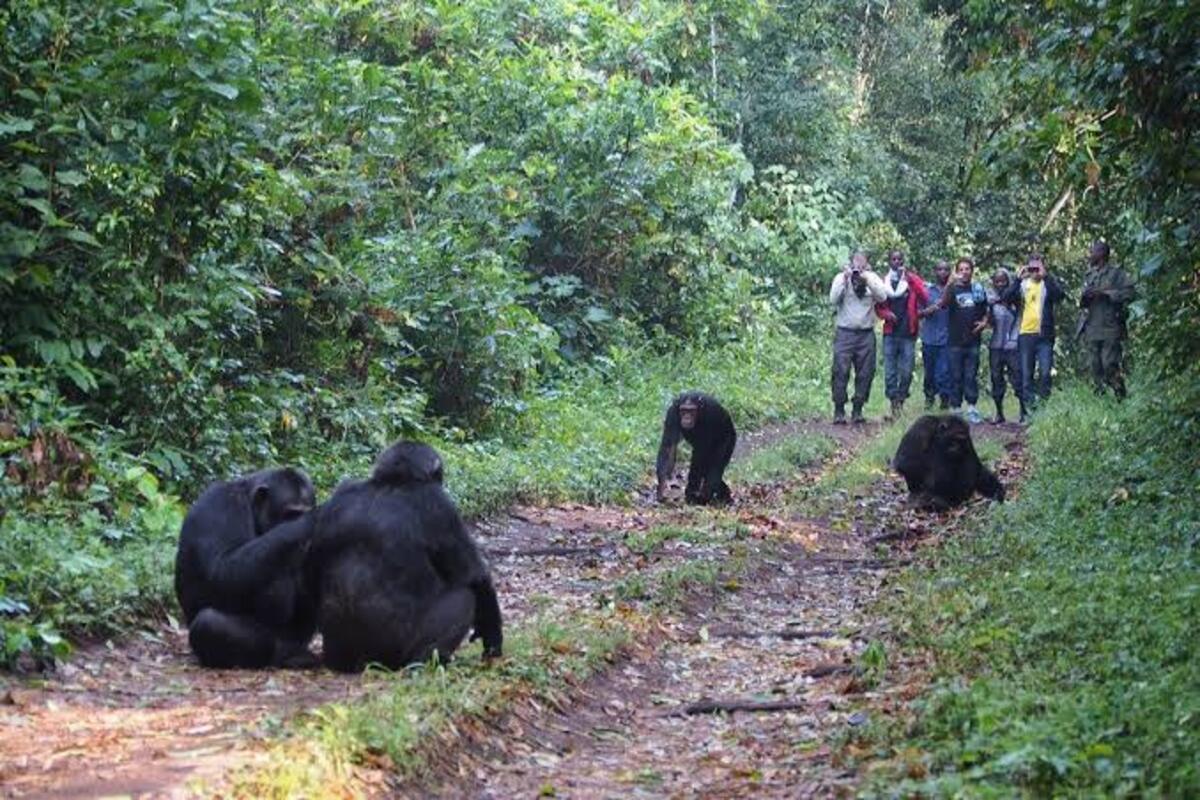
Tourists in sight with chimpanzees
When Is the Best Time to Track Chimpanzees?
Chimpanzee tracking takes place throughout the year. Interestingly, the rainy season can offer good tracking conditions because chimpanzees may remain closer to areas with food, although the trails can become muddy. During drier periods, chimpanzees may move deeper into the forest in search of food.
This means there is no simple answer to the question of the “best” month. Weather, road conditions, accommodation availability and your wider safari itinerary all matter.
Rain should not automatically put you off Kibale. A waterproof jacket, suitable footwear and a willingness to walk through damp forest conditions will make a significant difference.
What Should You Pack?
The most important thing is footwear. Choose comfortable hiking shoes or boots with good grip because forest trails can be muddy and uneven.
Long trousers and a lightweight long-sleeved shirt are useful for protection from vegetation and insects. A waterproof jacket or poncho is worth carrying even when the morning begins dry.
Bring drinking water, insect repellent, a small backpack and binoculars. For photography, a camera with a useful telephoto range can be more practical than relying entirely on a phone, particularly when chimpanzees remain high in the canopy.
Flash photography should not be used around the animals, and your guide’s instructions should always take priority.
Health, Safety and Responsible Chimpanzee Viewing
Chimpanzees are closely related to humans and can be vulnerable to human-borne diseases. This is one reason the rules around distance and visitor behaviour matter.
Do not attempt to touch, feed or attract the chimpanzees. Avoid loud noises and follow the guide’s instructions throughout the encounter. If you are unwell, particularly with a potentially infectious illness, inform your safari operator or park authorities before tracking.
The animals are wild, even when habituated to human presence. Their behaviour should never be treated as predictable or harmless simply because visitors regularly see them.
Responsible viewing also means accepting that a photograph is secondary to the welfare of the animals. Sometimes the chimpanzee you have travelled to see will remain partly hidden by leaves. That is still a genuine wildlife encounter.
Getting to Kibale National Park
Kibale is in western Uganda, near Fort Portal. The road distance from Kampala at approximately 326 kilometres, with the journey taking around six to seven hours under normal conditions. Travellers can also fly from Entebbe or Kajjansi to Kasese and continue by road, while charter options to Fort Portal are available.
Most international visitors include Kibale as part of a longer western Uganda circuit rather than travelling there solely for chimpanzee tracking. It combines particularly well with Queen Elizabeth National Park and Bwindi Impenetrable National Park.
Where to Stay Around Kibale
Accommodation ranges from simple camps and guesthouses like chimpanzee capital guest house to comfortable forest lodges like turaco treetops lodge and higher-end properties like Chimpundu safari lodge. The most important consideration is location rather than choosing accommodation purely by price.
Staying reasonably close to Kanyanchu can make the morning tracking session easier, particularly when you are combining chimpanzee tracking with other activities. The wider Kibale area also offers lodges that provide easy access to Bigodi and other community-based experiences.
If chimpanzee tracking is a central reason for visiting, check the location of your accommodation before booking rather than assuming that every lodge described as “Kibale” is equally close to the tracking point.
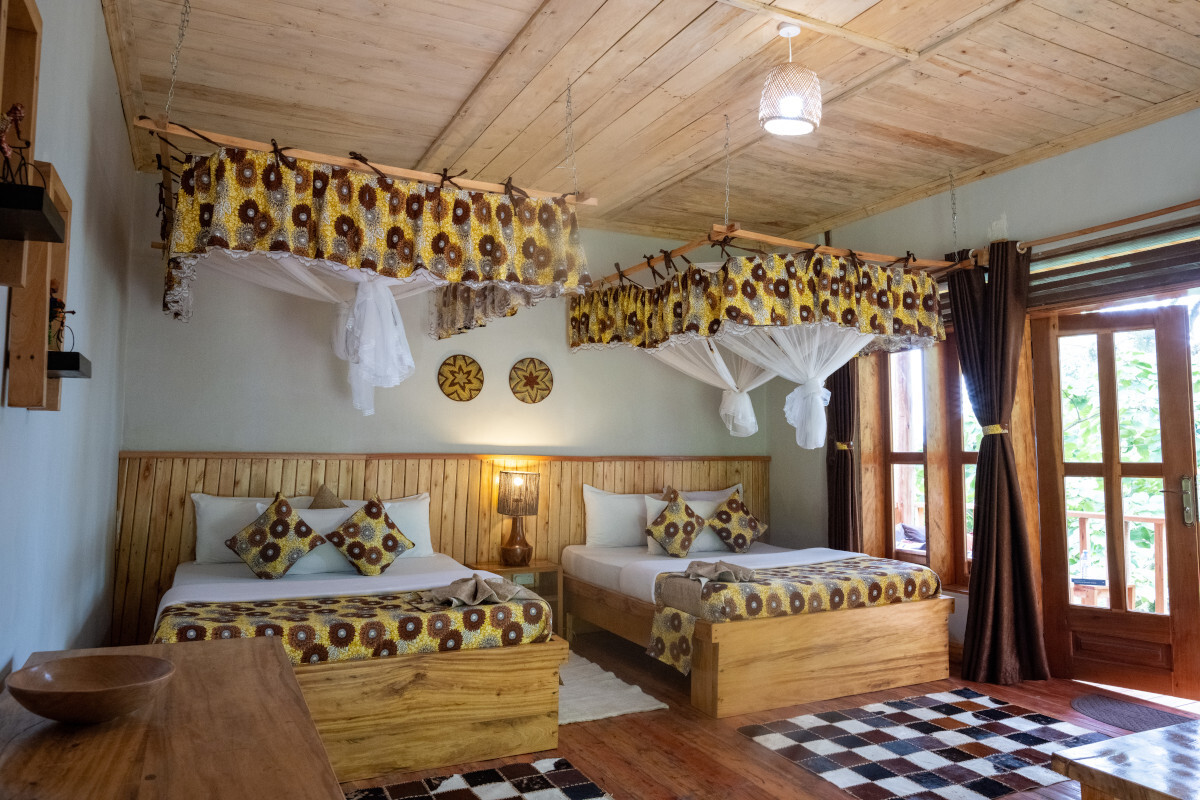
Accommodation in kibale
Combining Chimpanzees With a Uganda Safari
Kibale works particularly well as part of a broader western Uganda itinerary. After the forest, travellers can continue towards Queen Elizabeth National Park for savannah wildlife and the Kazinga Channel, or travel farther south towards Bwindi for mountain gorilla trekking.
The nearby Bigodi area is another worthwhile addition. Community-based walks provide a different perspective on the landscape, with opportunities to learn about local livelihoods and explore wetland and forest-edge habitats.
For travellers interested specifically in great apes, combining chimpanzee tracking with gorilla trekking creates two very different experiences: one focused on chimpanzees moving through the canopy and another on mountain gorillas living in high-altitude rainforest.
Frequently Asked Questions
Is chimpanzee tracking difficult in Kibale?
It is generally less demanding than a strenuous gorilla trek, but it is not simply a flat forest stroll. Mud, slopes, roots and uneven trails are possible, and the walking distance depends on where the chimpanzees have moved.
What age can children be for chimpanzee tracking?
UWA’s current Kibale visitor information states that participants in the chimpanzee tracking experience must be at least 15 years old. Families travelling with younger children can consider other forest activities available around Kibale.
Are chimpanzees guaranteed to be seen?
No wildlife encounter can honestly be guaranteed. Kibale’s habituated communities and long-running monitoring programme provide favourable conditions for sightings, but chimpanzees remain wild animals and may be high in the canopy or moving through dense forest.
Can I take photographs?
Yes, photography is part of the experience, but flash should not be used and visitors should follow the guide’s instructions. A telephoto lens and patience are often more useful than trying to get physically closer.
Should I choose tracking or habituation?
Choose standard tracking if you want a focused chimpanzee encounter that fits comfortably into a wider safari. Choose habituation if you want to spend substantially longer observing chimpanzee behaviour and are comfortable with a longer forest experience.
The Forest Beyond the Chimpanzees
Chimpanzee tracking in Kibale is ultimately about more than finding an ape in the trees. It is an introduction to a living forest where the animals dictate the pace of the experience.
You may spend part of the morning walking quietly beneath the canopy, following distant calls, before suddenly finding yourself watching a chimpanzee move through the branches above you. The encounter may last minutes or fill the permitted viewing period, but either way, it offers something a conventional game drive cannot: the feeling of entering the animal’s environment on foot.
For travellers planning a Uganda safari, Kibale provides an opportunity to slow down, look upwards and experience one of the country’s most important primate habitats on its own terms.
If you are planning a Uganda safari and would like help combining Kibale chimpanzee tracking with wildlife, gorilla trekking or cultural experiences, Contact Naseeb Safaris and we can help you build an itinerary around the places and experiences that matter most to you.