
Uganda Family Safaris: Planning a Family Trip
Uganda Family Safaris: Planning a Family Trip, A family safari in Uganda is not simply an adult safari with children added to the vehicle. The pace, accommodation, activities and distances all need to work for the youngest traveller as well as the adults. Done thoughtfully, however, Uganda offers an unusual variety of experiences for families: wildlife drives across open savannah, boat trips along the Nile, encounters with local communities, forest walks and, for teenagers who meet the age requirements, chimpanzee tracking or gorilla trekking.
The key is not trying to see everything. A well-planned Uganda family tour leaves enough time to explore without turning every day into a long drive or an early-morning race.
Is Uganda a Good Destination for a Family Safari?
Uganda can work very well for families, but the ideal itinerary depends on the children’s ages, interests and tolerance for long journeys.
Younger children may enjoy game drives, boat cruises and nature experiences without needing physically demanding activities. Older children and teenagers can take on more active experiences, including guided walks, chimpanzee tracking and, from the age of 15, gorilla trekking.
Private travel is particularly useful for families because the schedule can be adjusted. If the children are tired after a morning game drive, the afternoon can be kept free rather than following a fixed group programme. Similarly, meals, departure times and activity lengths can be discussed when planning the trip.
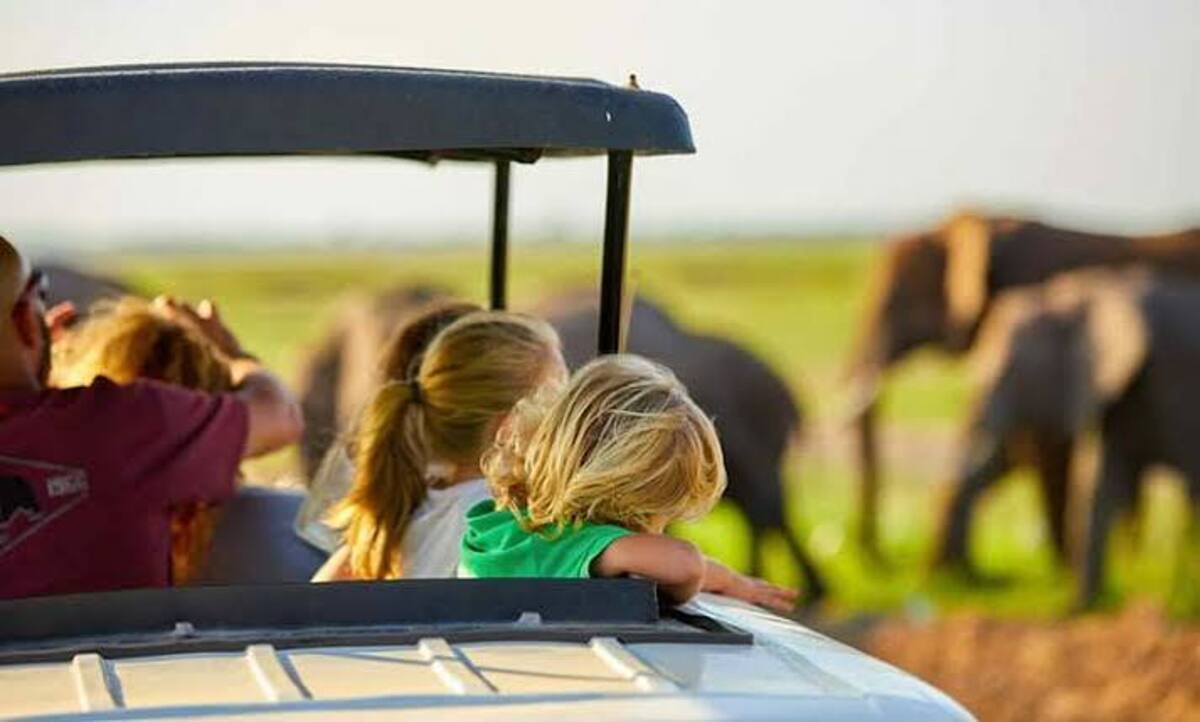
family inside a safari vehicle
Where Are the Best Places for a Family Safari in Uganda?
Murchison Falls National Park
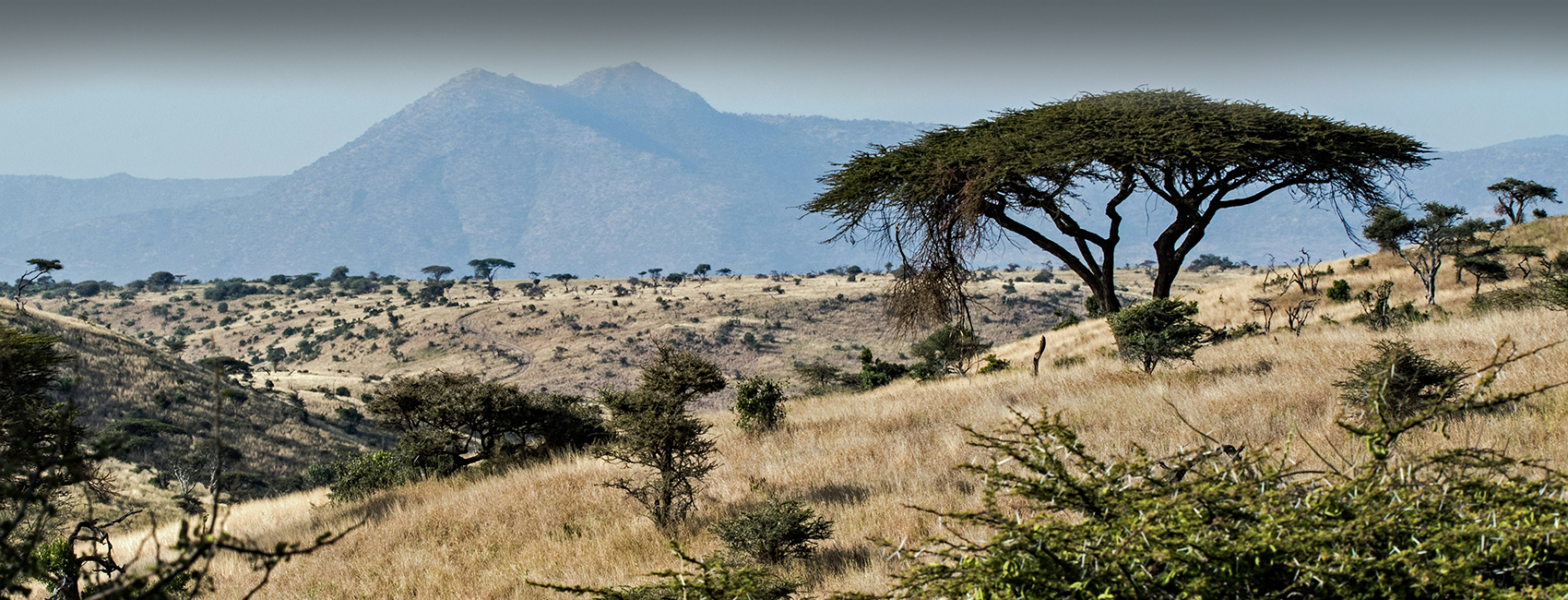
Murchison Falls is a practical choice for a first family safari because it combines several different experiences. Game drives can introduce children to elephants, giraffes, buffaloes, Uganda kob and lions, while a boat trip on the Nile changes the pace completely.
From the water, families can watch hippos, crocodiles, elephants and waterbirds along the river. The combination means children are not spending every day sitting in a vehicle looking for wildlife.
Ziwa Rhino Sanctuary can also be incorporated into a journey between the Entebbe or Kampala area and Murchison Falls. Rhino tracking takes place on foot with guides, so parents should consider their children’s age, walking ability and interest before adding it.
Queen Elizabeth National Park
Queen Elizabeth National Park is another good option for families, particularly when a wildlife safari is combined with a Kazinga Channel boat cruise. The cruise offers a different perspective on the park, with hippos, crocodiles, elephants, buffaloes and birds commonly associated with the waterway.
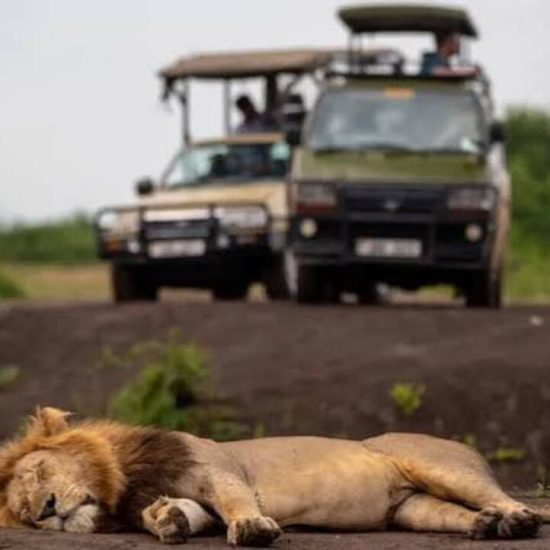
The Ishasha sector in the south is known for its tree-climbing lions. Seeing lions in the branches is not guaranteed, so it is better to treat the experience as an opportunity rather than a promise.
Lake Mburo National Park
Lake Mburo can provide a useful change of pace on a family itinerary. Wildlife viewing can be combined with guided nature experiences, giving children an opportunity to experience the landscape on foot where appropriate.
Its location can also make it useful for families travelling between Kampala or Entebbe and southwestern Uganda.
Kidepo Valley National Park
Kidepo is an option for families who have more time and want to experience a remote part of the country. Its distance from Uganda’s main safari circuit means that getting there requires additional travel planning, although domestic flights can be considered for some itineraries.
For families with young children, the additional travel should be weighed carefully against the appeal of visiting this remote wilderness.
What Age Is Best for a Uganda Family Safari?
There is no single age that makes a child “ready” for safari. The more useful questions are whether the child can cope with long journeys, follow safety instructions, enjoy outdoor activities and remain comfortable in a vehicle for several hours.
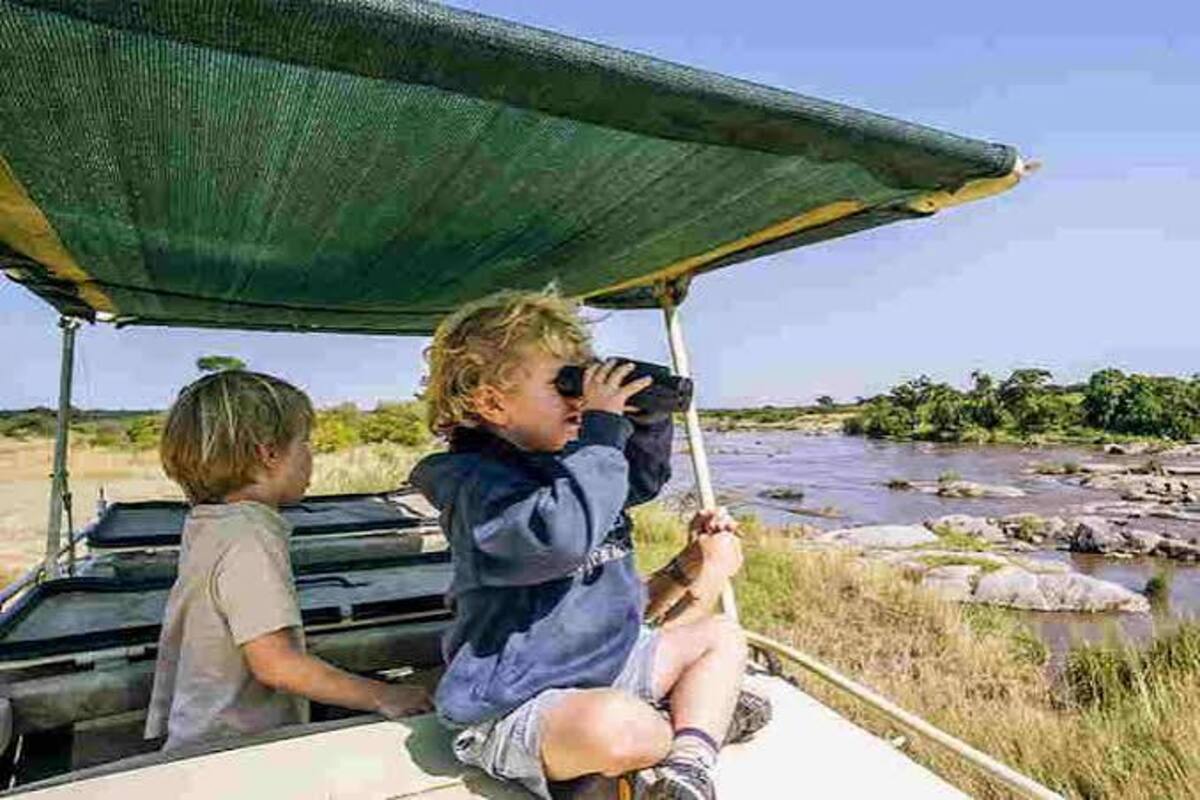
Game drives and boat trips may work well for younger children, provided the itinerary includes enough breaks. Older children often appreciate having binoculars and a guide who explains what they are seeing rather than simply pointing out animals.
Age restrictions become particularly important for primate experiences. Gorilla trekking in Uganda has a minimum age of 15. Chimpanzee activities also have age restrictions that can vary according to the destination, so families should confirm the current rules before finalising their itinerary.
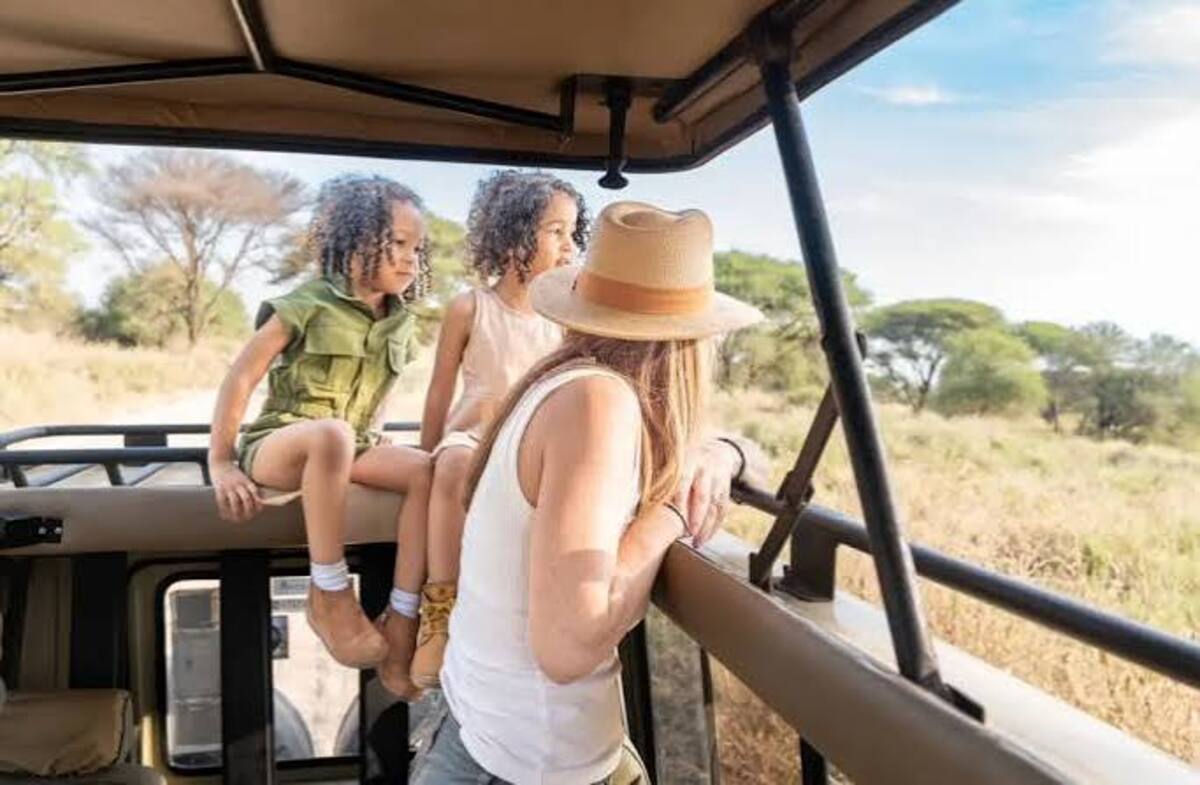
A Family enjoying a game drive
How Should You Pace a Family Safari?
The rhythm of the journey can make or break a family holiday.
Adults may be comfortable leaving camp before sunrise, spending several hours on a game drive and continuing with another activity afterwards. Young children may not have the same enthusiasm. A full itinerary every day can quickly become tiring.
Instead, alternate active experiences with slower periods. After a long transfer, consider keeping the afternoon free for swimming, relaxing at the lodge or exploring nearby surroundings. Where possible, spend two nights in the same accommodation rather than packing and unpacking every morning.
The aim is to give children enough time to settle into each place. They should have opportunities to look forward to the next activity rather than simply recovering from the previous one.
How Many Days Do You Need for a Family Safari?
Four or five days can provide a worthwhile introduction to Uganda’s wildlife, particularly if the itinerary concentrates on one region such as Murchison Falls.
With around a week, families have more room to combine destinations such as Murchison Falls and Queen Elizabeth or Lake Mburo. Longer holidays make it easier to add chimpanzee tracking, gorilla trekking or cultural experiences without squeezing too much into each day.
Trying to cover the entire country in a short holiday is one of the most common planning mistakes. Uganda is larger than it may appear on a map, and road journeys between parks can take several hours.
For families, fewer destinations with more time in each place are often more enjoyable than constantly moving.
What Can Children Do on a Uganda Safari?
Wildlife drives are only one part of the experience.
A boat cruise on the Nile at Murchison Falls can turn wildlife watching into an activity on the water. In Queen Elizabeth, the Kazinga Channel offers another opportunity to see animals from a different perspective.
Community experiences can also be valuable for children. Depending on the destination, families may learn about local food, crafts, farming, traditions and everyday life. These encounters help children understand that Uganda’s wildlife areas exist alongside communities and that tourism is connected to people’s livelihoods.
Older children and teenagers who meet the relevant requirements may enjoy chimpanzee tracking, guided walks or gorilla trekking.
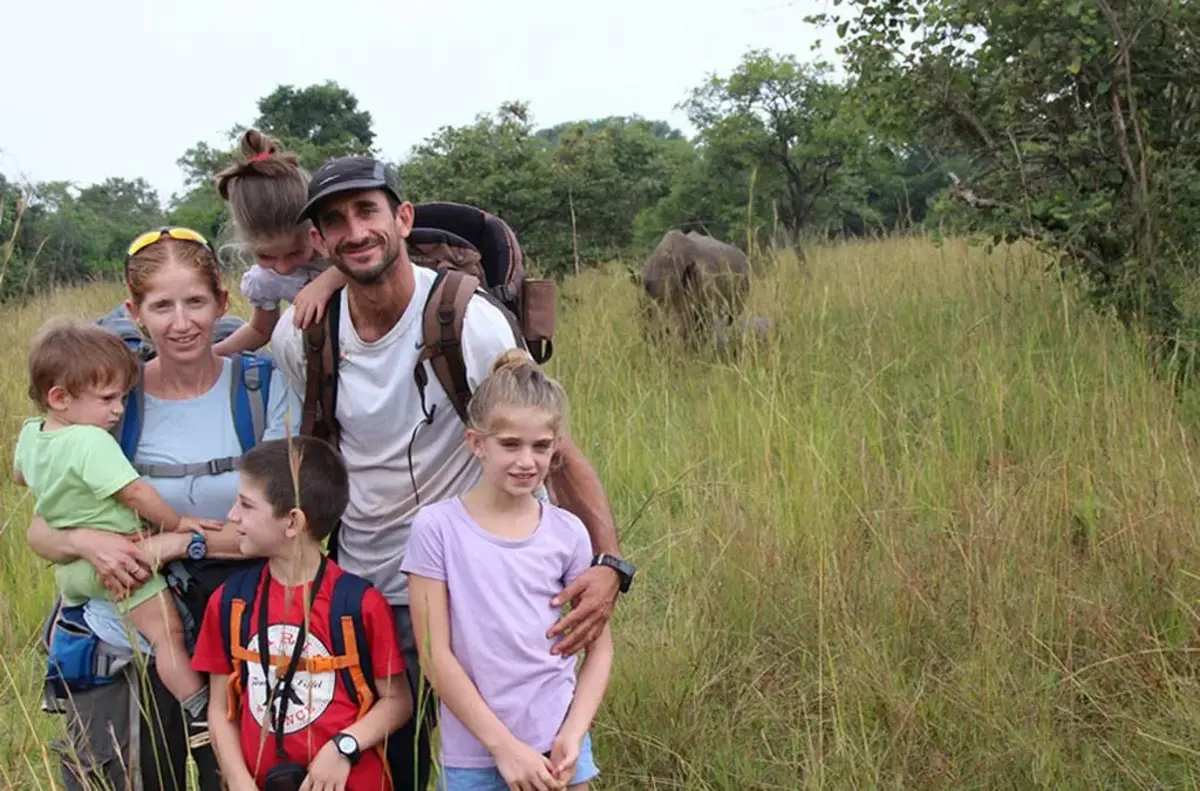
A family during on foot rhino tracking
Can Children Go Gorilla Trekking in Uganda?
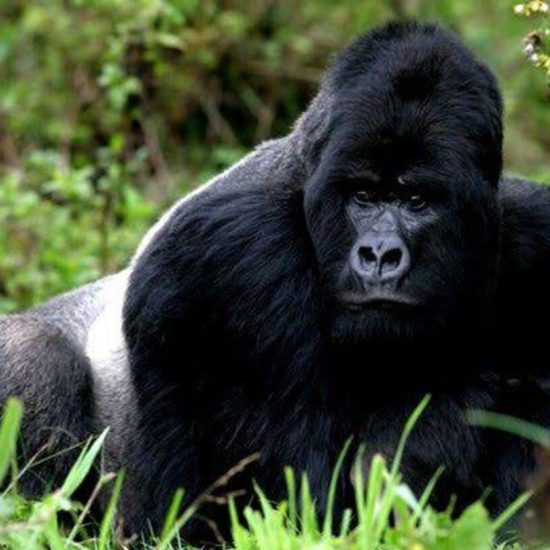
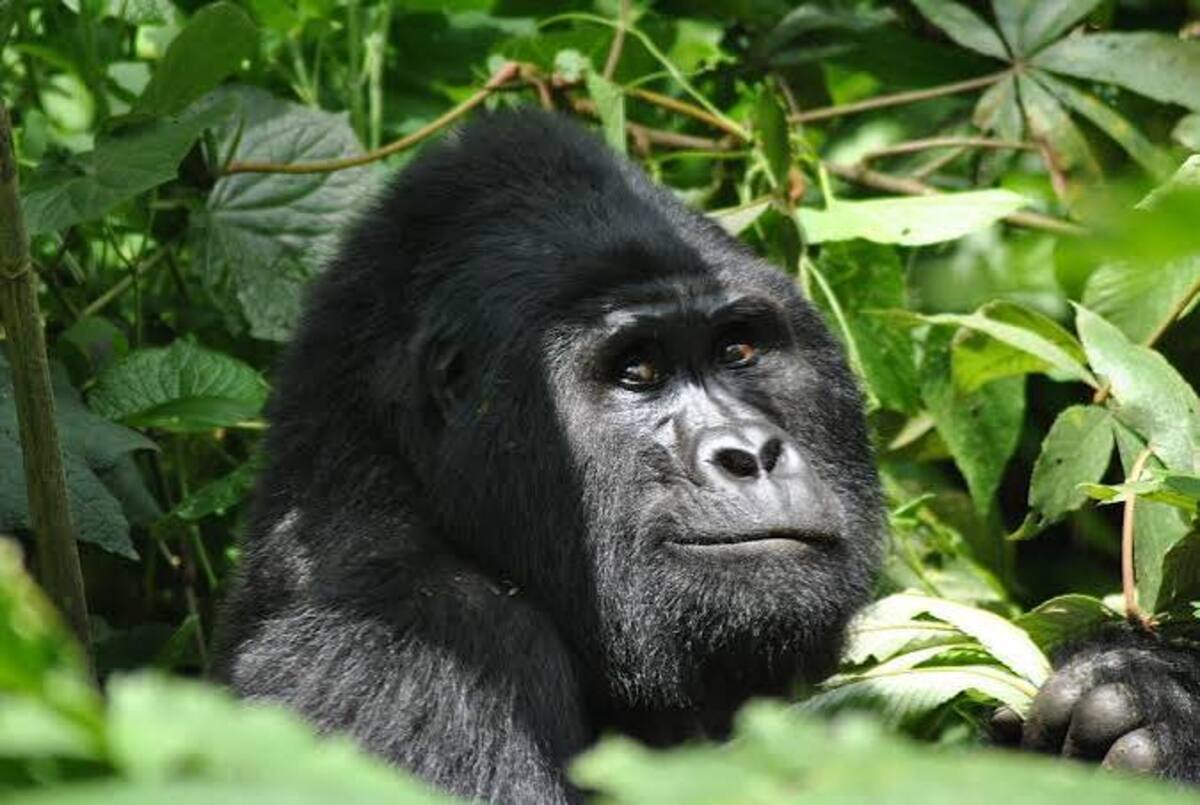
Children must be at least 15 years old to participate in gorilla trekking in Uganda.
For families with teenagers who meet the age requirement, gorilla trekking can form part of a larger wildlife itinerary. The trek should still be treated as a physically demanding outdoor activity. Forest trails can be steep, muddy and uneven, and the time spent walking varies depending on where the gorilla group is located.
Families travelling with younger children need to plan an alternative activity for them while eligible family members trek.
Choosing Family-Friendly Accommodation
The best family accommodation is not necessarily the most luxurious. Location and practicality often matter more.
Before booking, ask whether the property offers family rooms or adjoining rooms, whether children can be accommodated comfortably at mealtimes, whether there is a swimming pool or suitable recreation area, and whether the lodge can accommodate dietary requirements.
Some safari camps in remote areas are deliberately simple. That can be part of the experience, but families should understand the facilities before arriving.
Location is equally important. Saving money on a lodge that requires long daily transfers may not represent a real saving if young children spend much of the safari travelling to and from the park.
What Should Families Pack for Uganda?
Pack for outdoor conditions rather than bringing a large wardrobe. Lightweight clothing, comfortable walking shoes, hats, sunscreen, insect repellent and a light waterproof layer are useful.
Children can carry a small daypack containing water and a few personal items. Binoculars are particularly useful because they give children something active to do during slower parts of a game drive.
Bring any regular medication your family requires and seek professional medical advice before travelling about vaccinations, malaria prevention and other health considerations.
A small camera or phone is useful, but do not underestimate the value of simple field guides or binoculars for keeping children engaged with the wildlife around them.
Is a Uganda Family Safari Safe?
Families should always remember that national parks are wild environments. Children should remain close to their parents and guide and should never approach wildlife independently.
During game drives, follow the guide’s instructions about when to remain inside the vehicle and when it is safe to leave. On walking activities, stay with the ranger or guide.
Parents should also prepare for ordinary travel challenges such as strong sun, dehydration, insects and uneven roads. A knowledgeable driver-guide can make a significant difference by adjusting the pace and recognising when the family needs a break.
Responsible behaviour matters too. Do not feed wildlife, make unnecessary noise around animals or encourage drivers to approach animals too closely simply to obtain a photograph.
When Is the Best Time for a Family Safari in Uganda?
Uganda can be visited throughout the year. Drier periods can provide favourable wildlife-viewing conditions, while wetter months bring greener landscapes and can be rewarding for photography and birdwatching.
For families, the best dates may also depend on school holidays and the availability of accommodation and permits.
There is no need to assume that travelling outside the traditional peak period means having a poor safari. Weather changes from region to region, and wildlife remains present throughout the year. The more important consideration is whether your chosen itinerary suits your family and the activities you want to do.
How Much Does a Uganda Family Safari Cost?
There is no standard price for a family safari. The final cost depends on the number and ages of travellers, accommodation level, vehicle, route, activities and travel dates.
Private safaris normally cost more per person than joining a group because the vehicle and guide are dedicated to your family. In return, families gain greater control over departure times, activity duration and the overall pace.
When comparing quotations, look beyond the headline price. Check what is included: accommodation, meals, park fees, transport, activities, drinking water and airport transfers. Gorilla and chimpanzee permits should also be clearly identified where they apply.
Common Mistakes Families Should Avoid
The first is trying to fit too much into too little time. Long transfers combined with early mornings and several activities can exhaust children and adults alike.
The second is assuming that children will automatically enjoy long game drives. Bring binoculars, allow breaks and vary the experiences.
Another mistake is changing accommodation every night. Where possible, stay for two or more nights and let everyone settle into the environment.
Finally, do not make the entire trip depend on seeing one particular animal. Wildlife is unpredictable. A child who learns to notice birds, tracks, insects, landscapes and smaller animals may come away with a richer understanding of safari than someone focused only on finding a lion.
Frequently Asked Questions
Is Uganda suitable for families with young children?
Yes, provided the itinerary is designed around their age and energy levels. Shorter activities, comfortable accommodation and regular breaks can make the journey considerably easier.
Can children go on a Uganda safari?
Yes. Game drives and boat cruises can be suitable for children, although parents should consider their tolerance for heat, dust, long journeys and early starts.
Can children go gorilla trekking in Uganda?
Children must be at least 15 years old to participate in gorilla trekking.
Which national park is best for a family safari?
Murchison Falls is a practical choice because families can combine game drives with a Nile boat cruise. Queen Elizabeth and Lake Mburo can also work well depending on the family’s interests and available time.
How many days should a family spend in Uganda?
Four to five days can provide a good introduction to wildlife. A week or longer gives families more flexibility to combine destinations without rushing.
Is a private safari better for families?
A private safari gives families greater control over the schedule and pace. A group safari can reduce the cost but usually follows a less flexible timetable.
Planning Your Uganda Family Tour
A successful family safari does not require children to adapt to an adult travel schedule. It works the other way around: the itinerary should allow children to explore, ask questions, rest and gradually become comfortable with a new environment.
That might mean watching elephants during a morning game drive, seeing hippos from a boat in the afternoon and spending the following day learning about life in a local community. For older children, the journey can become more adventurous through chimpanzee tracking or gorilla trekking when age and fitness requirements allow.
The value of travelling as a family is not simply in the animals you see. It is in sharing unfamiliar landscapes, learning about another culture and giving children the opportunity to experience wildlife beyond a screen or classroom.
Naseeb Safaris can help you plan a family itinerary around your children’s ages, travel dates, interests, accommodation preferences and available time. Contact us with the details of your family trip, and we can help you work out a practical route that leaves room for both adventure and rest.