Gorilla Trekking in Mgahinga Gorilla National Park Uganda
Gorilla Trekking in Mgahinga Gorilla National Park Uganda, Gorilla trekking in Mgahinga Gorilla National Park offers a different perspective on Uganda’s wildlife. Here, the landscape rises from cultivated hillsides into the forested slopes of the Virunga Mountains, where mountain gorillas live among bamboo, dense vegetation and volcanic ridges. The park lies in southwestern Uganda, close to the borders with Rwanda and the Democratic Republic of Congo.
Unlike a traditional game drive, gorilla trekking requires visitors to travel on foot through the forest in search of a moving gorilla family. Trackers follow signs of the animals’ recent movements, while guides lead visitors along trails that can cross steep slopes, muddy ground and thick vegetation. The length and difficulty of the walk depend largely on where the gorillas are that day.
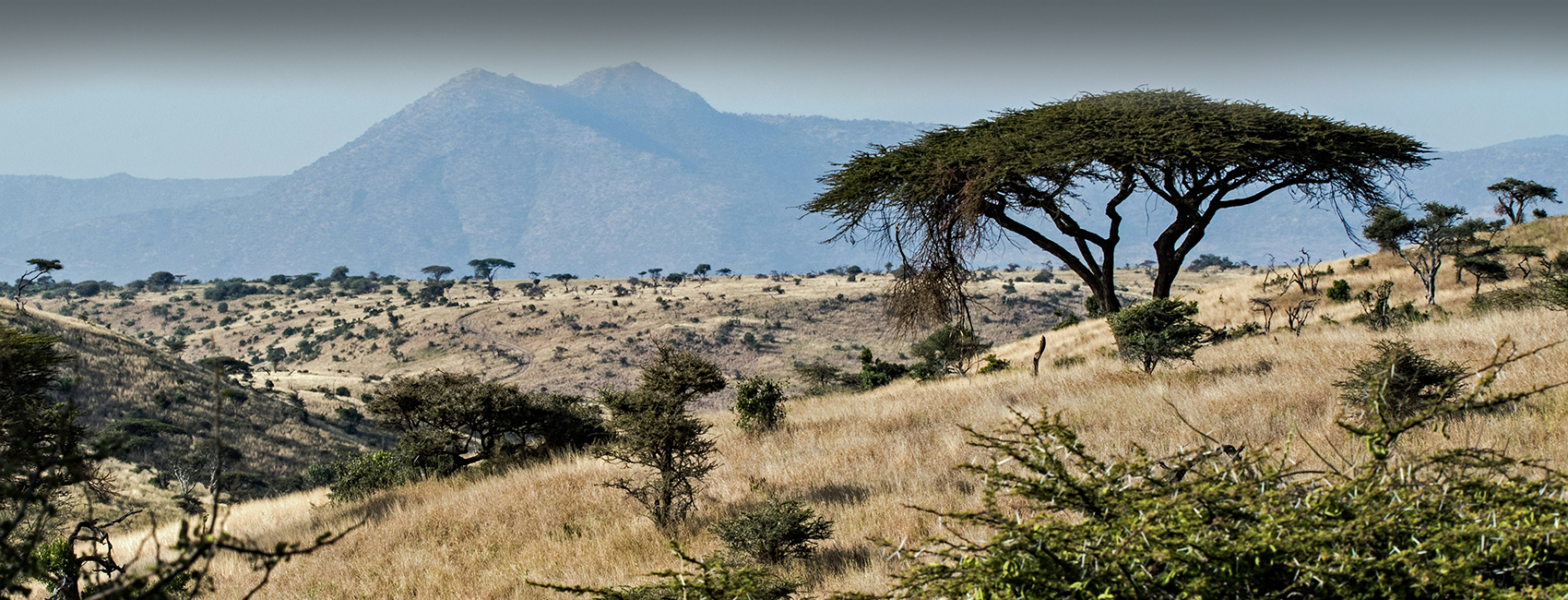
Mgahinga is Uganda’s smallest national park, covering approximately 33.7 square kilometres. Despite its size, it protects an important section of the Virunga ecosystem and provides habitat for endangered mountain gorillas and golden monkeys. Three volcanic peaks, Mount Gahinga, Mount Sabyinyo and Mount Muhabura dominate the surrounding landscape.
For travellers planning a Uganda safari, Mgahinga is worth considering for its gorilla trekking, mountain scenery and opportunities to explore the forest beyond the main wildlife encounter. Understanding the logistics, physical demands and limited permit availability helps you decide whether the park suits your travel plans.
Where Is Mgahinga Gorilla National Park?
Mgahinga Gorilla National Park is in Kisoro District in southwestern Uganda. The Muhabura Visitor Centre serves as the main starting point for gorilla trekking and several other park activities and Ntebeko serves as the main starting point for golden monkey tracking. Kisoro town lies approximately 14 kilometres away, although actual transfer times depend on road conditions and the location of your accommodation.
The park forms part of the wider Virunga Conservation Area, a transboundary landscape shared by Uganda, Rwanda and the Democratic Republic of Congo. Mountain gorillas move within this broader ecosystem, although visitors trek only in the designated park and tracking areas covered by their permits.
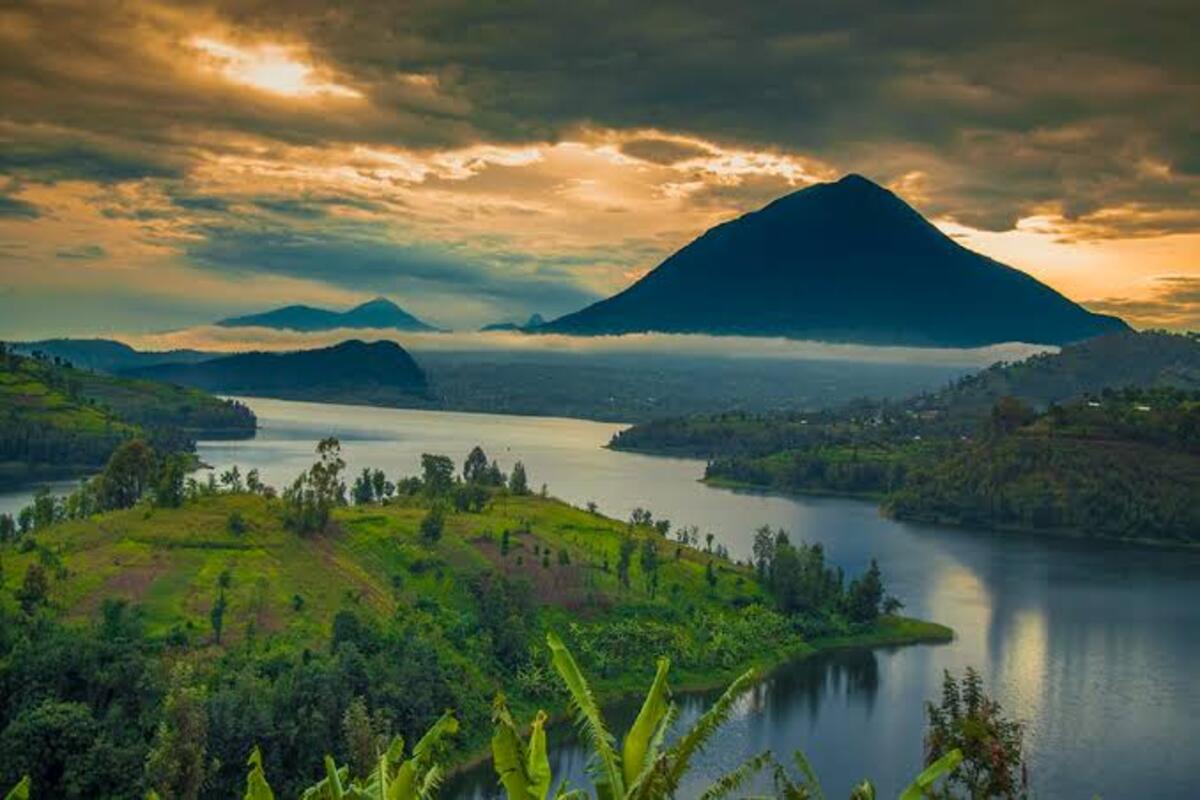
Volcanoes in Mgahinga
How do you get to Mgahinga?
Most visitors reach the park by road from elsewhere in Uganda or by domestic flight followed by a road transfer.
- From Kampala or Entebbe: The road journey to Kisoro takes approximately nine hours under favourable conditions, and sometimes longer. The route passes through Uganda’s southwestern highlands, with winding roads and changing road conditions.
- By domestic flight: Scheduled or charter flights may operate from Entebbe or Kajjansi to Kisoro Airstrip, subject to availability. Flight time is roughly 1 hour and 10 minutes, followed by a transfer to your lodge or the park.
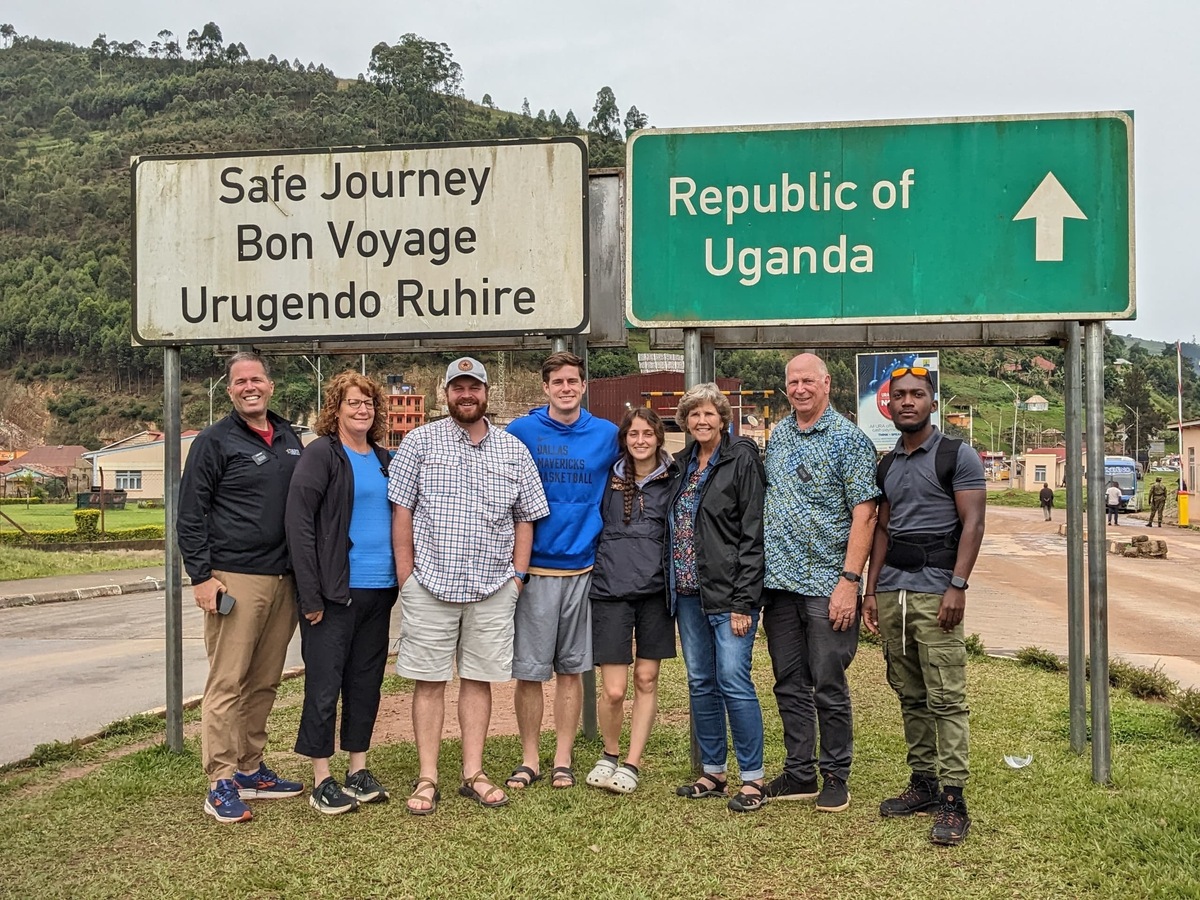
- From Rwanda: Travellers entering through Kigali may reach southwestern Uganda by road via the appropriate border crossing. Border formalities, immigration requirements and transfer arrangements need to be considered when planning the route.
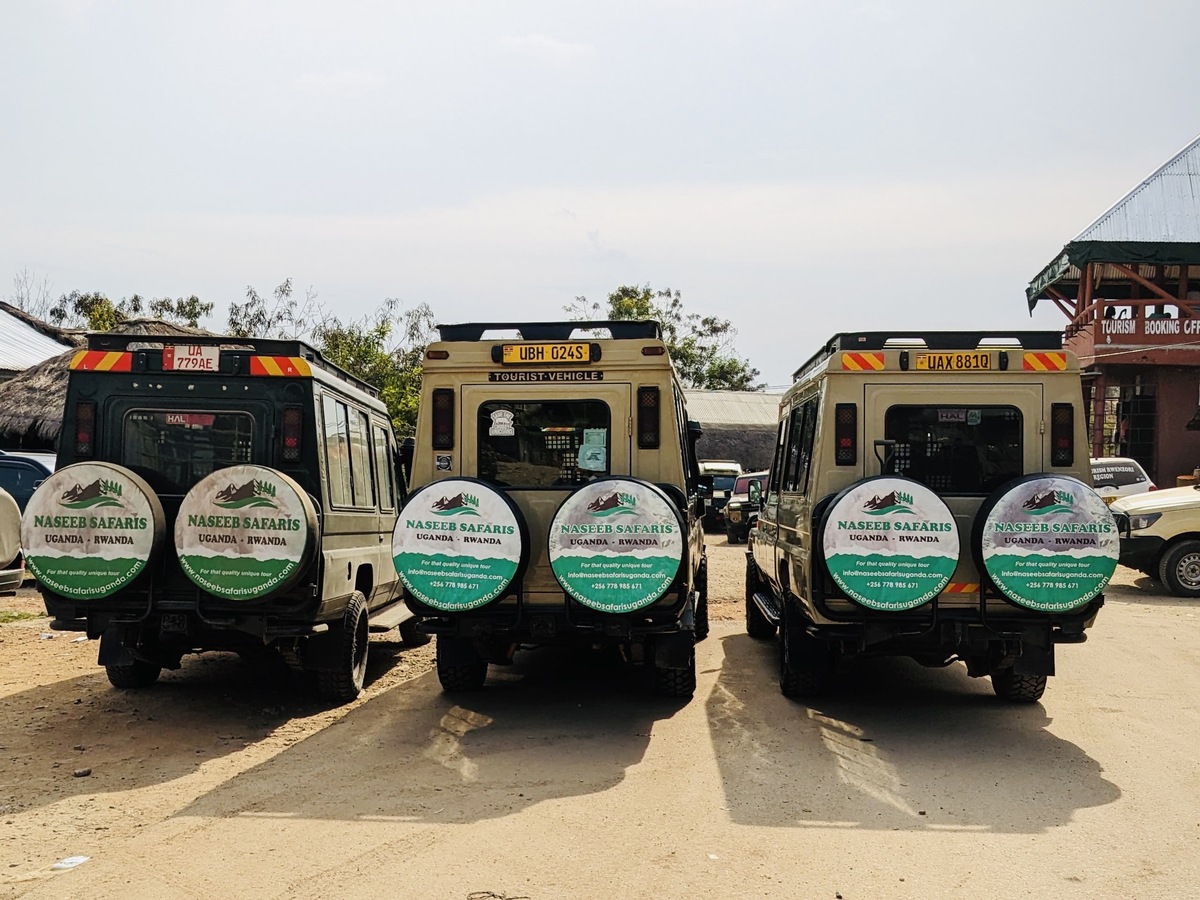
A suitable four-wheel-drive safari vehicle is advisable for a road-based itinerary, particularly when travelling on rural roads or during wet weather. If you fly, confirm baggage restrictions and the transfer time from the airstrip before arranging your trekking day.
Mgahinga works particularly well as part of a longer southwestern Uganda itinerary. Depending on your available time, you can combine it with Lake Bunyonyi, Lake Mutanda, Bwindi Impenetrable National Park or Queen Elizabeth National Park.
What Is Gorilla Trekking in Mgahinga Like?
The trekking day usually begins with a briefing at Muhabura Visitor Centre. Rangers explain the rules, outline what to expect and organise visitors before they enter the forest. The group then follows guides and trackers who use information about the gorillas’ movements to determine the direction of the trek.
There is no fixed walking route. Mountain gorillas move freely through their habitat, so the trackers must locate the group before guiding visitors towards it. Some treks take less time than others, and the distance covered can vary considerably.
The trek may take approximately three to seven hours, depending on the location of the gorillas. The actual viewing period is limited to one hour after the group is located.
The walk itself forms an important part of the experience. You may pass through bamboo stands, tangled undergrowth and forest clearings, with birds calling overhead and vegetation moving as other animals travel through the trees. The ground can be uneven, and rain can make exposed roots and slopes slippery.
When the trackers locate the gorillas, visitors approach under the guidance of the ranger. The animals may be feeding, resting, grooming or moving through the vegetation. Their behaviour cannot be predicted, and dense foliage sometimes makes photography difficult.
The ranger manages the encounter to protect both people and gorillas. Visitors need to remain calm, follow instructions and avoid moving closer simply to improve a photograph.
How Many Mountain Gorillas Can You See in Mgahinga?
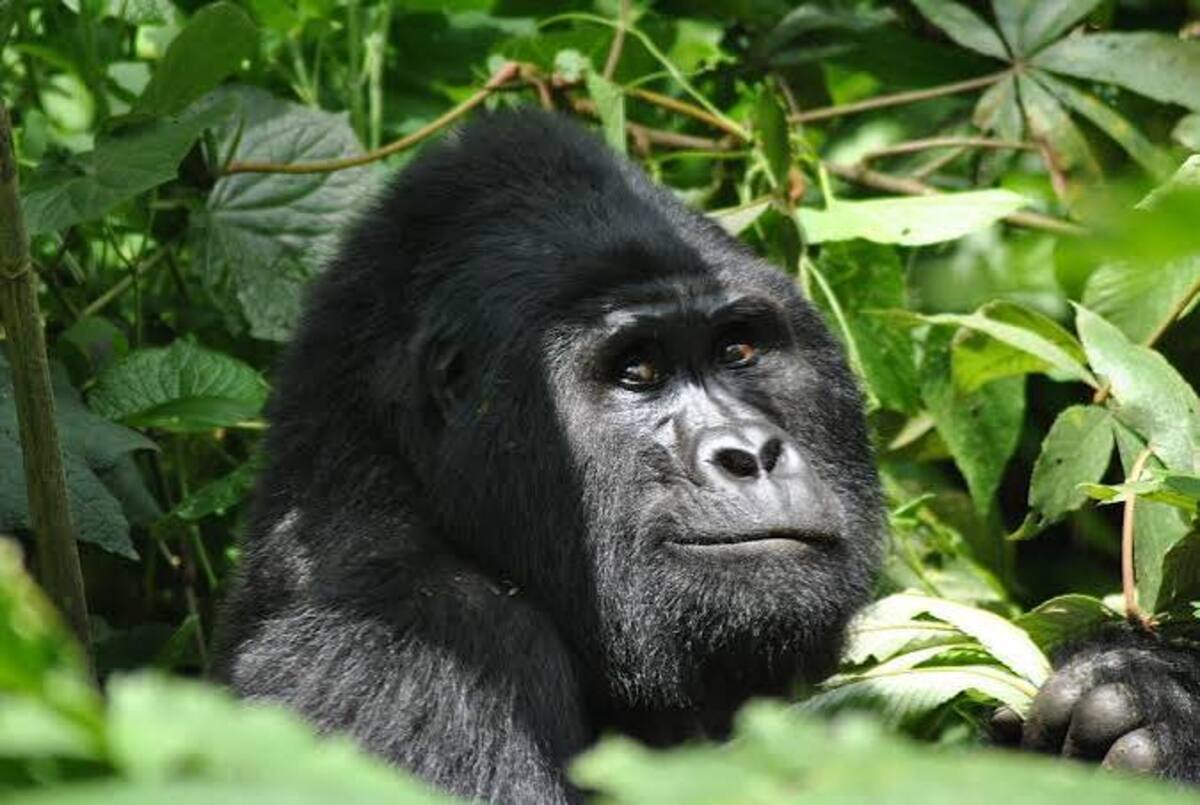
Mgahinga has one habituated transboundary mountain gorilla group available for tourism, commonly known as the Nyakagezi group. The park has traditionally allocated approximately eight permits per day for this group.The limited capacity makes advance planning especially important. If you have fixed international flights or only one available trekking day, check permit availability before committing to non-refundable accommodation and transport.
A permit allows you to participate in the designated gorilla trek; it does not guarantee a particular photograph, behaviour or length of walking time. The viewing period is limited to one hour, and the animals remain free to move through their habitat.
Mgahinga’s relatively small size should not be mistaken for a guarantee of an easy trek. The gorillas may be close to the starting point on one day and farther away on another.
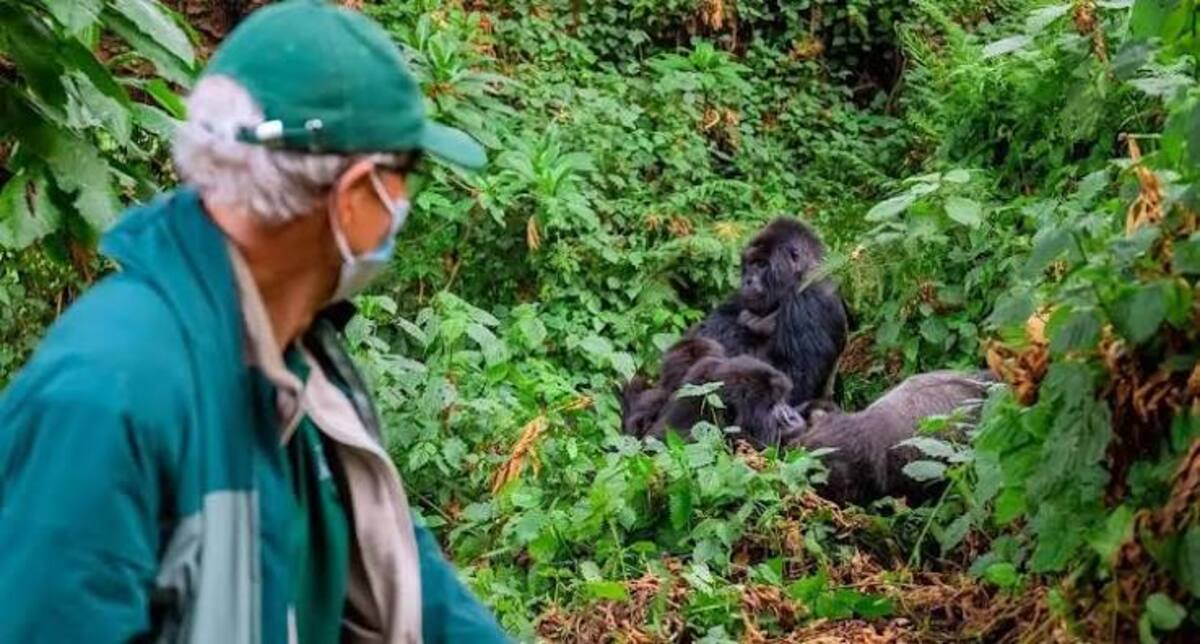
Tourist watching a family of gorillas
How Much Does Gorilla Trekking in Mgahinga Cost?
The gorilla permit is one of the main expenses to include in your Uganda safari budget. Currently, a permit for a foreign non-resident costs US$800 per person. Different rates apply to foreign residents and East African citizens.
The permit is separate from the overall safari price. Other expenses may include:
- Accommodation before and after the trek.
- Private safari vehicle, driver-guide and fuel.
- Meals and drinking water.
- Domestic flights, if required.
- Porter services, tips and personal expenses.
- Additional activities such as golden monkey tracking or volcano hiking.
Permit availability and accommodation availability are separate considerations. Even if a gorilla permit is available, your preferred lodge or flight may not be. For travel during busy periods, it is sensible to coordinate these arrangements rather than booking each component independently.
How Difficult Is Gorilla Trekking in Mgahinga?
Gorilla trekking can be physically demanding, particularly for visitors who are not accustomed to walking on hills or uneven ground. The park ranges from approximately 2,227 metres to 4,127 metres above sea level, and the volcanic terrain includes steep slopes and substantial changes in elevation.
The difficulty of an individual trek depends on the gorillas’ location, the weather, the condition of the trail and each visitor’s fitness. Mud can make walking slower, while dense vegetation sometimes requires careful footing.
You do not need to be an experienced mountaineer, but reasonable stamina and balance make the experience more manageable.
How should you prepare physically?
In the weeks before your safari, build up your walking routine. Regular walks, stair climbing and gentle hill training can help prepare your legs and improve your endurance. If you already hike, include longer walks on uneven surfaces.
On trekking day, move at a comfortable pace and tell your guide if you need a short break. Rushing to keep up with others can make the walk more tiring than necessary.
Porters are available to help carry daypacks and, where appropriate, provide support on difficult sections. Hiring a porter can make the trek easier while creating an income opportunity for someone from the surrounding community.
Is gorilla trekking suitable for visitors with limited mobility?
Not every trail is suitable for every traveller. There are no guaranteed flat, accessible routes, and the terrain can be slippery, steep and unpredictable. Visitors with mobility limitations or other concerns affecting their ability to walk should discuss their circumstances with their safari operator before booking.
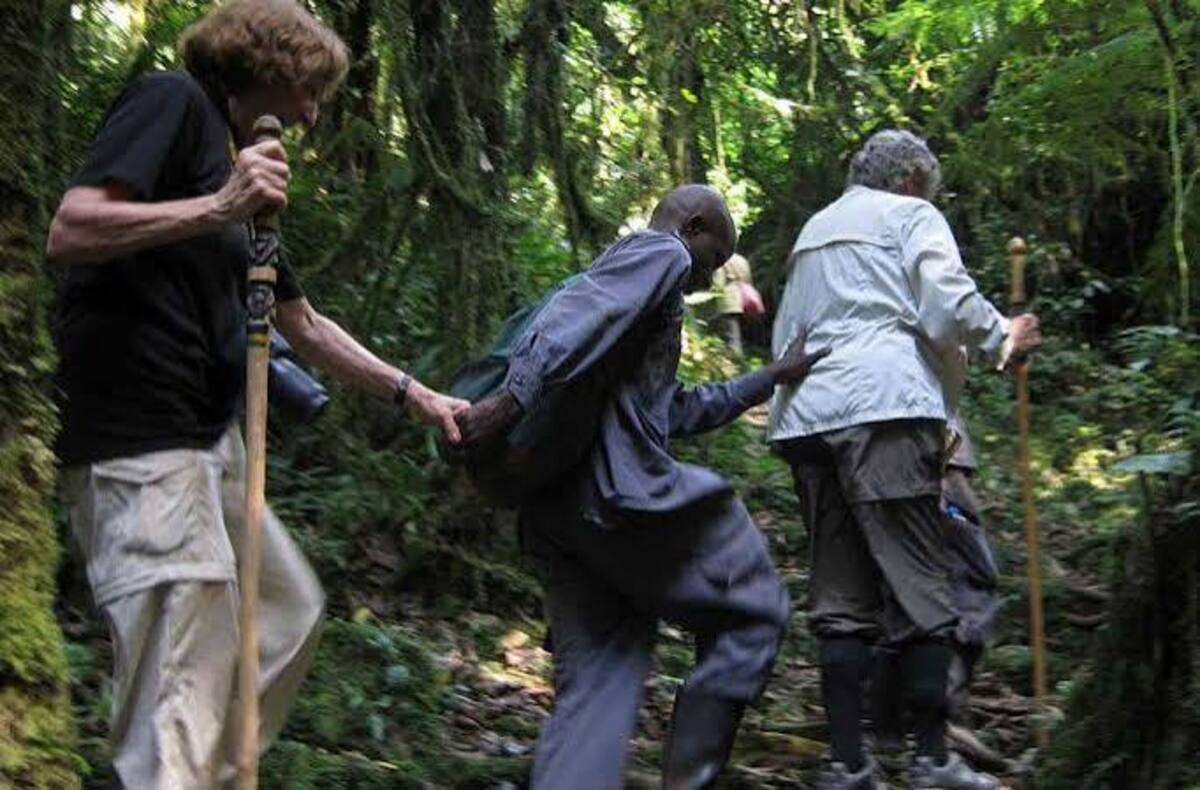
A porter assisting a traveller on a steep, muddy section of Bwindi trail
What Should You Pack for Gorilla Trekking?
Conditions in a mountain forest can change quickly, so practical clothing is more useful than elaborate safari outfits.
Pack the following items for the trekking day:
- Sturdy hiking boots with good grip.
- Long trousers and a long-sleeved shirt to protect against vegetation and insects.
- Waterproof jacket and a small daypack.
- Gardening gloves for gripping vegetation.
- Drinking water and suitable snacks for before or after the gorilla encounter.
- Sunscreen, insect repellent and personal medication.
- Walking poles, if you find them helpful.
- A camera or phone with sufficient battery and storage.
- Waterproof bags or covers for electronic equipment.
Choose clothing that allows you to move freely and does not restrict your legs when climbing. Neutral colours are practical, although the most important considerations are comfort, protection and suitability for wet conditions.
Carry only what you need. A heavy backpack becomes tiring on steep ground, and your porter can help with suitable items if you hire one.
Photography Tips for Mgahinga Gorilla Trekking
Forest photography presents different challenges from wildlife photography on open savannah. Light levels can be low beneath the canopy, and vegetation may obscure part of the gorillas even when you are standing at the permitted viewing distance.
A camera that performs well in low light is useful. If you use a phone, learn how to adjust exposure and focus before the trek. Bring spare batteries or a power bank where appropriate, and protect your equipment from rain.
Flash photography is prohibited. Visitors must also follow the ranger’s instructions regarding distance and positioning. Uganda’s published gorilla trekking guidance specifies a 10-metre viewing distance, although visitors should always follow the current instructions given by their ranger.
Do not push through vegetation or change position without permission to obtain a clearer view. Sometimes the best approach is to put the camera away for a moment and watch how the gorillas interact.
When Is the Best Time to Visit Mgahinga?
Gorilla trekking takes place throughout the year, but the weather affects trail conditions and the wider safari experience.
The relatively drier periods, generally around June to August and December to February, often provide more favourable conditions for walking. April, May and parts of the later wet season can bring heavier rainfall and muddier trails. These are broad seasonal patterns rather than guarantees; rain can occur in any month in a mountain rainforest.
Wet weather does not necessarily prevent trekking, but it can make the walk slower and more physically demanding. A waterproof jacket and suitable boots remain important regardless of when you travel.
Your choice of dates should also account for permit availability, accommodation, domestic flight schedules and the other places you intend to visit. If you plan to combine Mgahinga with Queen Elizabeth National Park or Bwindi, allow enough time for road transfers rather than trying to fit every activity into a tight schedule.
Where Should You Stay Near Mgahinga?
Accommodation is available around Ntebeko, in Kisoro and near Lake Mutanda. Options range from simpler guesthouses and budget lodges to more comfortable properties with additional facilities.
Your best choice depends on your budget, preferred setting and transport arrangements.
Near Ntebeko: Staying close to the park can reduce the early-morning transfer before the briefing. This is worth considering if gorilla trekking is your main reason for visiting.
In Kisoro: The town offers access to local services and a range of accommodation options. It can also work well for travellers arriving by road or air.
Around Lake Mutanda: This area offers a lakeside setting and can suit visitors who want to spend extra time enjoying the landscape or add other activities to their itinerary.
When comparing properties, check the actual driving distance to Ntebeko, meal arrangements, room facilities and whether transfers are included. A lodge’s advertised category does not always tell you how convenient it is for an early start.
If you intend to trek on consecutive days or combine gorilla trekking with golden monkey tracking, discuss the most practical overnight arrangements before confirming your accommodation.
What Else Can You Do in Mgahinga?
Gorilla trekking is the park’s best-known activity, but there are other ways to explore its forests and volcanic landscape.
Golden monkey tracking
Golden monkeys are associated with the Virunga Mountains and are another important reason to visit Mgahinga. Tracking takes visitors into forest habitat where these lively primates move through bamboo and other vegetation.
Their movements can make photography challenging, so a little patience is useful. Ask about current permit prices, departure times and the expected duration when planning the activity.
Hiking the Virunga volcanoes
Mount Gahinga, Mount Sabyinyo and Mount Muhabura offer hiking opportunities for visitors interested in mountain landscapes. These are separate activities from gorilla trekking and require their own preparation, appropriate footwear and guidance.
The difficulty varies by mountain and route. Check current hiking arrangements and realistic time requirements before adding a climb to your itinerary.
Batwa cultural experiences
The Batwa are Indigenous people with a long history of living in the forests of this region. A Batwa cultural experience can help visitors learn about their historical relationship with the forest, traditional knowledge and the changes that followed conservation restrictions and displacement.
Choose an experience that treats participants respectfully and allows local people to present their knowledge and culture on their own terms.
These activities can make a longer stay worthwhile, particularly for travellers who prefer a slower itinerary rather than arriving for a single trek and departing immediately.
Mgahinga or Bwindi: Which Is Better for Gorilla Trekking?
Uganda offers mountain gorilla trekking in both Mgahinga Gorilla National Park and Bwindi Impenetrable National Park. Neither is automatically the better choice; the right option depends on your route, available permits and the experience you want.
Mgahinga is compact and dominated by the Virunga volcanoes. It suits travellers interested in combining gorilla trekking with golden monkey tracking, volcano hiking, Kisoro or Lake Mutanda. Its limited gorilla trekking capacity makes early permit checks particularly important.
Bwindi is a much larger forest with several trekking sectors, including Buhoma, Ruhija, Rushaga and Nkuringo. The sector matters because driving distances between them can be substantial. Your accommodation should correspond to the trekking sector on your permit rather than simply carrying the name Bwindi.
Both destinations involve forest trekking, changing weather and some uncertainty over walking time. Neither guarantees an easy route or a particular gorilla encounter.
If you are still deciding, compare the parks in the context of your complete itinerary, including where you arrive in Uganda, which other parks you plan to visit and how much time you have available.
Responsible Gorilla Trekking and Safety
Mountain gorilla tourism depends on strict controls that reduce disturbance and limit the risk of transmitting human illnesses to gorillas.
Follow your ranger’s instructions throughout the trek. Do not visit when you have symptoms of an infectious illness, and tell your operator before departure if you become unwell. Keep the required distance from the gorillas, never touch them, do not feed them and avoid flash photography. Current rules take precedence over any general advice in a travel guide.
If a gorilla approaches, remain calm and follow the ranger’s instructions rather than trying to move closer or take a photograph. Do not leave the group without permission.
Other practical considerations include:
- Carry out all rubbish, including food wrappers and used tissues.
- Avoid loud noises and sudden movements around wildlife.
- Use established routes and do not damage vegetation unnecessarily.
- Consider hiring a porter if you need assistance or want to support local livelihoods.
- Tip guides, trackers and porters according to the service received and your budget; ask your operator if you need guidance on customary arrangements.
For general travel safety, keep valuables secure, use a reputable safari operator and confirm road transfers and accommodation before travelling. Follow current government travel advice and local guidance, particularly when crossing international borders.
Responsible tourism is not only about following rules during the hour with the gorillas. It also means respecting the communities and conservation systems that help protect their habitat.
Frequently Asked Questions About Gorilla Trekking in Mgahinga
How long does gorilla trekking in Mgahinga take?
A trek can take approximately three to seven hours, depending on where the gorillas are and the conditions along the route. The permitted viewing time with the gorillas is one hour. Allow most of the day for the activity rather than planning another major excursion immediately afterwards.
What is the minimum age for gorilla trekking in Mgahinga?
The minimum age for gorilla trekking in Uganda is 15 years. Families travelling with younger children should confirm the rules and consider alternative activities for anyone who cannot participate.
Is gorilla trekking in Mgahinga difficult?
It can be moderately to very demanding, depending on the gorillas’ location, elevation changes, vegetation and weather. Regular walking and hill training help prepare you, but no level of fitness guarantees an easy trek.
Can you see gorillas in Mgahinga throughout the year?
Gorilla trekking operates year-round, subject to official arrangements and permit availability. Weather affects trail conditions, while the gorillas’ movements influence how far visitors walk.
How much is a Mgahinga gorilla permit?
US$800 per foreign non-resident. Confirm the applicable tariff for your travel date, as rates and booking arrangements can change.
How far in advance should I book?
Book as early as practical if your dates are fixed. Mgahinga has limited daily gorilla trekking capacity, and accommodation and domestic flights may also have restricted availability during busy periods.
Can I combine Mgahinga with Bwindi or Queen Elizabeth National Park?
Yes. Both combinations are possible, but the route needs careful planning because driving times can be long. The best itinerary depends on the number of days available, permit dates and your preferred activities.
Is Mgahinga suitable for first-time safari visitors?
Yes, provided you understand that gorilla trekking involves walking in a mountainous forest rather than viewing wildlife from a vehicle. Good preparation, realistic expectations and a well-planned itinerary make the experience easier to manage.
Is Mgahinga Right for Your Uganda Safari?
Gorilla trekking in Mgahinga is as much about entering a mountain forest as it is about seeing mountain gorillas. The walk follows a landscape shaped by volcanic slopes, changing weather and the movements of wild animals. You cannot know exactly how far you will walk or what the gorillas will be doing when you arrive, and that uncertainty is part of the experience.
The key is to prepare for the practical realities: secure the appropriate permit, choose accommodation that suits your route, allow enough time for travel and arrive ready for uneven terrain. If you have additional days, golden monkey tracking, volcano hiking and a Batwa cultural experience provide different ways to understand this remarkable corner of southwestern Uganda.
For travellers who value a forest-based wildlife experience and want to explore the Virunga landscape, Mgahinga deserves serious consideration when planning a Uganda safari.
If you are considering a visit, Naseeb Safaris can help you plan a private Uganda safari around your travel dates, gorilla permit availability, accommodation preferences and preferred activities. Contact the team at info@naseebsafarisuganda.com or WhatsApp +256 778 985 671 to discuss a practical itinerary.