
Top Birding Places in Uganda: Best Birdwatching Destinations
Top Birding Places in Uganda: Best Birdwatching Destinations, Uganda is one of those countries where birdwatching naturally becomes part of the wider safari experience. In a single journey, you can move from papyrus wetlands and tropical forest to open savannah, riverbanks and high-altitude habitats. Each environment brings a different set of birds, which is why there is no single answer to the question of the best birding destination in Uganda.
For first-time visitors, the more useful question is: which habitats and species do you want to experience, and how much time do you have?
A canoe excursion in search of a shoebill at Mabamba is very different from listening for forest birds in Bwindi. Murchison Falls and Queen Elizabeth National Park, meanwhile, allow you to combine birdwatching with a more traditional wildlife safari.
The best itinerary usually follows your interests rather than trying to visit every birding site in the country.
Mabamba Swamp: A Practical Place to Search for the Shoebill
For many international birdwatchers, Mabamba Swamp is an obvious starting point because of its reputation for shoebill sightings.
Located on the Lake Victoria system west of Entebbe, the wetland is made up of papyrus channels and shallow waterways. Exploring it by canoe gives you a quieter perspective than a conventional game drive. A local guide searches the vegetation for movement while you watch and listen.
Shoebills can remain remarkably still, so finding one is not simply a matter of arriving at the wetland and expecting to see it. A knowledgeable local guide can make a significant difference.
There is also no guarantee of a wild shoebill sighting. That is part of birdwatching. Even without the main target, the canoe journey provides opportunities to observe other wetland species and experience an important Lake Victoria habitat.
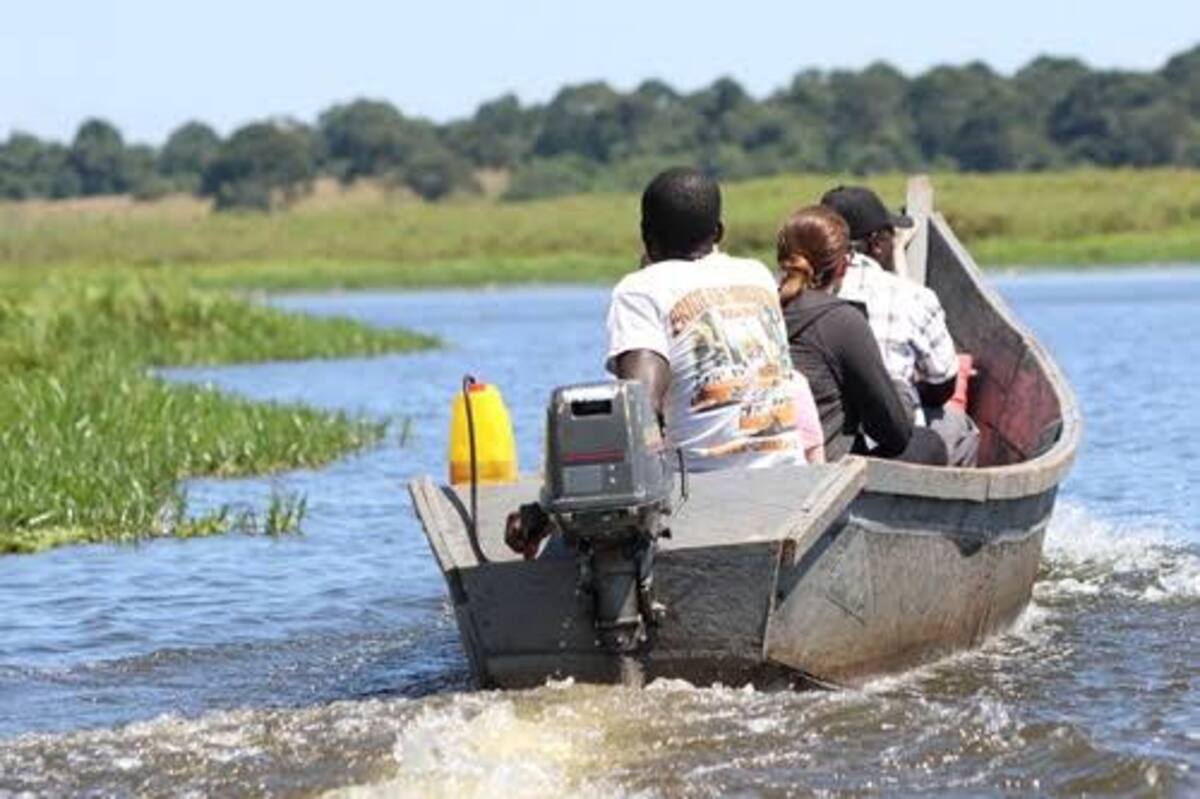
A traditional canoe moving quietly through Mabamba’s papyrus channels
Bwindi Impenetrable National Park: Forest Birding in the Albertine Rift
Bwindi is famous for mountain gorilla trekking, but it is also an important destination for visitors interested in the birds of the Albertine Rift.
The experience is very different from birding in open savannah. Dense vegetation can make birds difficult to locate, and you may hear a call several times before finally finding its source. Some species stay high in the canopy, while others move rapidly through the undergrowth.
This means forest birding rewards patience rather than speed.
The physical demands also matter. Trails can be steep, uneven and muddy depending on the route and weather. If you are already visiting for gorilla trekking, adding a birding experience can make good use of your time in the forest, although you should avoid packing too many strenuous activities into the same day.
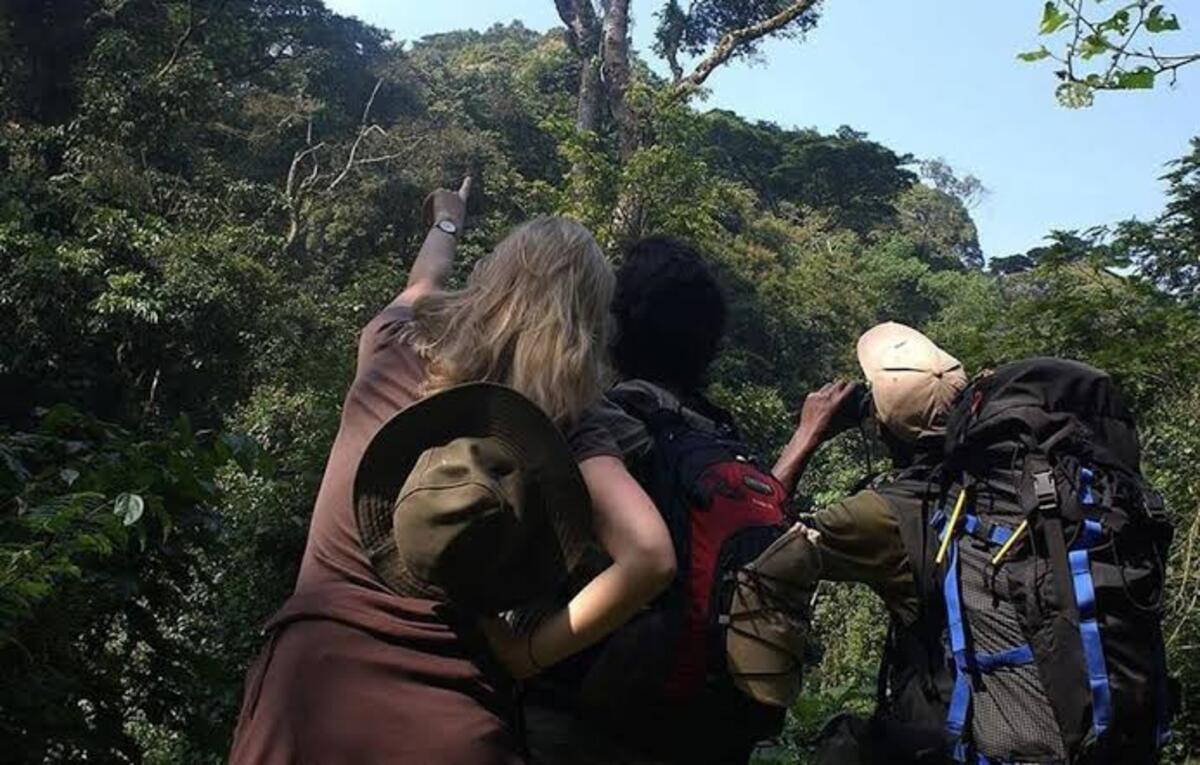
A local birding guide quietly identifying a bird while visitors watch
Murchison Falls National Park: Birding and Big Game
Murchison Falls works particularly well for travellers who want birds to be part of a broader Uganda safari rather than the sole purpose of the trip.
The park brings together savannah, woodland, wetlands and riverine habitats. The Nile and Albert Delta are especially interesting for waterbirds, and a boat cruise allows you to watch birds along the shoreline while also seeing hippos, crocodiles and other wildlife.
Game drives add another dimension. In the open country, it is easier to scan for raptors, hornbills and other savannah birds while also looking for elephants, giraffes, buffaloes and antelope.
The park also provides opportunities to search for the shoebill, particularly around its wetland areas.
For a first-time visitor who wants a conventional safari with serious opportunities for birdwatching, Murchison Falls is a particularly practical choice.
Kibale Forest and Bigodi Wetland: Birds Alongside Chimpanzees
Kibale is primarily known for chimpanzee tracking, but the surrounding habitats also make it useful for birdwatchers.
Inside the forest, birding often begins with listening. A call from somewhere above the trail may be the first indication that a bird is nearby. Finding it among dense foliage can take considerably longer.
Nearby Bigodi Wetland provides a completely different environment. The community-managed wetland supports birdlife and primates and offers a more relaxed walking experience than some of the forest trails.
For travellers interested in several aspects of nature, Kibale fits naturally into a western Uganda itinerary. A morning chimpanzee experience, for example, can be followed by a wetland walk before continuing towards Queen Elizabeth National Park.
Queen Elizabeth National Park: Birding Around the Kazinga Channel
Queen Elizabeth National Park is another strong option when birdwatching needs to share space with conventional wildlife viewing.
The park’s grasslands, woodland, lakes and wetlands support a wide variety of habitats. It is also known for elephants, buffaloes, lions, hippos and other wildlife.
The Kazinga Channel is particularly convenient for birdwatchers. A boat cruise brings visitors close to the shoreline, where waterbirds can be watched without requiring a long forest walk. Hippos and other animals gather around the water as well.
This makes Queen Elizabeth a good choice for travellers who do not want a specialist birding holiday but still want meaningful opportunities to watch birds during a safari.
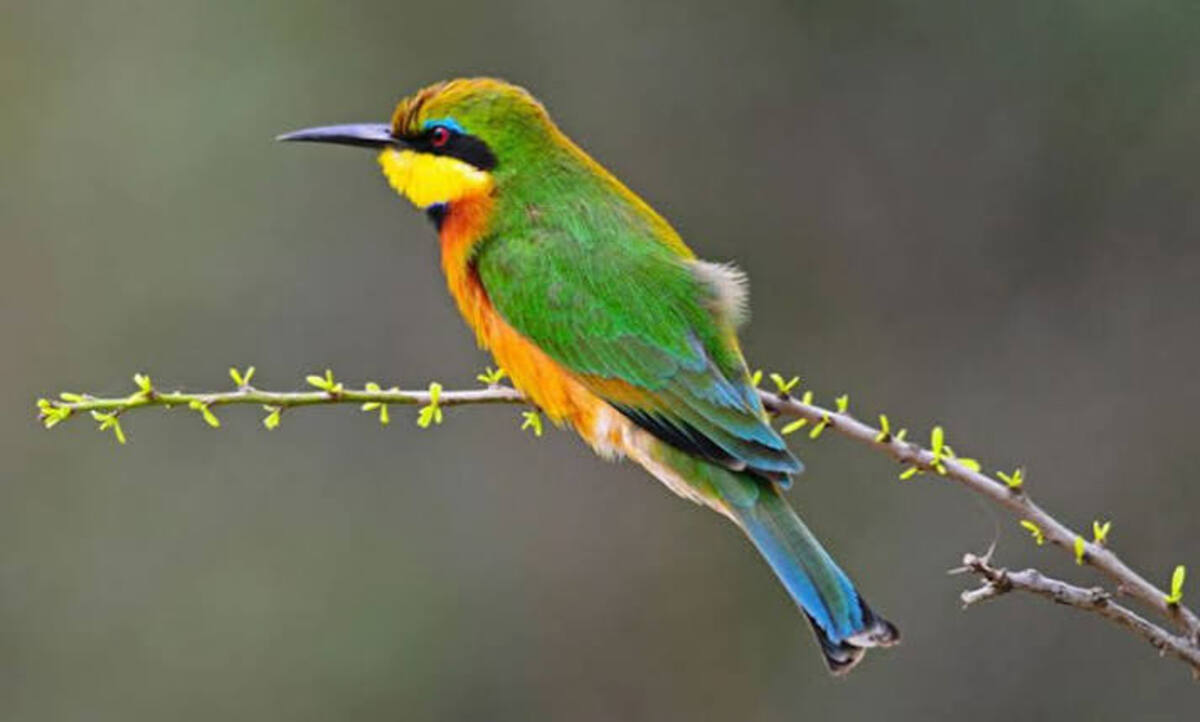
Little Bee eater
Semuliki National Park: For Specialist Forest Birding
Semuliki offers a very different birding experience from Uganda’s savannah parks.
Its forests have strong Central African influences, and the area is associated with Guinea-Congo regional bird species. For experienced birdwatchers, this adds habitats and species that may not feature on a conventional western Uganda safari.
The forest is humid and dense, and identifying birds often depends as much on recognising calls as seeing them clearly.
Semuliki therefore makes more sense for travellers with a genuine interest in forest birding than for someone looking for a quick stop between other destinations. It can also be combined with time around Fort Portal city, Uganda’s tourism city and the surrounding crater-lake region.
Lake Mburo National Park: Accessible Savannah and Wetland Birding
Lake Mburo offers a mixture of grassland, woodland and papyrus wetlands.
It is also conveniently positioned for travellers moving between Kampala and southwestern Uganda, making it easier to include without adding a major detour to an itinerary.
Birding can be combined with game drives, boat trips and guided walks. Walking is particularly useful because it slows the experience down. Instead of scanning the landscape from a vehicle, you have more opportunity to listen for calls, examine vegetation and notice smaller species.
For travellers looking for a balanced safari rather than a dedicated birding expedition, Lake Mburo can be a sensible addition.
Kidepo Valley National Park: Birding in Northern Uganda
Kidepo introduces another side of Uganda.
The dry savannah and semi-arid landscapes are markedly different from the humid forests and wetlands found elsewhere in the country. For dedicated birders building a broad national list, this change in habitat can be particularly rewarding.
The main consideration is time. Kidepo requires considerably more travel than destinations closer to Kampala or Entebbe.
It is therefore less practical for a short birding holiday, but travellers already planning to explore northern Uganda can incorporate birdwatching naturally into their journey.
Mount Elgon and Sipi: Eastern Uganda’s Montane Birding
Mount Elgon National Park provides access to higher-altitude forest and montane habitats in eastern Uganda.
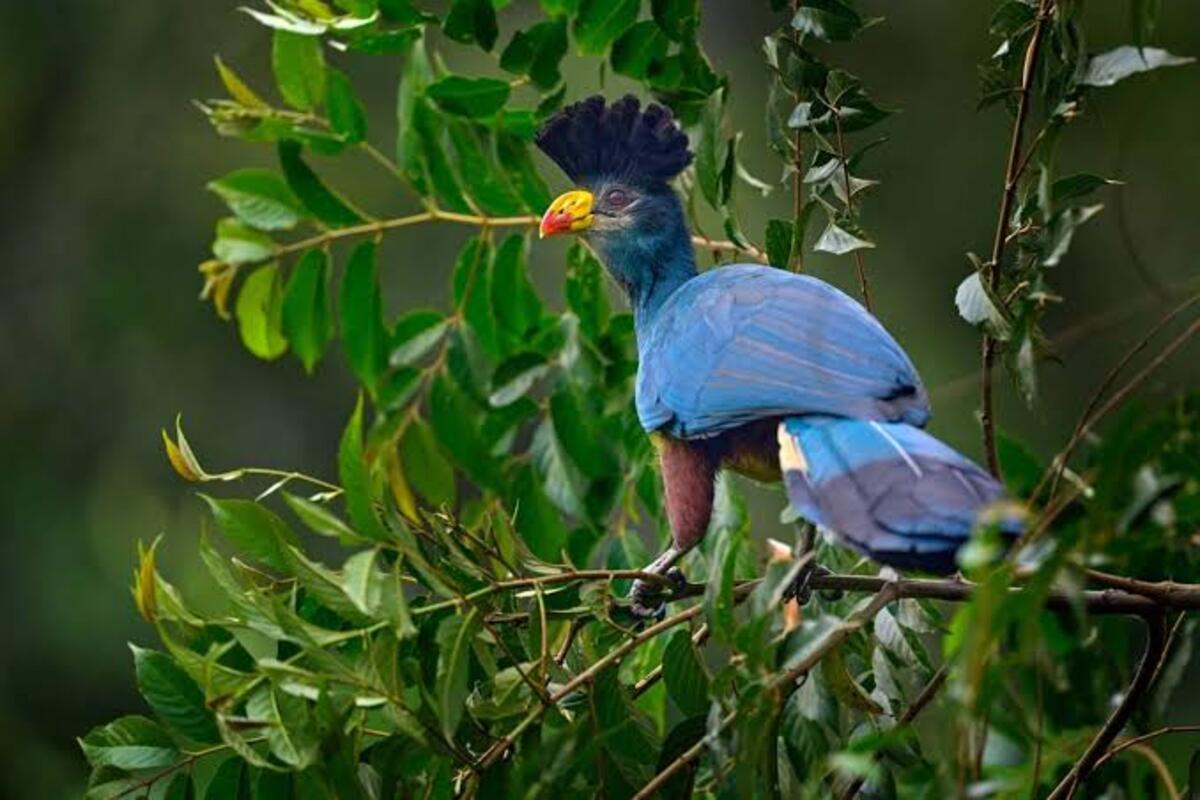
Birding around the Kapkwai area near Sipi is associated with species including Hartlaub’s turaco and other eastern montane birds. The region also works well for travellers who want to combine birdwatching with hiking and time around Sipi Falls.
It offers a useful contrast to the western forests and lowland savannah parks.
Ziwa Rhino and Wildlife Ranch: Rhinos and Wetland Birds
Ziwa is best known for its southern white rhinos, but its wetlands also provide opportunities for birdwatching, including searches for shoebills.
Its location along the Kampala–Gulu route makes it particularly convenient when travelling towards Murchison Falls. Combining rhino tracking with wetland birding can turn a transfer day into another wildlife experience rather than simply a long journey between destinations.
Mabira Forest: An Accessible Forest Birding Stop
Mabira Forest is useful for travellers who want a taste of tropical forest birding without travelling as far west as Bwindi or Kibale.
Located between Kampala and Jinja, it can fit naturally into an eastern Uganda itinerary. It is particularly useful when time is limited and a dedicated birding safari is not practical.
A forest walk here can become part of a wider journey towards Jinja or Mount Elgon rather than requiring a separate trip.
When Is the Best Time for Birdwatching in Uganda?
Uganda can be visited for birdwatching throughout the year because resident species remain present across the seasons.
The source material identifies late May to September as a favourable period, with less rain and abundant food, while December and January can also be productive.
The wetter months should not automatically be dismissed. Migratory birds can add interest at certain times, although heavier rainfall can make some roads and forest trails more difficult.
If birds are only one part of your holiday, it is usually more sensible to choose dates that work well for the entire safari rather than planning the whole trip around birding alone.
Internal link suggestion: Best Time to Visit Uganda
How to Choose Your Uganda Birding Destinations
Start with the species and habitats that interest you most.
- Shoebill:Mabamba is a practical place to begin.
- Albertine Rift birds:Bwindi and Mgahinga are important options.
- Guinea-Congo forest species:Consider Semuliki.
- Birds combined with classic safari:Murchison Falls, Lake Mburo, Kidepo valley and Queen Elizabeth are strong choices.
- Forest and wetland birding:Kibale and Bigodi provide contrasting habitats.
- Montane birding:Mount Elgon and Sipi offer a different environment.
For a first Uganda safari, a mixed itinerary is often more practical than trying to cover every specialist birding destination. A route combining Mabamba, Kibale, Queen Elizabeth and Bwindi, for example, introduces wetlands, tropical forest, savannah and Albertine Rift habitats while leaving room for chimpanzees, gorillas and conventional wildlife viewing.
What Should You Pack for a Uganda Birding Safari?
A good pair of binoculars is the most useful piece of equipment for most visitors. A camera with a telephoto lens helps, but serious photography equipment is not essential to enjoy the experience.
Useful items include:
- Comfortable walking shoes
- Lightweight clothing
- Hat and sunscreen
- Insect repellent
- Waterproof jacket
- Small waterproof bag for cameras and phones
- Bird field guide or reliable identification app
Forest birding also teaches an important lesson: listen as much as you look. A bird that refuses to appear clearly may still reveal itself through its call.
Frequently Asked Questions About Birding in Uganda
What is the best birding destination in Uganda?
There is no single destination that suits every birder. Mabamba is particularly useful for shoebill searches, Bwindi for Albertine Rift birds, Semuliki for Guinea-Congo forest species, and Murchison Falls for combining birdwatching with traditional wildlife viewing.
Where can I see a shoebill in Uganda?
Mabamba Swamp is one of Uganda’s best-known shoebill locations. The Albert Delta around Murchison Falls also provides an opportunity to search for the species.
Can I combine birdwatching with gorilla trekking?
Yes. Bwindi is particularly suitable because birding and gorilla trekking can be combined within the same broader itinerary. Both activities can be physically demanding, however, so allow realistic walking time and adequate rest.
Do I need a specialist birding guide?
Not always. A general safari guide can identify many common species, but dedicated birders can benefit considerably from a specialist who understands bird calls, habitats and target species.
How many days do I need for birdwatching in Uganda?
A short trip can concentrate on one destination such as Mabamba. A dedicated birding safari covering several habitats can require 10 days or considerably longer. The more regions and species you want to include, the more time you should allow.
Planning a Birding Safari in Uganda
Uganda’s greatest advantage for birdwatchers is the variety of environments within one country. A quiet canoe journey through Mabamba’s papyrus feels completely different from searching the canopy in Bwindi. The open landscapes of Murchison Falls and Kidepo introduce another set of habitats, while Semuliki and Mount Elgon offer still more specialised environments.
You do not need to see everything.
A better approach is to identify the birds and habitats that matter most to you, build a realistic route around them and allow enough time at each location. Wildlife is unpredictable, and some of the most rewarding moments may come from a species you were not expecting to find.
A birding safari is ultimately about more than the number of species on a checklist. It is learning to recognise a call from deep inside the forest, watching movement among papyrus stems or understanding why a particular bird belongs to a particular habitat.
If you are planning to combine birdwatching with gorilla trekking, chimpanzee tracking or a classic Uganda wildlife safari, Naseeb Safaris can help you build a route around your interests, available time and preferred travel style.