
What to Wear for Gorilla Trekking in Uganda
What to Wear for Gorilla Trekking in Uganda, Planning a gorilla trek in Uganda involves more than securing a permit. The right clothing can make the difference between spending the day adjusting uncomfortable gear and fully enjoying one of Africa’s most rewarding wildlife experiences.
The forests of southwestern Uganda are beautiful but demanding. Trails can be muddy, vegetation is often thick, and weather changes quickly, even during the drier months. You might spend just an hour walking to your assigned gorilla family or several hours climbing steep, uneven slopes before reaching them.
The good news is that you don’t need expensive expedition equipment. Practical, comfortable hiking clothing that protects you from rain, insects, thorny plants, and changing temperatures is usually all that’s required.
This guide explains exactly what to wear for gorilla trekking in Uganda, what to leave behind, and how to pack with confidence whether you are visiting Bwindi Impenetrable National Park or Mgahinga Gorilla National Park.
Who is this guide for?
Whether you’re an experienced hiker or preparing for your first safari, these recommendations will help you arrive well prepared without packing more than you need.
Why Your Clothing Matters More Than You Might Expect
Many first-time visitors imagine gorilla trekking as a leisurely walk through the forest. In reality, every trek is different.
Your assigned gorilla family may be relatively close to the starting point, or it could require several hours of hiking through steep valleys, dense vegetation, and muddy trails. Rangers adjust the pace to suit the group, but conditions depend on where the gorillas chose to spend the previous night.
Rather than dressing for a single weather forecast, it’s better to prepare for several conditions in one day.
You could experience:
- A cool morning at higher elevations
- Warm, humid conditions while climbing
- Sudden tropical rain showers
- Wet grass and muddy paths
- Thorny shrubs and stinging nettles
- Low branches and dense undergrowth
Good clothing isn’t about looking like an explorer. It’s about staying dry, protected, and comfortable enough to focus on the wildlife rather than your gear.
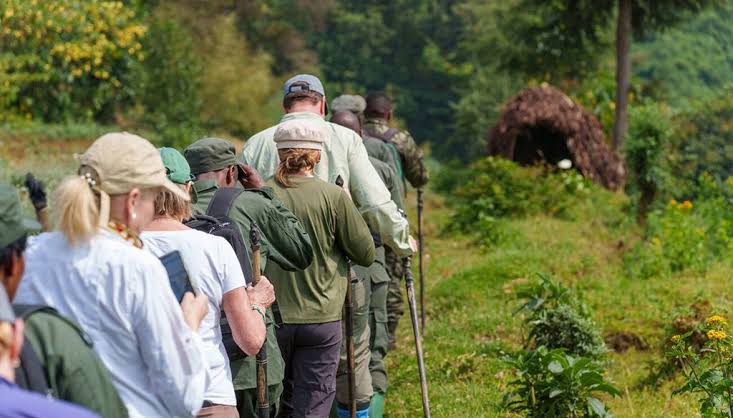
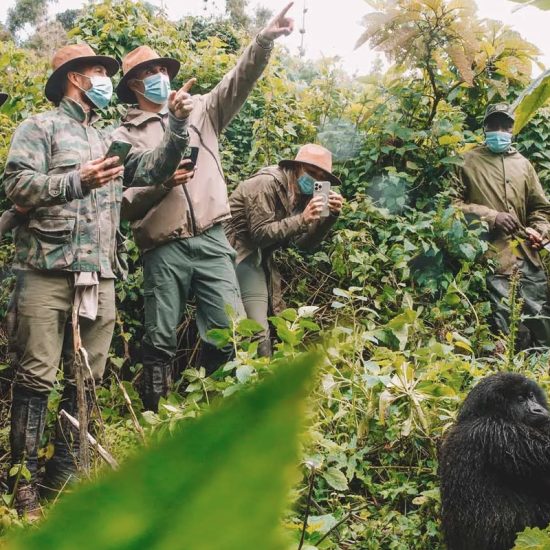
Tourists trekking to find mountain gorillas
Understanding Uganda’s Gorilla Trekking Environment
Mountain gorillas live in high-altitude tropical rainforest, generally between 1,200 and 2,600 metres above sea level. These forests receive rainfall throughout the year, which keeps the vegetation lush but also means trails can remain damp even during the dry season.
Expect a combination of:
- Thick rainforest vegetation
- Uneven forest paths
- Tree roots and loose rocks
- Muddy sections after rain
- High humidity beneath the canopy
- Cooler temperatures in the early morning
The duration of a trek varies considerably. Some visitors reach their gorilla family within an hour, while others may spend five or six hours hiking before the encounter begins.
This uncertainty is exactly why experienced guides recommend clothing that is lightweight, breathable, and easy to layer.
First-time traveler tip: Don’t assume a shorter trek means easier terrain. Even nearby gorilla families may require climbing steep or slippery sections of forest.
Essential Clothing for Gorilla Trekking
-
A Lightweight Long-Sleeved Hiking Shirt
A breathable long-sleeved hiking shirt is one of the most useful pieces of clothing you’ll pack.
Although Uganda’s rainforest is rarely cold during the day, long sleeves protect your skin from scratches, insects, and the stinging plants commonly found along forest trails.
Look for shirts made from technical hiking fabrics rather than cotton.
Features worth choosing
- Moisture-wicking material
- Quick-drying fabric
- Lightweight construction
- Ventilation panels
- UPF sun protection if available
Neutral colours also work best.
Choose shades such as:
- Olive green
- Khaki
- Brown
- Grey
- Dark green
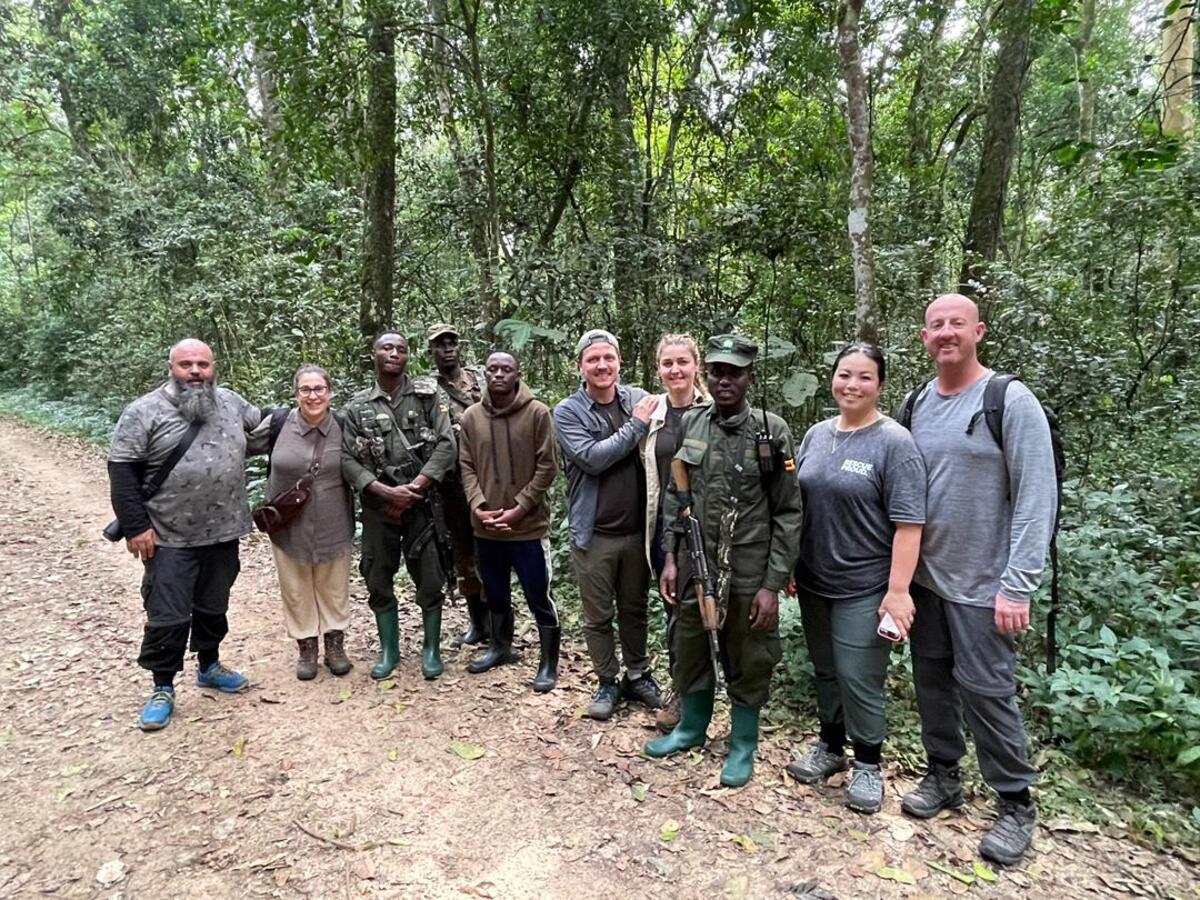
These colours are practical, show less dirt, and blend naturally into the forest environment.
Avoid bright colours, which may attract insects and stand out unnecessarily in wildlife areas.
-
Long Hiking Trousers
If there’s one piece of advice nearly every guide agrees on, it’s this: leave the shorts behind.
Long trousers protect your legs from:
- Thorny plants
- Stinging nettles
- Insect bites
- Scratches from branches
- Mud splashes
In many places, rangers use machetes to open sections of trail through dense vegetation. Long trousers provide valuable protection throughout the hike.
Stretchy trekking trousers designed for hiking are ideal because they allow easy movement on steep slopes.
Look for trousers that are:
- Lightweight
- Quick drying
- Durable
- Water resistant
- Comfortable for climbing
Convertible zip-off trousers can be useful during the rest of your Uganda safari, although you’ll almost always keep the lower sections attached during the trek itself.
-
Waterproof Hiking Boots
Footwear is arguably the single most important part of your trekking outfit.
Forest trails are rarely flat. Depending on recent rainfall, they may include slippery mud, exposed tree roots, rocky sections, or steep descents.
Supportive hiking boots help reduce fatigue and provide better stability throughout the day.
Choose boots with:
- Waterproof lining
- Good ankle support
- Deep tread for grip
- Comfortable cushioning
- Durable soles
Break them in before travelling
One of the most common mistakes first-time trekkers make is arriving with brand-new boots.
Wear them on several walks before your trip so they soften naturally and your feet adjust to them. A familiar pair of boots is far less likely to cause blisters halfway through the hike.
-
Comfortable Hiking Socks
Quality socks receive far less attention than boots, but they’re just as important for keeping your feet comfortable.
A good pair of hiking socks helps:
- Reduce friction
- Prevent blisters
- Cushion your feet
- Manage moisture inside your boots
Merino wool or technical synthetic hiking socks are both excellent choices.
Pack at least two or three pairs if gorilla trekking is part of a longer safari.
Some travellers also prefer carrying a clean, dry pair to change into immediately after returning from the forest.
-
A Waterproof Rain Jacket
Rain is possible at any time of year in Uganda’s gorilla habitat.
Even during the driest months, showers can appear with little warning, especially in the afternoon.
A lightweight waterproof jacket should always be packed, even if the morning begins with clear skies.
Choose one that is:
- Fully waterproof
- Breathable
- Lightweight
- Easy to fold into a daypack
- Equipped with an adjustable hood
Heavy winter coats are unnecessary. A compact shell worn over lighter layers is usually far more comfortable.
-
Gloves for Steep Sections
Gloves aren’t essential, but many experienced guides recommend them.
During steeper parts of the hike, you’ll often steady yourself by holding branches, tree trunks, or exposed roots.
Simple gardening gloves or lightweight trekking gloves help protect your hands from:
- Thorns
- Rough bark
- Sharp vegetation
- Stinging plants
They’re inexpensive, weigh very little, and can make a noticeable difference on longer hikes.
-
Gaiters: A Small Item That Makes a Big Difference
Gaiters fit over the tops of your boots and the lower part of your trousers.
Although optional, they’re particularly useful during wetter months.
They help keep:
- Mud out of your boots
- Water from soaking your socks
- Small insects away from your ankles
- Loose vegetation from getting inside your footwear
If you’re trekking during Uganda’s rainy seasons, many guides consider gaiters one of the most practical accessories you can bring.
-
A Hat for Sun and Rain
Even though much of the trek takes place beneath forest cover, you’ll often spend time in open areas before and after the hike.
A lightweight hat provides protection from both sunshine and light rain.
A wide-brim hat offers the most coverage, while a breathable baseball cap is easier to pack.
Whichever style you choose, avoid heavy materials that remain wet for long periods.
Dress in Layers Instead of Packing Heavy Clothing
Temperatures change throughout the day, particularly in the higher elevations of Bwindi.
A simple layering system allows you to stay comfortable without carrying bulky clothing.
A practical approach is:
Base layer
- Moisture-wicking hiking shirt
Mid layer
- Lightweight fleece or thin insulated jacket for cool mornings
Outer layer
- Waterproof rain jacket that can be added or removed quickly
By late morning, many trekkers remove their fleece while climbing and put it back on during breaks or after returning from the forest.
What Not to Wear for Gorilla Trekking
Packing the wrong clothing can make the day far less comfortable than it needs to be. While the forest doesn’t require specialist mountaineering equipment, a few common wardrobe choices are best avoided.
Skip Shorts
Shorts may seem appealing in a warm climate, but they offer little protection once you enter the forest.
Your legs are likely to brush against:
- Thorny shrubs
- Stinging nettles
- Long grass
- Low branches
- Insects
Most experienced guides recommend full-length hiking trousers regardless of the season.
Avoid Bright Colours
Neutral colours are generally preferred for trekking.
Choose shades such as:
- Olive
- Khaki
- Grey
- Brown
- Dark green
These colours are practical and less likely to show dirt picked up along the trail.
Very bright clothing isn’t prohibited, but fluorescent colours can attract insects and are unnecessary in a natural wildlife setting.
Leave Camouflage Clothing at Home
Camouflage clothing is associated with military and security personnel in Uganda.
To avoid misunderstandings, visitors should choose standard outdoor clothing instead.
Earth tones provide all the practicality you need without resembling military attire.
Don’t Wear Sandals or Casual Trainers
Open footwear offers little grip and leaves your feet exposed.
Likewise, lightweight fashion trainers are not designed for steep, muddy terrain.
A sturdy pair of waterproof hiking boots provides much better support, particularly on slippery descents.
Avoid Heavy Cotton Clothing
Cotton absorbs sweat and rainwater, then dries slowly.
Once wet, it can feel heavy and uncomfortable, especially if temperatures drop later in the day.
Technical hiking fabrics dry faster, breathe better, and are generally much more comfortable during long walks.
What to Wear During Different Seasons
One question many travellers ask is whether clothing recommendations change throughout the year.
The short answer is not very much.
The same protective clothing is appropriate year-round because rain is possible in every season.
Dry Season (June to August and December to February)
These months are generally the most popular for gorilla trekking because trails are often drier.
You can usually expect:
- More stable weather
- Less slippery paths
- Cool mornings
- Pleasant daytime temperatures
Even so, afternoon showers are always possible.
Don’t leave your rain jacket behind simply because you’re travelling during the dry season.
Wet Season (March to May and September to November)
Rainfall is typically heavier during these months.
Expect:
- Muddy trails
- Higher humidity
- More slippery slopes
- Wet vegetation
The advantage is that the forest is exceptionally green, photography can be beautiful, and visitor numbers are often lower.
If travelling during the rainy season, waterproof boots, gaiters, and a reliable rain jacket become even more valuable.
Good to know: Gorilla trekking continues throughout the year. Rain rarely causes treks to be cancelled.
Essential Accessories to Pack
Clothing is only part of your preparation. A few carefully chosen accessories will make the day more comfortable.
A Comfortable Daypack
A small backpack is all most visitors need.
Carry items such as:
- Rain jacket
- Drinking water
- Packed lunch or snacks (if provided by your lodge)
- Camera
- Extra batteries
- Sunscreen
- Personal medication
A waterproof backpack cover is useful if heavy rain develops during the hike.
Water
Even shorter treks can be physically demanding.
Carry around 2 litres of drinking water per person, especially if you are trekking during warmer months.
Reusable water bottles or hydration bladders are encouraged to reduce plastic waste.
Walking Stick
Most briefing centres provide or lend walking sticks before the trek begins.
Don’t underestimate how useful they are.
They help with:
- Balance on uneven ground
- Steep climbs
- Slippery descents
- Crossing muddy sections
Many visitors who initially decline one end up wishing they had accepted it.
Insect Repellent
Mosquitoes are not usually the biggest nuisance deep inside the forest, but other insects can be.
Apply insect repellent before setting off and reapply if needed after the trek.
Repellent containing DEET or picaridin is generally effective, though travellers should choose a product they arecomfortable using.
Sunglasses
While much of the hike takes place beneath tree cover, sunglasses can be useful during transfers, at viewpoints, and in open clearings.
Pack a lightweight pair with UV protection.
Photography Tips for Gorilla Trekking
Photographing mountain gorillas is often one of the highlights of the day, but rainforest conditions can be challenging.
Low light beneath the forest canopy means cameras sometimes struggle more than visitors expect.
Helpful photography tips
- Bring spare batteries, as batteries drain more quickly in cool conditions.
- Carry a microfiber cloth to remove moisture from your lens.
- Use a waterproof cover if rain is forecast.
- Increase your camera’s ISO rather than relying on flash.
Flash photography is not permitted during gorilla encounters because it may disturb the animals.
If you are using a smartphone, consider carrying it in a waterproof pouch until you reach the gorillas.
Should You Hire a Porter?
Many first-time visitors assume porters are only for people who struggle with hiking.
In reality, visitors of all ages and fitness levels often hire one.
A porter can:
- Carry your backpack
- Offer a helping hand on steep sections
- Provide extra stability during muddy climbs
- Allow you to focus on the trek rather than your gear
Hiring a porter also supports local employment in communities living near the parks.
It’s one of the simplest ways visitors contribute directly to the local economy.
Common Mistakes First-Time Trekkers Make
A little preparation helps avoid the most common problems.
Wearing brand-new hiking boots
Unbroken boots frequently cause blisters.
Packing too much
You will carry your bag throughout the hike unless you hire a porter.
Bring only what you will actually use.
Underestimating the weather
Many visitors are surprised by how quickly sunshine turns into rain.
Always pack waterproof layers.
Forgetting gloves
Hands often brush against branches, vines, and rough vegetation.
A lightweight pair of gloves is a simple addition that many trekkers appreciate.
Not drinking enough water
Even moderate hikes become tiring if you are dehydrated.
Responsible Gorilla Trekking
Your clothing is only one part of preparing responsibly.
Mountain gorillas remain endangered, and tourism plays an important role in supporting their conservation.
Visitors should also remember to:
- Follow ranger instructions at all times.
- Maintain the required distance from the gorillas whenever possible.
- Never use flash photography.
- Speak quietly during the encounter.
- Avoid trekking if you’re feeling unwell, particularly with cold or flu symptoms, as gorillas are susceptible to many human illnesses.
- Leave no litter behind.
Respect for wildlife helps protect these animals for future generations.
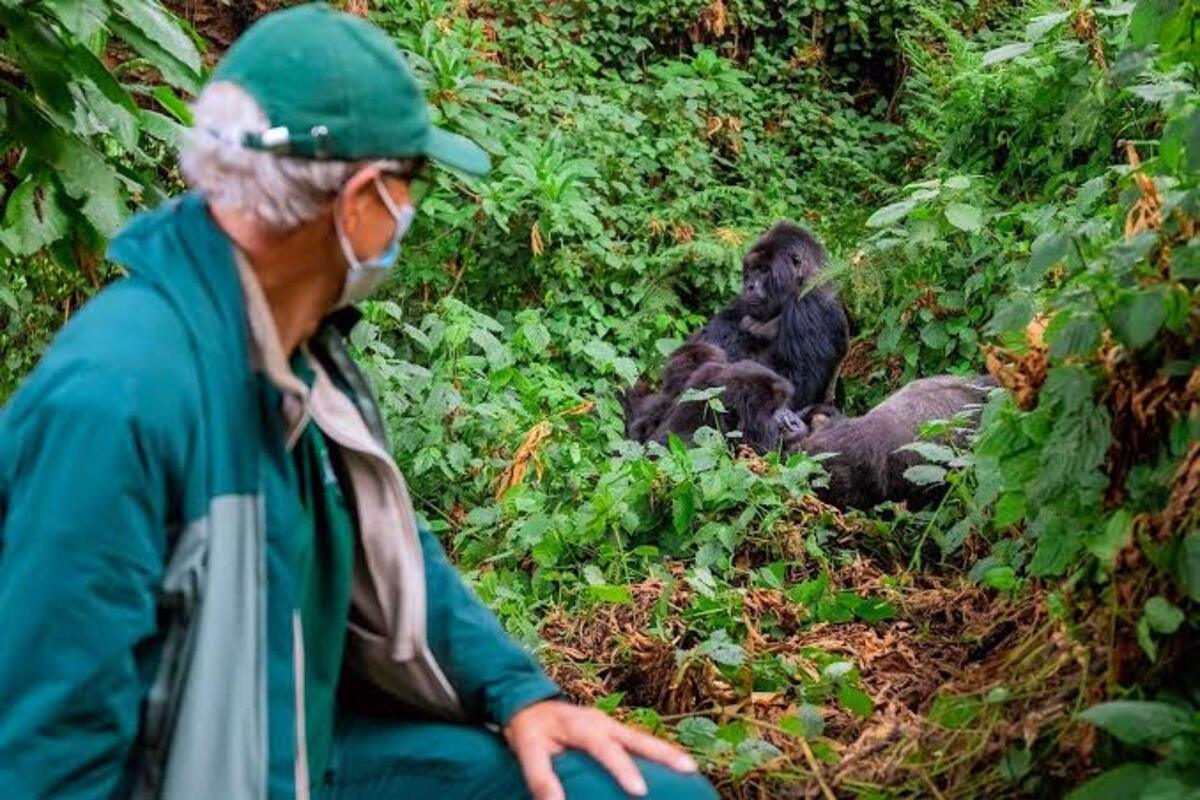
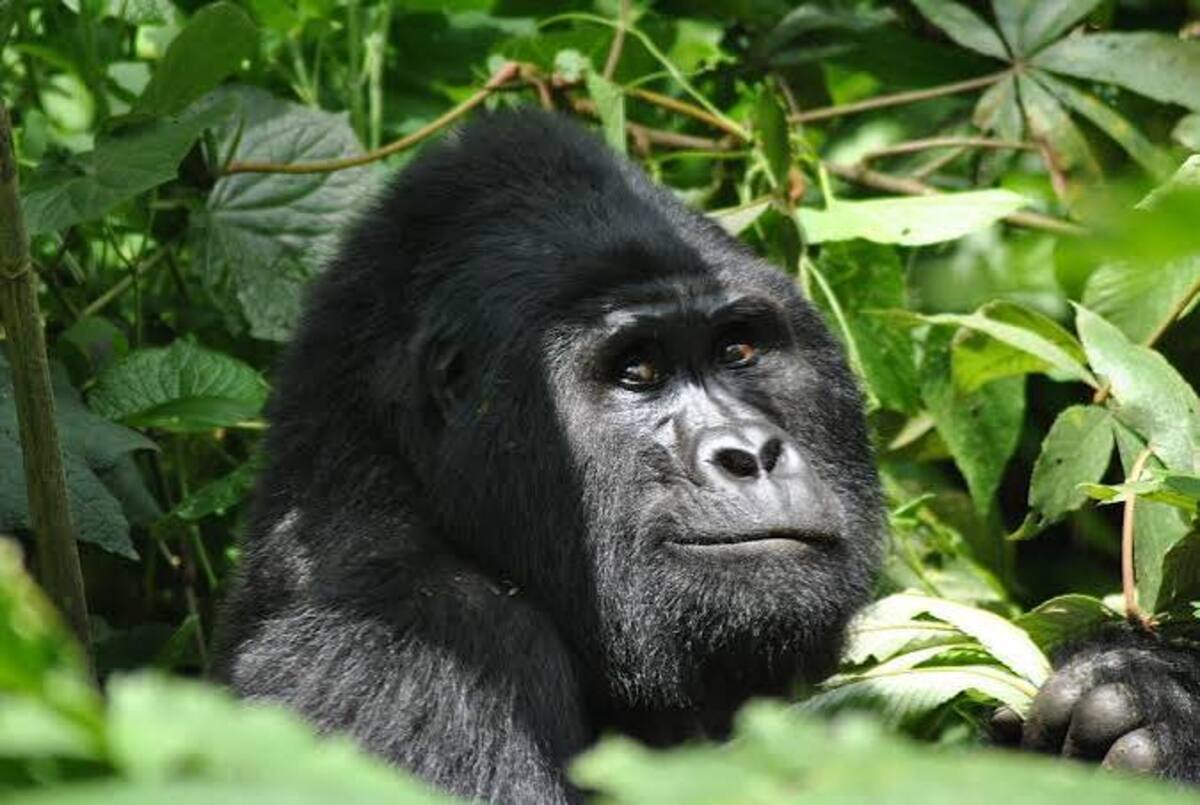
Tourist in sight with a gorilla family at a safe distance
Gorilla Trekking Clothing Checklist
Clothing
- ✓ Long-sleeved hiking shirt
- ✓ Long hiking trousers
- ✓ Waterproof hiking boots
- ✓ Hiking socks
- ✓ Lightweight fleece
- ✓ Waterproof rain jacket
- ✓ Gardening or trekking gloves
- ✓ Wide-brim hat or cap
- ✓ Gaiters (recommended)
Daypack Essentials
- ✓ Reusable water bottle (around 2 litres)
- ✓ Camera or smartphone
- ✓ Spare batteries or power bank
- ✓ Lens cloth
- ✓ Insect repellent
- ✓ Sunscreen
- ✓ Snacks
- ✓ Waterproof backpack cover
- ✓ Personal medication
Frequently Asked Questions
How fit do I need to be for gorilla trekking?
A reasonable level of fitness is helpful, but you don’t need to be an experienced hiker.
Some gorilla families are reached quickly, while others require several hours of walking over steep or uneven ground. Rangers adjust the pace where possible, and porters can provide valuable assistance.
Will I definitely see gorillas?
Although wildlife can never be guaranteed, sightings during Uganda’s guided gorilla treks are extremely reliable because trained trackers locate each habituated family before visitors begin their hike.
Can I hire a porter?
Yes! Porters are available at both Bwindi and Mgahinga trailheads for an additional fee. Many visitors find their assistance worthwhile, regardless of age or fitness.
Can older travellers do gorilla trekking?
Yes! Many older travellers successfully complete gorilla treks every year.
Those with limited mobility should discuss options with their tour operator in advance, as certain gorilla groups may be more suitable depending on accessibility and daily conditions.
What happens if it rains?
Treks continue in most weather conditions.
This is why waterproof clothing and boots are strongly recommended throughout the year.
Can I wear shorts?
They are not recommended.
Long trousers provide much better protection against insects, thorny vegetation, and stinging plants.
Is there a luggage weight limit?
If you are travelling to the parks by domestic flight, baggage allowances are often lower than on international flights.
Check the allowance with your airline or safari operator before packing.
Internal link suggestion: Uganda Safari Cost Guide
How much should I tip?
Tipping is voluntary but appreciated.
Many visitors choose to tip:
- Rangers
- Porters
- Driver-guides
- Lodge staff
Your safari company can provide current guidance on typical tipping ranges.
Can I take photographs?
Yes! Photography is encouraged, but flash must remain switched off throughout the gorilla encounter.
Are there toilets at the starting point?
Yes! Briefing centres generally have basic toilet facilities before the trek begins.
Facilities are not available once you are deep inside the forest, so it’s worth using them before setting off.
Final Thoughts
Preparing for gorilla trekking isn’t about buying the most expensive outdoor clothing. It’s about choosing practical gear that helps you stay comfortable in a rainforest where conditions can change quickly.
A lightweight long-sleeved shirt, durable hiking trousers, waterproof boots, quality socks, a rain jacket, and a few well-chosen accessories are enough for most visitors. These simple choices allow you to concentrate on the experience itself, listening to the forest, following experienced rangers through the vegetation, and quietly observing a family of mountain gorillas in their natural home.
For many travellers, the hour spent with the gorillas becomes the highlight of an entire African journey. Arriving well prepared means you will spend less time worrying about your clothing and more time appreciating the privilege of being there.
Planning Your Gorilla Trek?
If you are still deciding what to pack or have questions about permits, accommodation, transport, or choosing the right trekking sector, the team at Naseeb Safaris can help you plan a trip that matches your interests, fitness level, and travel style.
Whether you are combining gorilla trekking with a classic Uganda safari or focusing solely on the rainforest, personalised advice can make the planning process much easier.