
Semuliki National Park Uganda -Uganda’s Ancient Rainforest
Semuliki National Park Uganda -Uganda’s Ancient Rainforest, In western Uganda, where the forests of the Congo Basin meet the landscapes of East Africa, lies a national park unlike any other in the country.
Semuliki National Park is not a destination built around large herds of savannah wildlife or dramatic mountain peaks. Its appeal comes from a different kind of wilderness: ancient rainforest, rare bird species, unusual Central African wildlife, geothermal springs, and quiet trails where the sounds of the forest often matter as much as what you see.
For many first-time visitors to Uganda, places such as Bwindi Impenetrable National Park, Queen Elizabeth National Park, and Murchison Falls National Park naturally come first. Semuliki is often overlooked, yet it offers one of the country’s most distinctive nature experiences.
Walking beneath the forest canopy here feels different from a typical East African safari. The vegetation is dense, vines twist around enormous trees, butterflies move through shafts of sunlight, and distant calls from birds and primates reveal a rainforest that has evolved over millions of years.
This is a destination for travellers who enjoy slowing down and paying attention. Wildlife encounters are not always immediate, but the reward comes from exploring an ecosystem where every trail reveals something new.
This guide explains everything you need to know before visiting Semuliki National Park, including how to get there, what to see, wildlife expectations, birdwatching, the famous Sempaya Hot Springs, accommodation, the best time to visit, packing advice, responsible tourism, and how to include Semuliki in a wider Uganda safari itinerary.
Where Is Semuliki National Park?
The park covers approximately 220 square kilometres and protects the easternmost extension of the vast Congo Basin rainforest. Its location is one of the reasons for its exceptional biodiversity.
The landscape sits within the Albertine Rift Valley, one of Africa’s most biologically important regions. To the southeast are the Rwenzori Mountains, while Lake Albert lies to the north. This meeting point of different ecosystems creates habitats for species associated with both East and Central Africa.
The nearest major town is Fort Portal, which serves as a convenient base for many visitors exploring western Uganda.
From Kampala, reaching Semuliki usually takes around seven to eight hours by road, depending on the route, traffic, and stops along the way.
The journey passes through changing landscapes:
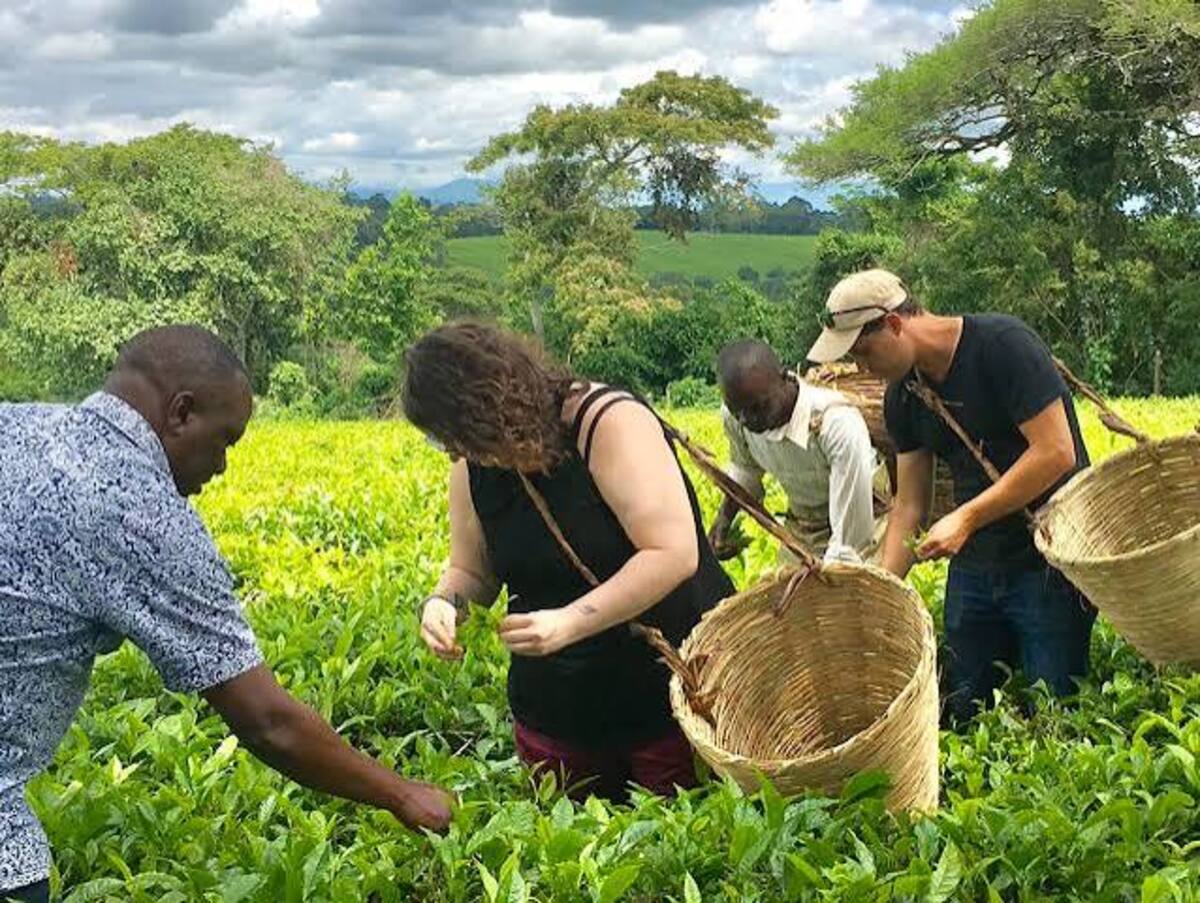
- Tea plantations around Fort Portal
- Rolling green hills
- Rural communities
- The foothills of the Rwenzori Mountains
- The open landscapes of the Semuliki Valley
Because of its location, Semuliki is often combined with other western Uganda destinations, including:
- Kibale National Park for chimpanzee trekking
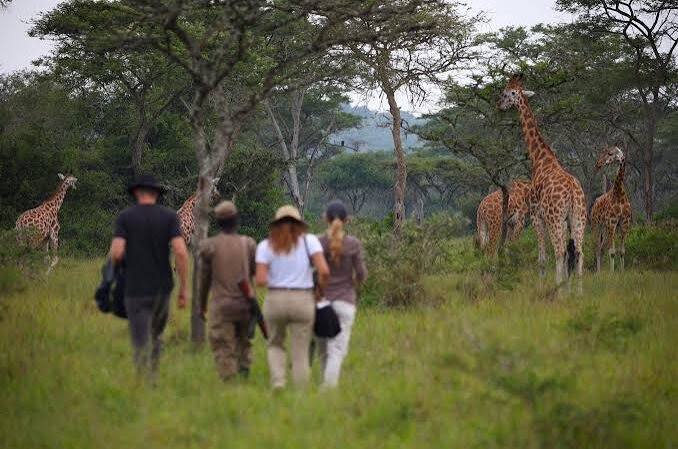
- Queen Elizabeth National Park for game drives and boat safaris
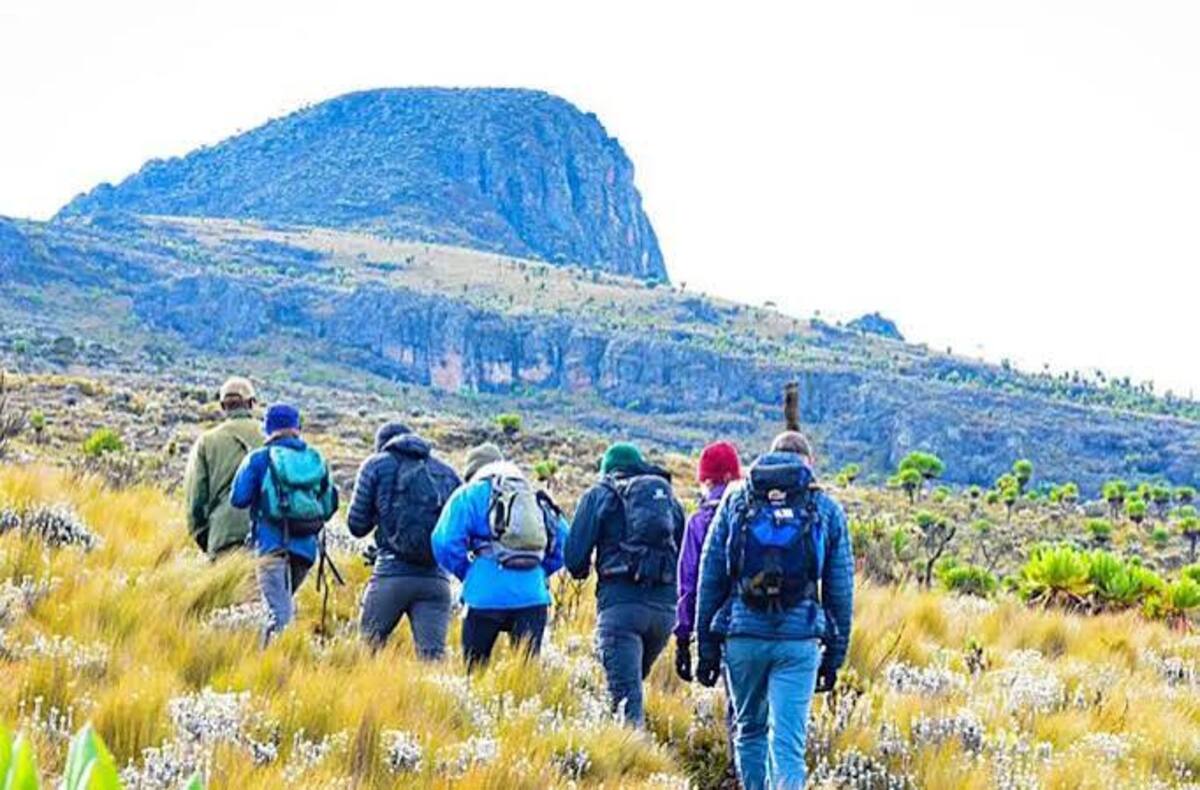
- Rwenzori Mountains National Park for mountain trekking
- Toro-Semliki Wildlife Reserve
- Fort Portal’s crater lakes and tea estates
For travellers planning a longer Uganda safari, Semuliki works particularly well as part of a western circuit rather than as a standalone destination.
What Makes Semuliki National Park Different?
Every Ugandan national park has its own identity.
Bwindi is known for mountain gorillas.
Queen Elizabeth is famous for savannah wildlife and the Kazinga Channel.
Murchison Falls is defined by the Nile forcing its way through a narrow gorge.
Semuliki’s character comes from its rainforest.
The park protects one of East Africa’s oldest surviving tropical forests, an ecosystem that has remained relatively stable over millions of years. Because of this long history, many species found here are closely related to those in the Congo Basin rather than other parts of Uganda.
For visitors, this creates a safari experience that feels closer to Central Africa than the landscapes many people associate with East Africa.
The forest environment offers:
- Ancient rainforest habitats
- Rare Central African wildlife
- More than 400 bird species
- Several primate species
- Diverse butterflies and insects
- Geothermal features
- Cultural connections with nearby communities
Unlike open savannah parks, Semuliki rewards patience. Wildlife is often hidden among thick vegetation, and sightings depend on moving quietly, listening carefully, and understanding the signs of the forest.
A guide may stop to point out fresh tracks, a broken branch where an animal passed, a bird call high in the canopy, or movement hidden among leaves.
The experience is less about covering large distances and more about learning how to read the rainforest.
The Ancient Story of Semuliki’s Rainforest
The story of Semuliki begins millions of years ago.
Scientists consider the forest part of the greater Congo Basin rainforest ecosystem, one of the oldest tropical forest regions in Africa. While many forests experienced significant changes during past climatic periods, Semuliki remained relatively stable.
This long history helped preserve plant and animal communities with strong links to Central Africa.
As a result, visitors may encounter species that are uncommon elsewhere in Uganda, including some birds and mammals more typically associated with the Congo rainforest.
Before becoming a national park, the area was managed as a forest reserve. In 1993, Semuliki was officially established as a national park to protect its exceptional biodiversity.
Today, the park plays an important role in conserving:
- Tropical rainforest habitat
- Rare wildlife species
- Forest-dependent birds
- Primates
- Indigenous plant species
- Important ecological systems within the Albertine Rift
The forest is also important for local communities who have long depended on the surrounding landscape for cultural traditions, resources, and livelihoods.
What Kind of Traveller Will Enjoy Semuliki?
Semuliki is best suited for travellers who enjoy nature-based experiences rather than fast-paced sightseeing.
It is especially appealing for:
Birdwatchers
With hundreds of recorded bird species, including many difficult-to-find forest birds, Semuliki is one of Uganda’s most rewarding birding destinations.
Wildlife Enthusiasts
The park offers the chance to look for forest species that behave differently from animals in open savannah environments.
Photographers
The combination of rainforest textures, birds, butterflies, plants, and cultural experiences creates many opportunities for nature photography.
Travellers Seeking Quieter Destinations
Semuliki generally receives fewer visitors than Uganda’s most famous parks, allowing for a more peaceful forest experience.
However, it is important to have realistic expectations.
Semuliki is not the best choice if your main goal is to see large numbers of animals quickly. Dense vegetation means wildlife sightings can be unpredictable.
Instead, choose this park if you enjoy:
- Guided walks
- Birding
- Forest exploration
- Learning about ecosystems
- Experiencing less-visited parts of Uganda
How Long Should You Spend in Semuliki National Park?
Many visitors include Semuliki as a one- or two-night stop within a larger western Uganda safari.
A short visit can include:
- Sempaya Hot Springs
- A guided forest walk
- Birdwatching
- Wildlife observation
However, travellers with more time benefit from staying longer.
A two- or three-day visit allows you to explore at a slower pace and increases opportunities for:
- Early morning birdwatching
- Longer forest walks
- Cultural experiences
- Photography
- Exploring less-visited trails
The rainforest changes throughout the day. Early mornings bring increased bird activity, while quieter periods later in the day may reveal different forest sounds and movements.
Getting to Semuliki National Park
Most international visitors reach Semuliki as part of a Uganda safari by road.
From Kampala
The drive takes approximately seven to eight hours.
The route usually passes through:
- Mubende
- Fort Portal
- Bundibugyo
Road conditions vary depending on the season. Main roads are generally accessible, but some routes closer to the park may become rougher during rainy periods.
A 4×4 safari vehicle is recommended, particularly for visitors travelling during wetter months.
From Fort Portal
Fort Portal is the most convenient base for exploring Semuliki.
The drive from Fort Portal to the park is shorter and allows travellers to combine Semuliki with:
- Kibale Forest
- Crater lakes
- Tea plantations
- Rwenzori foothills
Many western Uganda safari routes are designed around this region, making Semuliki easy to combine with other major attractions.
First-Time Visitor Tips Before You Go
A little preparation makes a significant difference when visiting a rainforest environment.
First-time visitors should remember:
- Rain is possible throughout the year.
- Trails can become muddy after rainfall.
- Wildlife sightings require patience.
- Comfortable walking shoes are essential.
- Early morning activities often provide the best wildlife and birding opportunities.
- Carry some local currency for small purchases and community visits.
- A guide greatly improves the experience by explaining the forest’s hidden details.
One common mistake is treating Semuliki like a traditional game-drive safari destination. The park is experienced differently. The focus is not only on what appears in front of you, but also on understanding the ecosystem around you.
Wildlife in Semuliki National Park: A Rainforest Safari Experience
Wildlife viewing in Semuliki National Park is different from the classic safari experience found in Uganda’s savannah parks.
Here, there are no wide-open plains where large herds are easily visible from a vehicle. Instead, the forest creates a more intimate style of wildlife exploration. Animals move through thick vegetation, often hidden among trees and undergrowth, making patience and careful observation essential.
A guided walk through Semuliki is an opportunity to learn how to interpret the forest. Guides look for footprints, feeding marks, broken branches, sounds, and other clues that reveal which animals are nearby.
The park supports more than 60 mammal species, including several species associated with Central Africa.
Possible wildlife sightings include:
- Forest elephants
- African buffaloes
- Bushbucks
- Giant forest hogs
- Water chevrotains
- Bush babies
- Civets
- Mongooses
- African clawless otters
- Flying squirrels
- Pygmy squirrels
- Leopards (rarely seen)
Some animals, particularly forest elephants and large mammals, are naturally difficult to observe because of the dense habitat. Seeing one requires luck, quiet movement, and an experienced guide who understands the forest.
For many visitors, the excitement comes from knowing that wildlife is present even when it is not immediately visible. The sounds of movement in the trees, fresh tracks on a trail, or a sudden rustle in the vegetation can make a simple walk feel like an active exploration.
Primates of Semuliki National Park
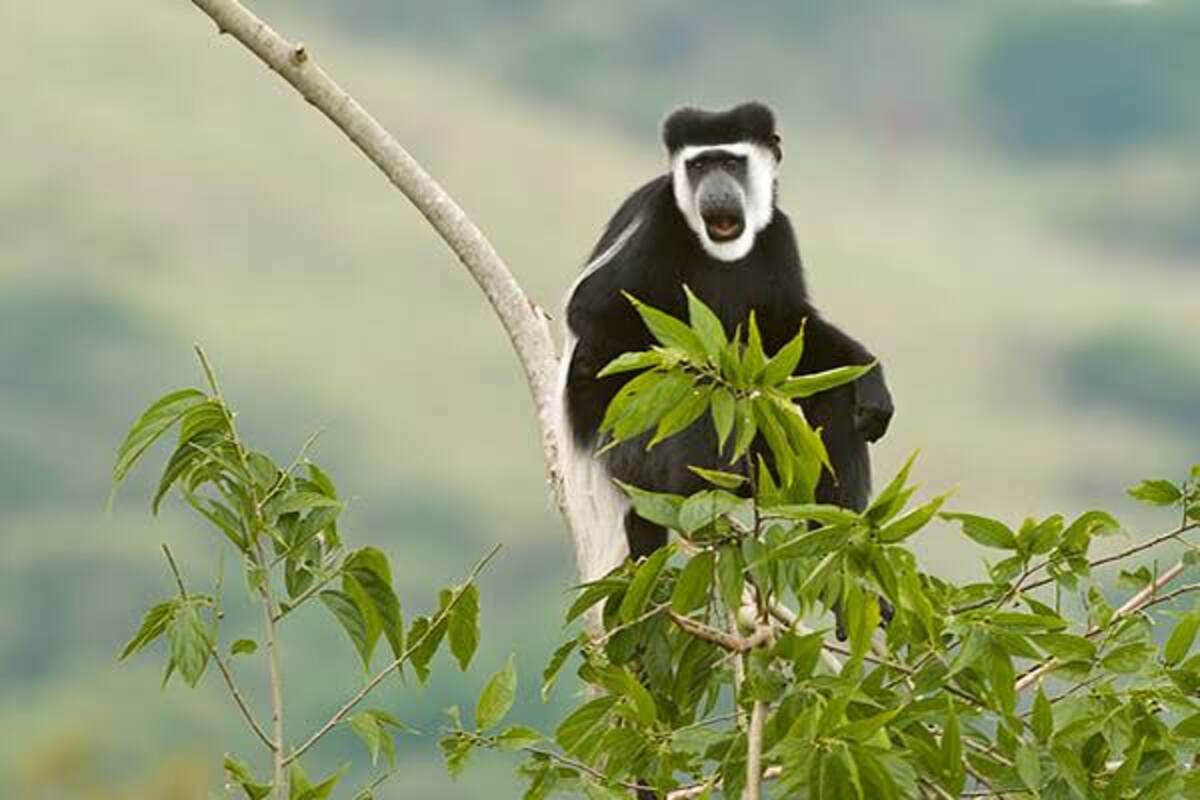
Black and white colobus monkey on treetops of Semuliki national park
Uganda is famous for its primate diversity, and Semuliki contributes significantly to the country’s reputation as one of Africa’s best destinations for primate experiences.
The rainforest supports several primate species, including some that are closely associated with Central African forests.
Species recorded in the park include:
- Olive baboons
- Black-and-white colobus monkeys
- Red-tailed monkeys
- Grey-cheeked mangabeys
- Blue monkeys
- De Brazza’s monkeys
- Vervet monkeys
- Mona monkeys
- Chimpanzees
Chimpanzees are present in the wider Semuliki ecosystem, although the park is not Uganda’s main chimpanzee trekking destination. Visitors should not expect the same experience as dedicated chimpanzee tracking in places such as Kibale National Park.
Instead, Semuliki offers a broader rainforest experience where primates are part of the overall ecosystem.
During forest walks, you may hear monkeys before seeing them. A sudden movement high above the trail, leaves shaking in the canopy, or distant calls travelling through the trees often provide the first signs of primate activity.
Photography opportunities can be excellent, especially when visitors remain patient and allow animals to behave naturally.
Birdwatching in Semuliki National Park
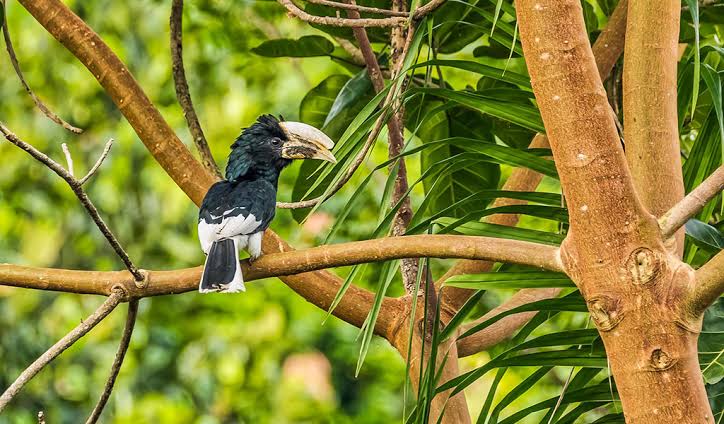
Black & white casqued hornbill
For bird enthusiasts, Semuliki National Park is one of Uganda’s most important destinations.
The park has recorded more than 400 bird species, including many species with strong links to the Congo Basin. Some birds found here are extremely difficult to see elsewhere in East Africa.
This makes Semuliki particularly valuable for experienced birdwatchers who want to add rare forest species to their sightings.
Notable birds include:
- Nkulengu Rail
- White-crested Hornbill
- Piping Hornbill
- Black Dwarf Hornbill
- Red-billed Dwarf Hornbill
- Congo Serpent Eagle
- Lyre-tailed Honeyguide
- Blue-billed Malimbe
- Maxwell’s Black Weaver
- Long-tailed Hawk
- African Piculet
- Yellow-throated Cuckoo
- Chestnut-breasted Negrofinch
Birding here is a sensory experience. The forest is often filled with calls before birds are visible. A skilled guide helps visitors identify species by sound, movement, feeding behaviour, and habitat.
Early morning is usually the most productive time for birdwatching because many species are active before the heat of the day increases.
For the best experience, bring:
- Binoculars
- A camera with a suitable zoom lens
- A field guide or bird identification app
- Waterproof protection for equipment
Patience is essential. Forest birds rarely present themselves in the same way as large animals on open plains.
Exploring the Kirumia Trail
The Kirumia Trail is one of Semuliki’s most rewarding walking experiences for travellers who want to explore deeper into the rainforest.
The trail extends for approximately 13 kilometres through dense forest toward the Semuliki River, which forms part of the boundary between Uganda and the Democratic Republic of the Congo.
This is not a quick sightseeing walk. The trail is best suited to visitors who enjoy spending several hours immersed in nature.
Along the route, visitors may encounter:
- Giant tropical trees
- Forest birds
- Butterflies
- Primate activity
- Animal tracks
- Dense vegetation
- Quiet rainforest landscapes
The trail is especially popular with birdwatchers because it passes through some of the park’s richest forest habitats.
Conditions vary depending on rainfall. During wetter periods, sections can become muddy, so waterproof footwear and good physical preparation are important.
A guided walk allows visitors to understand the forest rather than simply pass through it.
The Sempaya Hot Springs: Semuliki’s Famous Natural Attraction
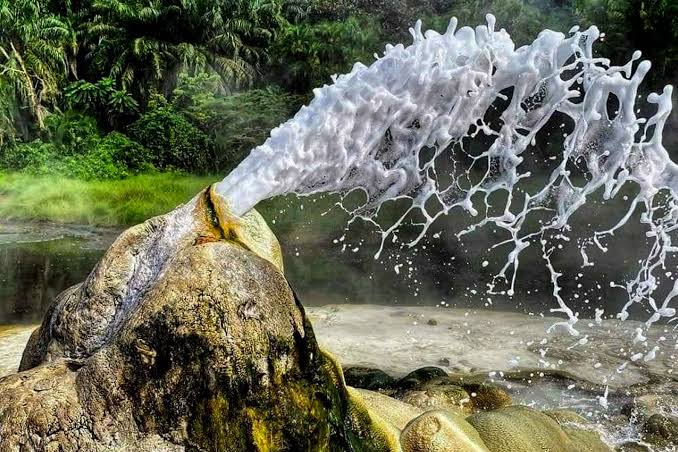
Female hot spring in Semuliki national park
The Sempaya Hot Springs are the most famous attraction in Semuliki National Park and one of Uganda’s most fascinating geological features.
Located within the rainforest, the springs reveal the volcanic and tectonic activity that continues to shape the Albertine Rift region.
There are two main springs:
- The Female Hot Spring, locally known as Nyasimbi
- The Male Hot Spring, known as Bintente
The Male Hot Spring is the larger of the two, with boiling water reaching temperatures close to 100°C. Visitors often see steam rising from the ground and guides may demonstrate the heat by cooking eggs or plantains using the naturally boiling water.
The Female Hot Spring is surrounded by cultural stories connected to the local Bamaga people, who consider the area an important traditional site.
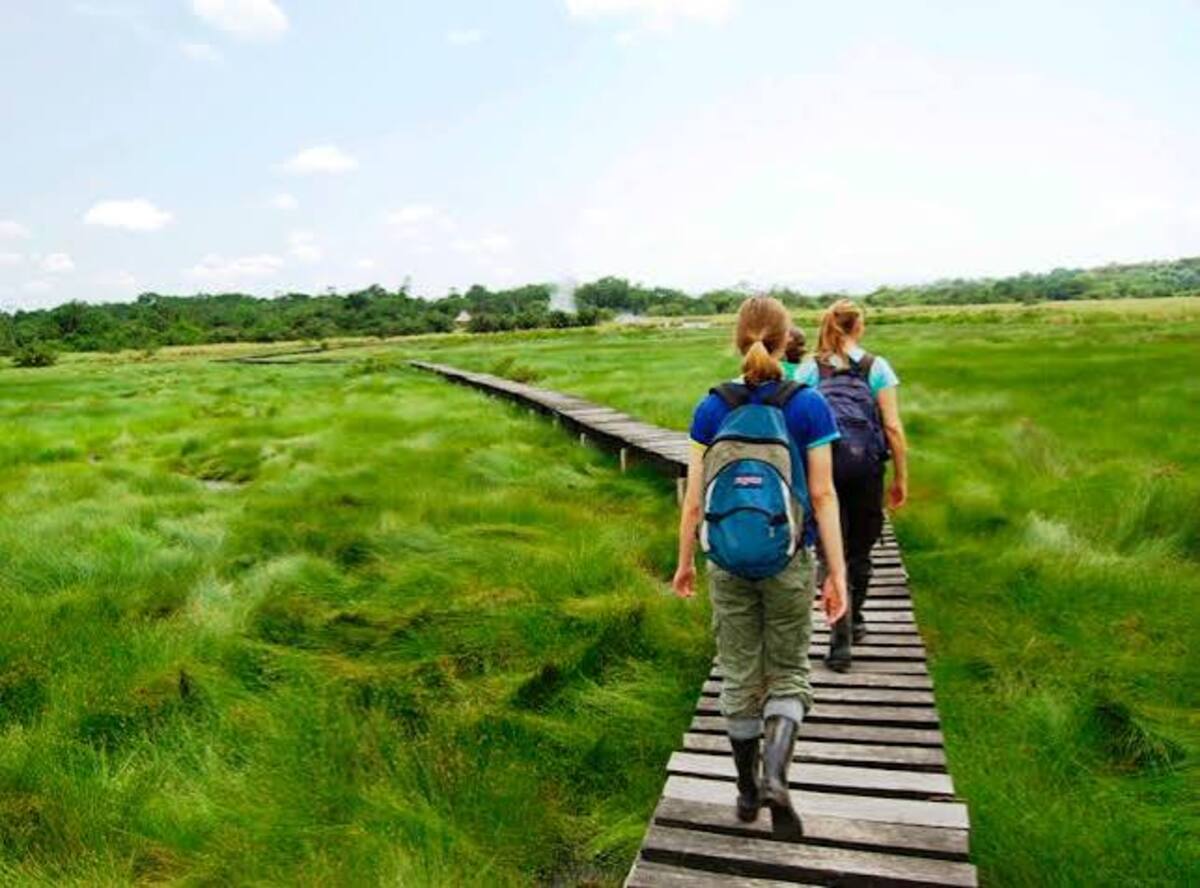
The walk to the springs is part of the attraction. A boardwalk passes through lush forest where visitors can observe plants, birds, butterflies, and the sounds of the rainforest.
The experience combines:
- Geology
- Natural history
- Local culture
- Forest exploration
It is worth allowing enough time to appreciate the surroundings rather than simply arriving, taking photographs, and leaving.
Top Things to Do in Semuliki National Park
Semuliki is best experienced slowly. The park does not rely on a long list of attractions but on the quality of time spent inside one of Uganda’s oldest forests.
The main activities include:
-
Guided Rainforest Nature Walks
Walking is the best way to understand Semuliki.
Unlike a vehicle safari, a forest walk allows visitors to notice details that are easily missed:
- Small frogs on leaves
- Colourful butterflies
- Medicinal plants
- Bird calls
- Animal tracks
- Insects and fungi
- Signs of primate movement
Uganda Wildlife Authority guides help explain the relationships between plants, animals, and people that make the ecosystem function.
The pace is slower, but the experience is more immersive.
-
Visit the Sempaya Hot Springs
The hot springs are usually included in most Semuliki itineraries.
Visitors can:
- Walk through rainforest trails
- Learn about geothermal activity
- Hear local stories connected to the springs
- Observe boiling water emerging from the ground
The springs are suitable for most travellers, although visitors should wear comfortable walking shoes as paths can be uneven.
-
Birdwatching Excursions
Semuliki is a destination where dedicated birdwatching can easily fill several days.
Early morning excursions offer the best chance to observe active forest birds.
Experienced guides help identify:
- Calls hidden in the canopy
- Species feeding in vegetation
- Birds that are difficult to spot without local knowledge
For serious birders, Semuliki can be one of the highlights of a Uganda safari.
-
Butterfly Watching
The rainforest is also an excellent destination for butterfly enthusiasts and macro photographers.
More than 300 butterfly species have been recorded in the area, creating opportunities to observe a remarkable variety of colours, patterns, and behaviours.
Butterflies are often easier to photograph in sunny forest clearings where they gather around damp soil or vegetation.
A macro lens can be useful, but even travellers using smartphones can capture impressive images with patience.
Cultural Experiences Around Semuliki National Park
A visit to Semuliki is not only about forests and wildlife. The communities surrounding the park have their own histories, traditions, and relationships with the landscape.
Cultural experiences may include visits with:
- The Bamaga people
- Batuku pastoral communities
- Local farming communities
Depending on availability, visitors may participate in:
- Traditional dance performances
- Storytelling sessions
- Craft demonstrations
- Local food experiences
- Community walks
- Traditional farming activities
These experiences provide context for the environment around the park. They also allow tourism revenue to support local livelihoods.
When visiting communities, respectful interaction is important. Ask permission before taking photographs, listen to local explanations, and remember that cultural visits are exchanges rather than performances created only for visitors.
Best Time to Visit Semuliki National Park
Semuliki National Park can be visited throughout the year, but conditions change with the seasons. The rainforest climate means visitors should expect some rainfall even during traditionally drier months.
The best time to visit depends on what you want to experience.
Birdwatchers, photographers, hikers, and travellers combining Semuliki with other Uganda safari destinations may each find different advantages throughout the year.
Dry Seasons: December to February and June to August
These months are generally considered the most comfortable periods for exploring the park.
During the drier seasons:
- Forest trails are usually easier to walk.
- Roads are generally more accessible.
- Hiking conditions are more comfortable.
- Photography is often easier because equipment is less exposed to heavy rain.
- Wildlife walks may be more enjoyable for first-time visitors.
However, “dry season” does not mean completely rain-free. Semuliki is a rainforest environment, and short showers can occur at any time.
Visitors should still carry:
- A lightweight rain jacket
- Waterproof protection for cameras
- Quick-drying clothing
- Suitable walking shoes
Wet Seasons: March to May and September to November
The rainy months bring a different character to the forest.
Rainfall strengthens the rainforest atmosphere, with deeper green vegetation, active streams, and increased insect and amphibian activity.
Advantages of visiting during wetter months include:
- Fewer visitors on trails
- Excellent conditions for forest photography
- Lush vegetation
- Active butterflies and frogs
- Good birdwatching opportunities
The main challenges are:
- Muddy trails
- Slippery walking surfaces
- Higher humidity
- Occasional delays caused by road conditions
For travellers comfortable with changing weather, the wet season can be a rewarding time to experience the park.
Road Conditions and Transport Advice
Road conditions vary depending on the season.
The main routes are generally accessible, but roads closer to the park can become rougher during heavy rains.
For a comfortable journey:
- Allow extra travel time.
- Avoid planning overly tight schedules.
- Use a reliable safari vehicle.
- Carry water and snacks for longer drives.
- Inform your driver about any mobility concerns before departure.
Travellers visiting during the rainy season should expect slower travel in some sections.
Accommodation Near Semuliki National Park
Accommodation around Semuliki ranges from comfortable safari lodges to simpler community-based options.
The right choice depends on your travel style, budget, and how much time you plan to spend exploring the park.
Luxury Safari Lodges
Luxury accommodation near Semuliki provides a comfortable base after long days exploring the rainforest.
Typical features include:
- Private cottages or rooms
- Restaurant services
- Scenic surroundings
- Comfortable lounges
- Guided activities
- Peaceful forest locations
These lodges are suitable for travellers who value comfort while still wanting access to nature.
Mid-Range Accommodation
Mid-range lodges offer a balance between comfort and cost.
Travellers can usually expect:
- Private rooms
- Hot showers
- Restaurant facilities
- Electricity
- Helpful staff
- Convenient access to park activities
These options are popular among couples, families, and small safari groups.
Budget Accommodation
Budget travellers can find simple guesthouses and camps around the region.
Facilities may be more basic, but many provide:
- Clean rooms
- Local hospitality
- Essential amenities
- Affordable access to the park
Choosing locally owned accommodation can also help support communities surrounding the protected area.
What to Pack for Semuliki National Park
Packing for Semuliki is less demanding than preparing for a high-altitude trek, but rainforest conditions require thoughtful preparation.
The most important rule is to prepare for humidity, rain, insects, and changing temperatures.
Recommended items include:
Clothing
- Lightweight long-sleeved shirts
- Long trousers
- Comfortable walking clothes
- Rain jacket or poncho
- Quick-drying fabrics
- Light fleece or sweater for cooler evenings
Long sleeves and trousers are useful for protecting against insects and vegetation during forest walks.
Footwear
Bring:
- Comfortable hiking shoes or boots
- Good grip for muddy trails
- Extra socks
- Sandals for relaxing at your accommodation
Avoid brand-new footwear. Break in hiking shoes before your trip to prevent discomfort.
Safari Essentials
Pack:
- Insect repellent
- Sunscreen
- Reusable water bottle
- Binoculars
- Camera and spare batteries
- Waterproof bags for electronics
- Small daypack
- Personal medication
- Sunglasses
- Hat
Photography Tips for Semuliki National Park
Rainforest photography requires a different approach from photographing wildlife on open savannah.
The biggest challenge is light.
Dense vegetation creates shaded conditions, even during bright daylight.
Helpful photography tips:
- Use a lens with a wide aperture where possible.
- Increase ISO when lighting is low.
- Carry spare batteries.
- Protect equipment from moisture.
- Use a telephoto lens for birds and monkeys.
- Consider a macro lens for butterflies and insects.
- Keep cameras ready because wildlife encounters can be brief.
A waterproof camera cover or dry bag is highly recommended.
The best photographs often come from patience rather than expensive equipment. Taking time to observe the forest increases the chance of capturing natural behaviour.
Responsible Tourism in Semuliki National Park
Semuliki protects one of Uganda’s oldest rainforest ecosystems, and every visitor has a role in helping preserve it.
Responsible travel practices include:
- Staying on designated trails.
- Following guide instructions.
- Avoiding loud noise in the forest.
- Never feeding wildlife.
- Carrying out all rubbish.
- Respecting photography guidelines.
- Supporting local communities.
- Choosing licensed tourism providers.
Small actions matter in fragile ecosystems.
Avoid purchasing products made from wildlife materials, and choose locally produced crafts where possible.
Tourism can contribute positively to conservation when visitors, communities, and park authorities work together.
Why Include Semuliki National Park in Your Uganda Safari?
Many first-time visitors plan Uganda trips around gorilla trekking, chimpanzee tracking, or traditional game drives.
Those experiences are excellent, but Semuliki offers something different.
This park introduces travellers to an ancient rainforest ecosystem where the experience is based less on ticking off sightings and more on understanding a living environment.
Adding Semuliki to your itinerary allows you to:
- Explore one of East Africa’s oldest tropical forests.
- Discover wildlife associated with the Congo Basin.
- Experience exceptional birdwatching.
- Visit the famous Sempaya Hot Springs.
- Enjoy quieter trails away from larger tourist crowds.
- Learn about communities living near the forest.
- Combine rainforest exploration with Uganda’s western safari circuit.
For travellers who appreciate nature, photography, birdlife, and cultural connections, Semuliki provides a deeper understanding of Uganda’s ecological diversity.
Sample Semuliki National Park Itineraries
Two-Day Semuliki Safari
This option works well for travellers adding Semuliki to a western Uganda itinerary.
Day 1: Arrival and Sempaya Hot Springs
- Depart from Fort Portal or another nearby destination.
- Travel through western Uganda’s countryside.
- Check into your lodge.
- Visit Sempaya Hot Springs with a guide.
- Learn about the geology and cultural importance of the site.
- Return for dinner and overnight stay.
Day 2: Rainforest Walk and Departure
- Early breakfast.
- Guided rainforest walk.
- Birdwatching and wildlife observation.
- Look for primates, butterflies, and forest species.
- Optional community visit.
- Continue to your next safari destination.
Three-Day Semuliki Experience
A longer stay allows visitors to explore the forest at a slower pace.
Day 1
- Arrival.
- Lodge check-in.
- Evening nature walk.
Day 2
- Morning birdwatching.
- Sempaya Hot Springs visit.
- Cultural experience.
- Relaxation at the lodge.
Day 3
- Kirumia Trail exploration.
- Wildlife observation.
- Photography.
- Departure.
A three-day visit gives travellers more opportunity to appreciate the forest beyond the main attractions.
Nearby Attractions to Combine with Semuliki National Park
One of Semuliki’s biggest advantages is its location within western Uganda’s tourism circuit.
Travellers can combine rainforest exploration with mountains, primates, and savannah wildlife.
Kibale National Park
Kibale National Park is one of Africa’s leading destinations for chimpanzee tracking.
The forest is also home to numerous monkey species, making it an excellent complement to Semuliki.
Queen Elizabeth National Park
Queen Elizabeth National Park offers a completely different landscape.
Visitors can enjoy:
- Game drives
- Boat cruises on the Kazinga Channel
- Elephant sightings
- Buffaloes
- Hippos
- Birdwatching
- The famous Ishasha tree-climbing lions
Rwenzori Mountains National Park
Rwenzori Mountains National Park offers dramatic mountain scenery, hiking trails, alpine vegetation, and challenging summit expeditions.
It pairs well with Semuliki because travellers can experience both rainforest ecosystems and high-altitude landscapes.
Fort Portal
Fort Portal is one of Uganda’s most attractive regional cities and a useful base for exploring western Uganda.
Nearby attractions include:
- Crater lakes
- Tea plantations
- Cultural sites
- Scenic countryside
Permits, Fees, and Planning Your Semuliki National Park Visit
Planning a visit to Semuliki National Park is relatively straightforward compared with some of Uganda’s more regulated wildlife experiences, such as gorilla trekking. However, arranging activities in advance helps ensure a smoother experience, especially during busy travel periods.
Park access and activities are managed by the Uganda Wildlife Authority (UWA), which oversees Uganda’s protected areas.
Visitors should plan for costs associated with:
- National park entry fees
- Guided forest walks
- Birdwatching excursions
- Nature walks
- Transport to and within the region
- Accommodation
- Meals
- Community experiences
Fees and regulations can change, so travellers should confirm current rates before travelling.
Do You Need a Guide in Semuliki National Park?
Yes. Visitors exploring the forest trails should go with an authorised guide.
A guide is not only important for safety but also greatly improves the experience.
Without local knowledge, much of the forest’s wildlife and ecological detail can easily be missed.
A trained guide can help identify:
- Animal tracks
- Bird calls
- Medicinal plants
- Signs of primate activity
- Forest insects
- Cultural connections to the landscape
In a rainforest environment, the difference between simply walking through trees and truly understanding the ecosystem is often the quality of interpretation provided by the guide.
Safety in Semuliki National Park
Semuliki is generally a safe destination for travellers who follow normal safari precautions and listen to guidance from park staff and guides.
The rainforest environment, however, requires awareness.
Wildlife Safety
Visitors should:
- Maintain a safe distance from animals.
- Never attempt to approach wildlife.
- Follow guide instructions at all times.
- Avoid making unnecessary noise.
- Stay on established trails.
Even animals that appear calm can behave unpredictably when surprised.
Health Considerations
Before travelling to Uganda, consult a travel health professional regarding recommended vaccinations and malaria prevention.
Useful precautions include:
- Carrying insect repellent.
- Drinking safe water.
- Staying hydrated during walks.
- Protecting yourself from the sun.
- Carrying personal medication.
Rainforest walks can be physically demanding because of humidity, uneven ground, and long periods of walking.
Walking Conditions
Visitors should expect:
- Uneven forest paths
- Mud after rainfall
- Humid conditions
- Occasional slippery sections
Good footwear and realistic expectations are important.
Semuliki is not a destination where visitors rush from one attraction to another. The experience is built around walking, observing, and spending time in nature.
Accessibility Considerations
Travellers with mobility concerns should discuss their requirements before booking.
Some experiences, especially deeper forest trails, involve:
- Uneven terrain
- Walking on natural surfaces
- Humidity
- Longer distances
The Sempaya Hot Springs area is more accessible than some forest trails, but conditions can still vary depending on rainfall.
Families travelling with children, older travellers, or visitors with limited mobility may prefer shorter guided walks combined with cultural experiences and easier activities.
A personalised itinerary can help match activities with individual abilities and interests.
Can Families Visit Semuliki National Park?
Yes. Semuliki can be a rewarding destination for families, particularly those interested in nature and learning.
Children often enjoy:
- Butterfly spotting
- Looking for monkeys
- Learning about rainforest plants
- Visiting the hot springs
- Listening for bird calls
However, parents should consider:
- The length of walking activities
- Weather conditions
- Heat and humidity
- Children’s comfort with insects and forest environments
Shorter activities may be more suitable for younger travellers.
Tipping Guide for Semuliki National Park
Tipping in Uganda is not compulsory, but it is appreciated when good service is provided.
Many safari workers rely on tips as an important part of their income.
Common people travellers may choose to tip include:
- Driver-guides
- Park guides
- Lodge staff
- Porters or local assistants
- Community performers
There is no fixed rule, and the amount depends on:
- Length of service
- Group size
- Quality of assistance
- Personal satisfaction
It is best to give tips directly to the person you wish to thank.
Common Mistakes First-Time Visitors Make
A little preparation can significantly improve your experience in Semuliki.
Expecting a Traditional Game Drive Safari
Some travellers arrive expecting open landscapes filled with easily visible animals.
Semuliki is different.
The reward comes from rainforest exploration, birdlife, geological features, and smaller discoveries rather than constant large-animal sightings.
Not Allowing Enough Time
A rushed visit may cover the main attractions but miss the deeper character of the forest.
If possible, allow at least two nights so you can experience different activities without feeling hurried.
Wearing Unsuitable Clothing
Heavy cotton clothing can become uncomfortable in humid conditions.
Better choices include:
- Lightweight fabrics
- Long trousers
- Quick-drying shirts
- Waterproof outer layers
Forgetting Rain Protection
Rain can occur at any time.
A small waterproof jacket and protection for electronics can make a major difference.
Ignoring the Value of a Guide
A rainforest can look quiet at first glance.
A guide helps reveal the hidden activity happening around you.
Combining Semuliki with a Gorilla or Chimpanzee Safari
For many international visitors, Uganda’s greatest attraction is the chance to experience primates in their natural habitats.
Semuliki combines especially well with:
- Chimpanzee tracking in Kibale National Park
- Gorilla trekking in Bwindi Impenetrable National Park
- Wildlife viewing in Queen Elizabeth National Park
Adding Semuliki creates a more complete picture of Uganda’s natural diversity:
- Ancient rainforest
- Mountain ecosystems
- Savannah landscapes
- Primate habitats
- Local cultures
Why Travel with Naseeb Safaris?
Planning a Uganda safari involves more than choosing destinations. The most enjoyable journeys usually come from thoughtful planning, realistic timing, and understanding what each location offers.
Naseeb Safaris helps travellers create personalised Uganda itineraries that combine Semuliki National Park with other experiences across the country.
Support can include:
- Safari planning and itinerary design
- Transport arrangements
- Accommodation selection
- Experienced driver-guides
- Wildlife safari extensions
- Gorilla and chimpanzee trekking arrangements
- Cultural experiences
- Birdwatching-focused journeys
Whether your interest is rainforest exploration, photography, birding, wildlife, or combining Semuliki with Uganda’s famous primate destinations, the itinerary can be designed around your travel style.
The goal is not simply to visit more places, but to create a journey that allows enough time to understand each landscape.
Frequently Asked Questions About Semuliki National Park
Is Semuliki National Park worth visiting?
Yes, especially for travellers interested in rainforest ecosystems, birdwatching, photography, geology, and quieter safari experiences.
It offers something different from Uganda’s savannah parks and famous primate destinations.
How many days do I need in Semuliki National Park?
A minimum of two days is recommended.
This allows time to visit the Sempaya Hot Springs and experience a guided forest walk.
Travellers with more time can explore longer trails, birdwatching routes, and cultural activities.
Can I see chimpanzees in Semuliki National Park?
Chimpanzees live in the wider Semuliki ecosystem, but Semuliki is not Uganda’s main chimpanzee trekking destination.
For a dedicated chimpanzee tracking experience, many travellers choose Kibale National Park.
Is Semuliki suitable for older travellers?
Yes, depending on fitness level and chosen activities.
The hot springs visit and shorter walks may be suitable for many older travellers, while longer forest trails require more stamina.
Travellers should discuss mobility needs when planning their itinerary.
What happens if it rains during my visit?
Rain is a normal part of the Semuliki experience.
Activities usually continue, although trails may become muddy.
Waterproof clothing and suitable footwear are strongly recommended.
Do I need hiking boots for Semuliki?
For longer forest walks, comfortable hiking shoes or boots with good grip are recommended.
For shorter visits, sturdy walking shoes may be sufficient.
Can I wear shorts in Semuliki National Park?
You can, but long trousers are usually more practical.
They provide protection from:
- Insects
- Vegetation
- Mud
- Sun exposure
Can I take photographs in Semuliki National Park?
Yes.
Photography is encouraged, but visitors should:
- Avoid disturbing wildlife.
- Follow guide instructions.
- Avoid flash photography where inappropriate.
- Protect equipment from rain and humidity.
Will I definitely see wildlife?
No wildlife sighting can be guaranteed.
Semuliki is a rainforest environment where animals are often hidden.
The experience focuses on exploration, interpretation, birdlife, plants, and occasional wildlife encounters.
How much should I tip my guide?
There is no fixed amount.
A tip should reflect the quality of service, knowledge, and assistance provided.
Many visitors choose to tip guides who significantly improve their experience.
Why Semuliki National Park Belongs on Your Uganda Safari
Semuliki National Park rewards travellers who are willing to slow down and look closely.
Its value is not only in what can be seen, but in what can be discovered: the sound of hornbills moving through the canopy, steam rising from ancient hot springs, monkeys calling from the trees, and a rainforest ecosystem that has survived for thousands of years.
For visitors exploring Uganda, Semuliki provides an important reminder that the country’s natural heritage extends far beyond its most famous attractions.
Here, the journey is about understanding a landscape rather than simply collecting sightings.
A visit to Semuliki can become one of the most meaningful parts of a Uganda safari because it reveals a quieter side of the country, one shaped by forests, communities, wildlife, and geological forces that continue to influence the region today.
If you would like help planning a Uganda safari that includes Semuliki National Park, contact Naseeb Safaris for personalised advice on routes, accommodation, activities, and the best combination of destinations for your travel goals.