
Chimpanzee Tracking in Kalinzu Forest, Uganda
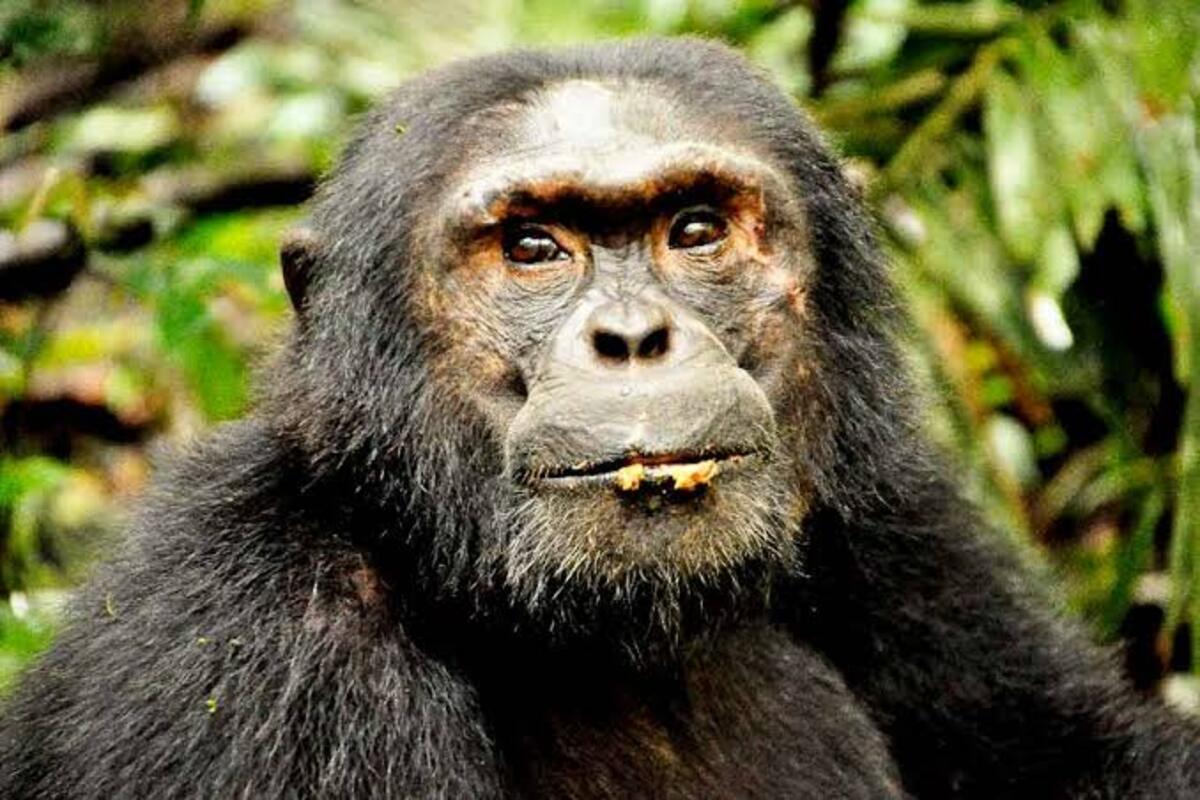
Chimpanzee Tracking in Kalinzu Forest, Uganda: Chimpanzee trekking in Kalinzu Forest offers an opportunity to explore one of western Uganda’s tropical forests on foot, following the calls and movements of wild chimpanzees through the canopy. The experience is different from a traditional game drive. Instead of scanning open grassland from a safari vehicle, you walk beneath tall trees, listen for activity overhead and watch for movement among the branches.
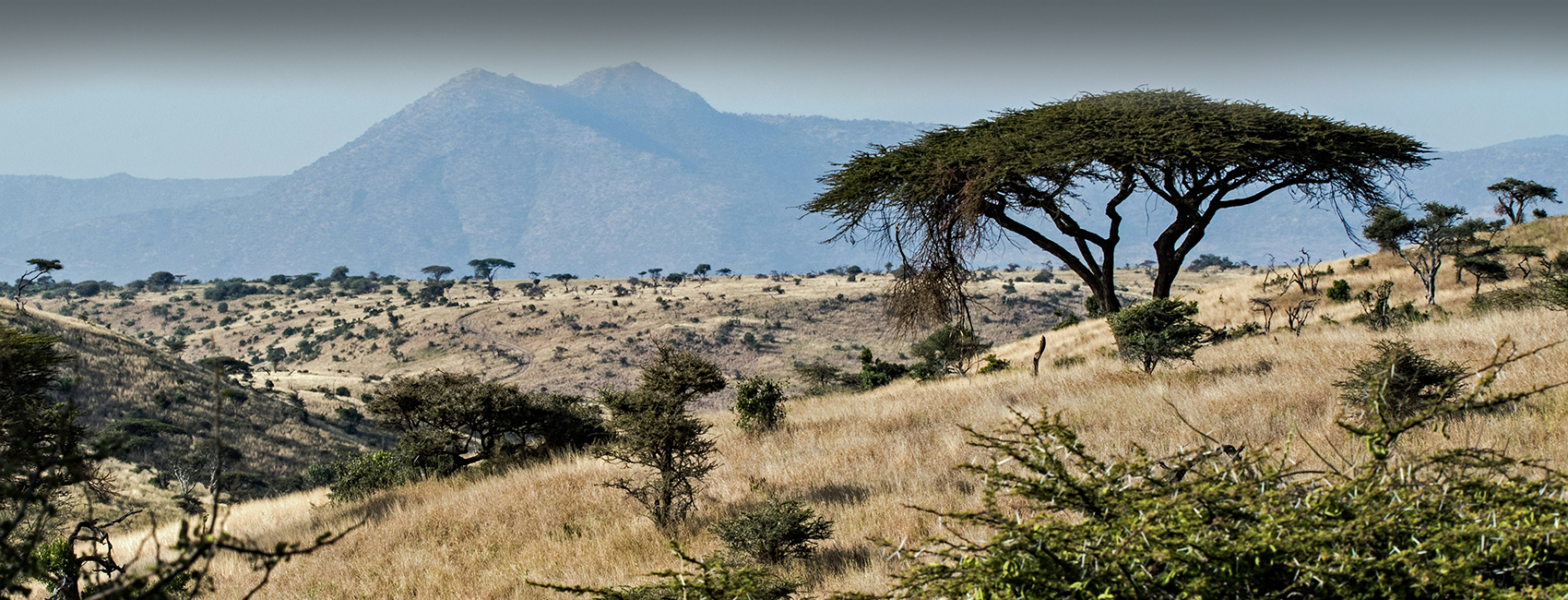
Kalinzu Central Forest Reserve lies close to Queen Elizabeth National Park, making it a practical stop for travellers who want to combine chimpanzee tracking with savannah wildlife viewing. It also provides an alternative to Uganda’s better-known chimpanzee destination, Kibale National Park, particularly for those already travelling through the region.
The forest has more to offer than its chimpanzees. Other primates, birds, butterflies and varied vegetation make the walk worthwhile even when the animals are difficult to see.
This guide explains what to expect, how much chimpanzee tracking costs, when to visit, where to stay and how to decide whether Kalinzu belongs in your Uganda safari itinerary.
Where Is Kalinzu Forest in Uganda?
Kalinzu Central Forest Reserve is in western Uganda, mainly in Bushenyi District, along the Bushenyi–Kasese road. It is approximately 375 kilometres from Kampala, with a road journey of around five hours under normal conditions. Traffic, roadworks, stops and the precise starting point can affect the actual travel time.
Its location is one of its strongest practical advantages. The reserve lies close to Queen Elizabeth National Park, allowing visitors to combine forest primates with game drives and a boat trip along the Kazinga Channel. Travellers continuing south can also plan a route towards Bwindi Impenetrable National Park or Mgahinga Gorilla National Park for mountain gorilla trekking.
Kalinzu works particularly well as part of a wider western Uganda circuit rather than as a destination requiring a separate journey from Kampala solely for chimpanzee tracking.
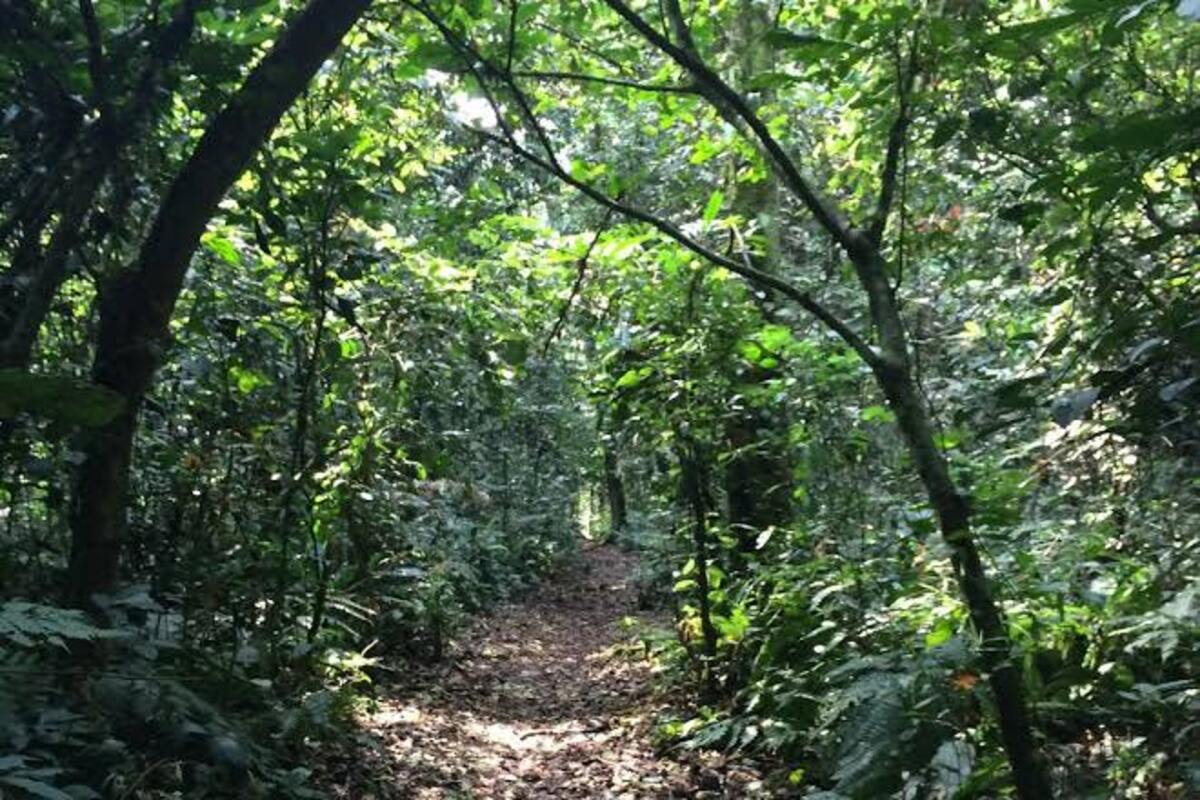
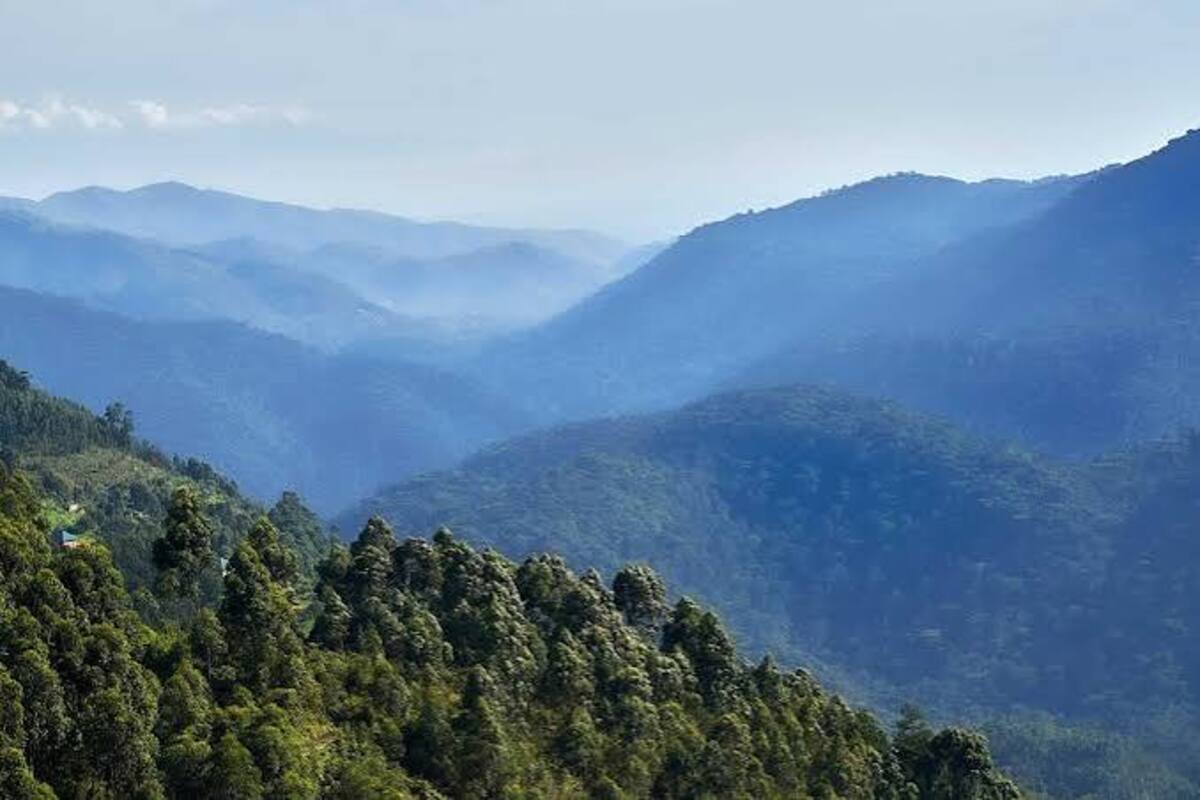
Kalinzu Central Forest Reserve
What Is Chimpanzee Tracking in Kalinzu Forest Like?
Chimpanzee tracking begins with a briefing from the guiding team before visitors enter the forest. Guides and trackers use information about the chimpanzees’ movements, along with calls and signs of recent activity, to help locate the community.
The walk follows natural forest trails rather than paved paths. The route depends on where the chimpanzees are that day, so the distance and duration vary. Sometimes the animals are relatively accessible; on other occasions, the group must walk farther through uneven terrain.
As you move beneath the canopy, the forest provides much of the atmosphere. Bird calls carry through the trees, monkeys move between branches and leaves rustle in places where visibility is limited. Chimpanzees may announce their presence with loud calls long before you see them.
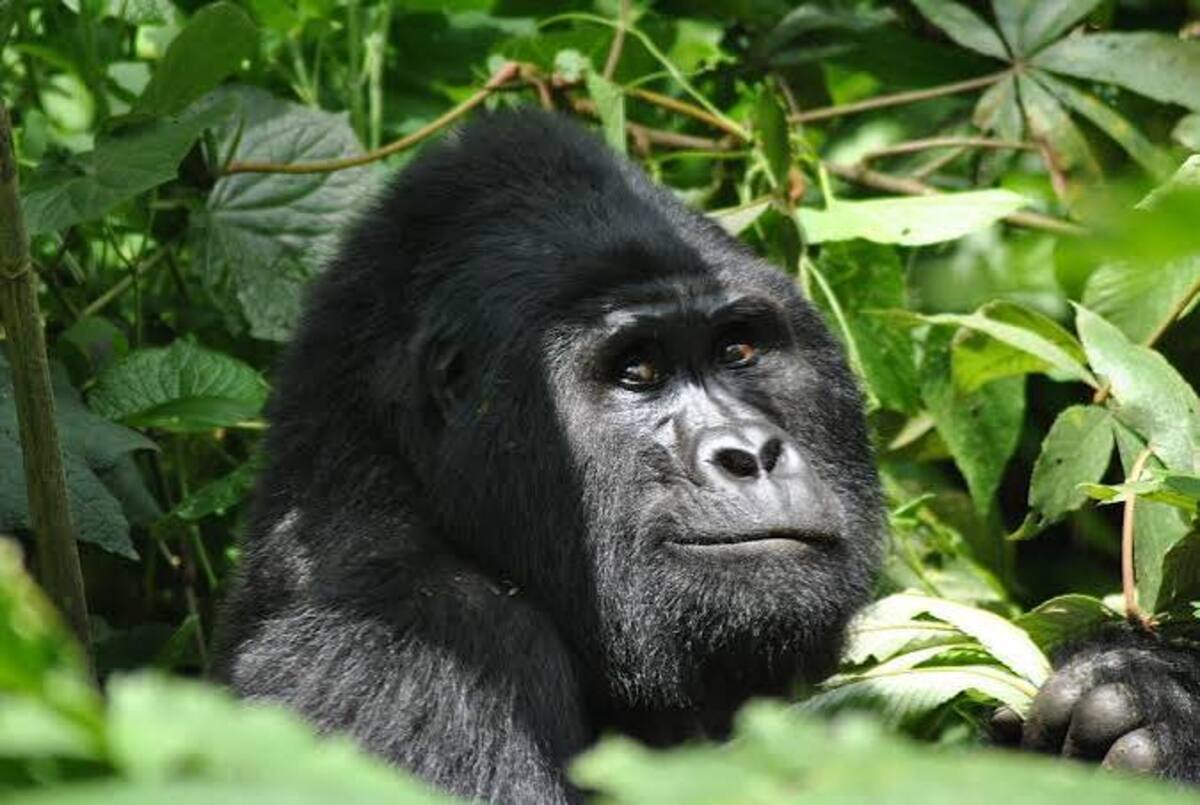
Once the group locates the animals, you may observe them feeding, resting, moving through the trees or interacting with other members of the community. However, they do not remain still for photographs. They can climb quickly, disappear behind foliage or move away while visitors are watching.
The experience rewards patience more than speed. A clear view of a chimpanzee is never guaranteed, and the aim is to observe the animals without disturbing their natural behaviour.
How Difficult Is Chimpanzee Tracking in Kalinzu?
Kalinzu does not require specialist mountaineering skills, but visitors should be comfortable walking for several hours in a natural forest environment.
The terrain can include:
- Uneven paths, exposed roots and sloping ground.
- Muddy or slippery sections after rainfall.
- Short, steep climbs and descents.
- Longer walks when chimpanzees move deeper into the forest.
The difficulty varies with the weather, trail conditions and location of the animals. A walk that feels manageable in dry conditions may be more demanding after rain.
You do not need to be an experienced hiker, but reasonable fitness and steady footing help. Wear shoes with good grip, take water and follow the guide’s advice on difficult sections.
Visitors with limited mobility, balance difficulties or concerns about walking on slippery ground should discuss their needs with their safari operator before confirming the activity. Forest trails are natural terrain, and the experience may not be suitable for everyone.
Families should also check the current minimum age requirement before booking.
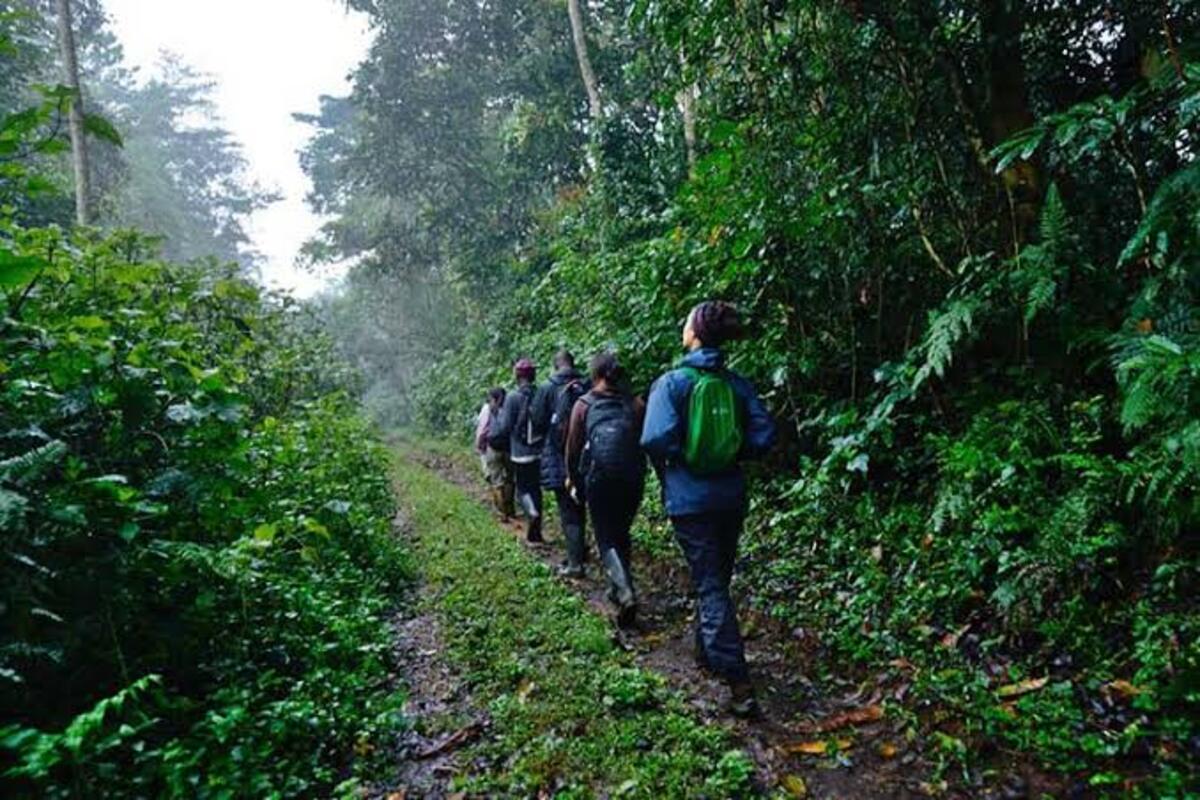
A small group of visitors following a forest trail
What Wildlife Can You See Besides Chimpanzees?
Chimpanzees are the main attraction, but Kalinzu supports a broader range of forest wildlife.
Other primates reported in the reserve include black-and-white colobus monkeys, blue monkeys, red-tailed monkeys and L’Hoest’s monkeys. Their presence adds interest to the walk, particularly when chimpanzees remain high in the canopy.
Birdlife is another reason to explore the forest. Kalinzu supports hundreds of bird species, alongside extensive tree and butterfly diversity. The reserve therefore appeals to nature enthusiasts who enjoy observing an ecosystem rather than focusing on a single animal.
Binoculars can help you identify movement in the canopy, while a guide can point out species that are easy to overlook.
Remember that wildlife sightings depend on the day, the weather and the animals’ movements. Kalinzu is a natural forest, not an enclosure where animals appear on a predictable schedule.
When Is the Best Time to Visit Kalinzu Forest?
Kalinzu can be visited throughout the year. Western Uganda has a tropical climate, and rainfall can occur even during periods generally considered drier.
For chimpanzee tracking, the most important consideration is often the condition of the trails. Wet ground can make walking more difficult, while drier conditions may offer firmer footing. Rain also contributes to the forest’s dense vegetation, so there is no simple rule that one season guarantees better wildlife sightings.
Morning tracking is a popular option because temperatures are generally cooler. Afternoon sessions may suit travellers whose itinerary includes other activities or who prefer a later start. Confirm the available tracking session and reporting time when arranging your visit.
When choosing travel dates, consider the wider safari rather than Kalinzu alone. Gorilla permit availability, accommodation, road transfers and your plans in Queen Elizabeth National Park may have a greater influence on the best dates for your trip.
How Much Does Chimpanzee Tracking in Kalinzu Cost?
Kalinzu is generally considered a lower-cost alternative to Kibale National Park for chimpanzee tracking.
Permit prices are approximately US$130 for foreign non-residents. These figures should not be treated as a guaranteed current tariff. Permit prices, eligibility categories and booking arrangements can change, so confirm the applicable rate directly with the responsible authority or your safari operator before making payment.
The permit is only one component of the total safari cost. Depending on your arrangements, you may also need to budget for:
- Private vehicle transport and a driver-guide.
- Accommodation before or after tracking.
- Meals and drinking water.
- Other activities in western Uganda.
- Any applicable service or local charges not included in your package.
Booking ahead is sensible if you have fixed dates, particularly when chimpanzee tracking forms part of a larger itinerary with gorilla trekking or pre-booked accommodation.
Ask for a clear breakdown of inclusions and exclusions when comparing safari quotations. A lower permit price does not necessarily mean the overall trip costs less, especially when transport and overnight stays differ.
Kalinzu or Kibale: Which Chimpanzee Destination Should You Choose?
Both forests offer opportunities to track chimpanzees, but they suit different itineraries.
Choose Kalinzu if you are visiting Queen Elizabeth National Park
Kalinzu’s location makes it convenient for travellers exploring western Uganda. You can arrange chimpanzee tracking without necessarily adding a substantial detour to a route that already includes Queen Elizabeth National Park.
Its lower permit price is another consideration for budget-conscious travellers, although current rates should always be verified.
Choose Kibale if chimpanzees are a central focus of your safari
Kibale National Park is Uganda’s best-known chimpanzee tracking destination and has a more established tourism infrastructure. It is a strong choice for itineraries built around primates, particularly when combined with nearby Bigodi and other attractions.
Neither forest guarantees a better wildlife encounter on a particular day. Chimpanzees are wild, and sightings depend on their movements and the conditions during the visit.
The most useful question is not simply which forest is better, but which one fits your route, budget and interests. If your itinerary already passes through Queen Elizabeth National Park, Kalinzu is worth considering. If you want to focus more extensively on chimpanzees and the Kibale area, Kibale may be the more natural choice.
What Should You Pack for Kalinzu Chimpanzee Tracking?
Pack for a forest walk rather than a vehicle-based safari. Conditions can change, and the right footwear and rain protection make a practical difference.
Essential items include:
- Hiking shoes or boots: Choose footwear with good grip and secure ankle support if you prefer it.
- Long trousers and a lightweight long-sleeved shirt: These help protect your skin from vegetation and insects.
- Rain jacket or poncho: Rain is possible throughout the year.
- Drinking water: Carry enough for several hours of walking.
- Insect repellent: Useful in a tropical forest environment.
- Small backpack: Keep essentials accessible without carrying unnecessary weight.
- Binoculars: Helpful when chimpanzees or other primates remain high in the trees.
- Camera and suitable lens: A telephoto lens can help when animals are visible at a distance.
A walking stick can be useful on slippery or sloping trails. Ask your operator whether one is available or whether you should bring your own.
For photography, use a camera setting that accommodates changing light beneath the canopy. Avoid flash and follow all instructions from your guide. Keep your equipment secure while walking, and do not attempt to approach wildlife to improve a photograph.
Responsible Chimpanzee Tracking and Safety
Chimpanzees are great apes, and their close relationship to humans makes responsible viewing especially important. Human respiratory illnesses and other infections can pose risks to wild primates.
If you feel unwell before tracking, inform your operator and follow the relevant health guidance rather than entering the forest while sick.
During the encounter:
- Follow the guide’s instructions and maintain the required viewing distance.
- Never touch, feed or deliberately attract chimpanzees.
- Keep your voice low and avoid sudden movements.
- Do not leave the group or approach animals independently.
- Never throw food or litter into the forest.
- Respect restrictions on photography and the time allowed with the animals.
Chimpanzees can move quickly, and their behaviour is not always predictable. Give them space and let your guide manage the encounter.
For personal safety, wear appropriate footwear, stay on the guided route and tell your guide if you are struggling physically. Keep valuables secure and carry only what you need.
Responsible tourism also involves the surrounding communities. Where practical, consider locally operated accommodation, local guiding services and community activities that provide benefits beyond the tracking experience.
Where to Stay When Visiting Kalinzu Forest
Accommodation choices immediately around Kalinzu are more limited than those in Uganda’s major safari hubs. The most suitable base depends on your itinerary, comfort preferences and plans for the following day.
Bushenyi and Ishaka
These nearby towns offer practical options for travellers who want to stay relatively close to the reserve. Accommodation tends to be more straightforward than the established safari-lodge options found around major national parks.
Check the exact location, meal arrangements and departure time before booking, particularly if you have an early tracking session.
Queen Elizabeth National Park area
Travellers combining Kalinzu with Queen Elizabeth National Park may prefer to stay in the wider park area, depending on their route and planned activities. This can make it easier to continue with game drives or a Kazinga Channel boat trip.
However, do not assume every lodge is equally convenient for the forest. Confirm driving distances and the time needed to reach the tracking meeting point.
Camping
Basic camping is available in the Kalinzu area, but facilities and arrangements should be checked before travelling. If you plan to camp, confirm whether equipment, toilets, water and meals are provided rather than assuming a fully serviced campsite.
The main planning consideration is convenience. A lodge farther away may offer more comfort but require an earlier departure, while a simple local stay can reduce the morning transfer.
How to Combine Kalinzu With Queen Elizabeth and Bwindi
Kalinzu fits naturally into a western Uganda itinerary that includes forest primates, savannah wildlife and mountain gorillas.
A practical route may include:
- Kalinzu Forest: Spend time tracking chimpanzees and exploring the forest.
- Queen Elizabeth National Park: Continue with a game drive and, if time permits, a boat trip on the Kazinga Channel.
- Bwindi Impenetrable National Park: Travel south for mountain gorilla trekking, provided permits and accommodation are available.
- Entebbe or another onward destination: Complete the journey according to your flight arrangements and the route selected.
This sequence is only a planning outline, not a fixed itinerary. The best order depends on your arrival time, available permits, road transfers, accommodation and departure flight.
Road journeys in western Uganda can take longer than expected. Avoid planning a demanding activity immediately after a long transfer, and allow sufficient time to reach the correct gorilla-tracking sector if you continue to Bwindi.
For travellers interested in both chimpanzees and gorillas, the contrast is particularly rewarding: chimpanzee tracking involves following active animals through forest terrain, while gorilla trekking takes place in mountain forest and can involve steep slopes and substantial elevation changes.
Bwindi Impenetrable National Park
Frequently Asked Questions About Kalinzu Chimpanzee Tracking
Are chimpanzees guaranteed during tracking in Kalinzu?
No. Guides and trackers use information about the chimpanzees’ movements to help locate them, but they remain wild animals. Visibility may be limited by dense vegetation or the animals’ position in the canopy.
How long does chimpanzee tracking take?
The duration varies with the location and movements of the chimpanzees. Prepare for several hours on foot and avoid scheduling another activity too tightly afterwards.
What is the minimum age for chimpanzee tracking in Kalinzu?
The minimum age is currently 12 years. Do not assume that the age limit is the same at every chimpanzee-tracking site in Uganda.
Is Kalinzu cheaper than Kibale?
Kalinzu is generally a lower-cost option. However, the total cost depends on transport, accommodation and other activities.
Can I visit Kalinzu and Queen Elizabeth National Park on the same safari?
Yes. Their proximity makes them a practical combination in western Uganda. Whether both fit comfortably into one day depends on the tracking session, transfer times and the other activities you want to include.
Is Kalinzu suitable for first-time safari travellers?
Yes, provided you are comfortable walking on natural forest trails. You do not need specialist hiking experience, but reasonable fitness, appropriate shoes and patience are important.
What should I wear for chimpanzee tracking?
Wear comfortable walking shoes with good grip, long trousers and a lightweight long-sleeved top. Bring rain protection, drinking water and insect repellent. Trail conditions can change after rain.
Can I photograph chimpanzees in Kalinzu?
Photography is possible. Chimpanzees may be high in the canopy or moving quickly, so a suitable zoom lens can help. Never use flash or move closer to an animal against your guide’s instructions.
Where should I stay for Kalinzu chimpanzee tracking?
Stay in the wider Queen Elizabeth National Park area. Choose according to the tracking time, your route and your preferred comfort level, and confirm the transfer distance before booking.
Is Kalinzu Forest Worth Including in Your Uganda Safari?
Kalinzu offers a different perspective on Uganda’s wildlife. The experience centres on walking through a living forest, listening for chimpanzees and observing animals that can be difficult to see in dense vegetation. Its location near Queen Elizabeth National Park also makes it a useful choice for travellers who want to combine primate encounters with traditional safari activities.
It is not the right choice for every itinerary. Travellers seeking extensive chimpanzee-focused activities may prefer to consider Kibale, while those with limited time need to weigh the forest walk against travel distances and other priorities. Permit rates, age requirements and local arrangements also deserve confirmation before departure.
For travellers whose route passes through western Uganda, however, Kalinzu can add a valuable forest experience to a broader safari. The encounter is not defined only by how close you get to a chimpanzee, but also by the time spent listening, watching and understanding the environment these animals call home.
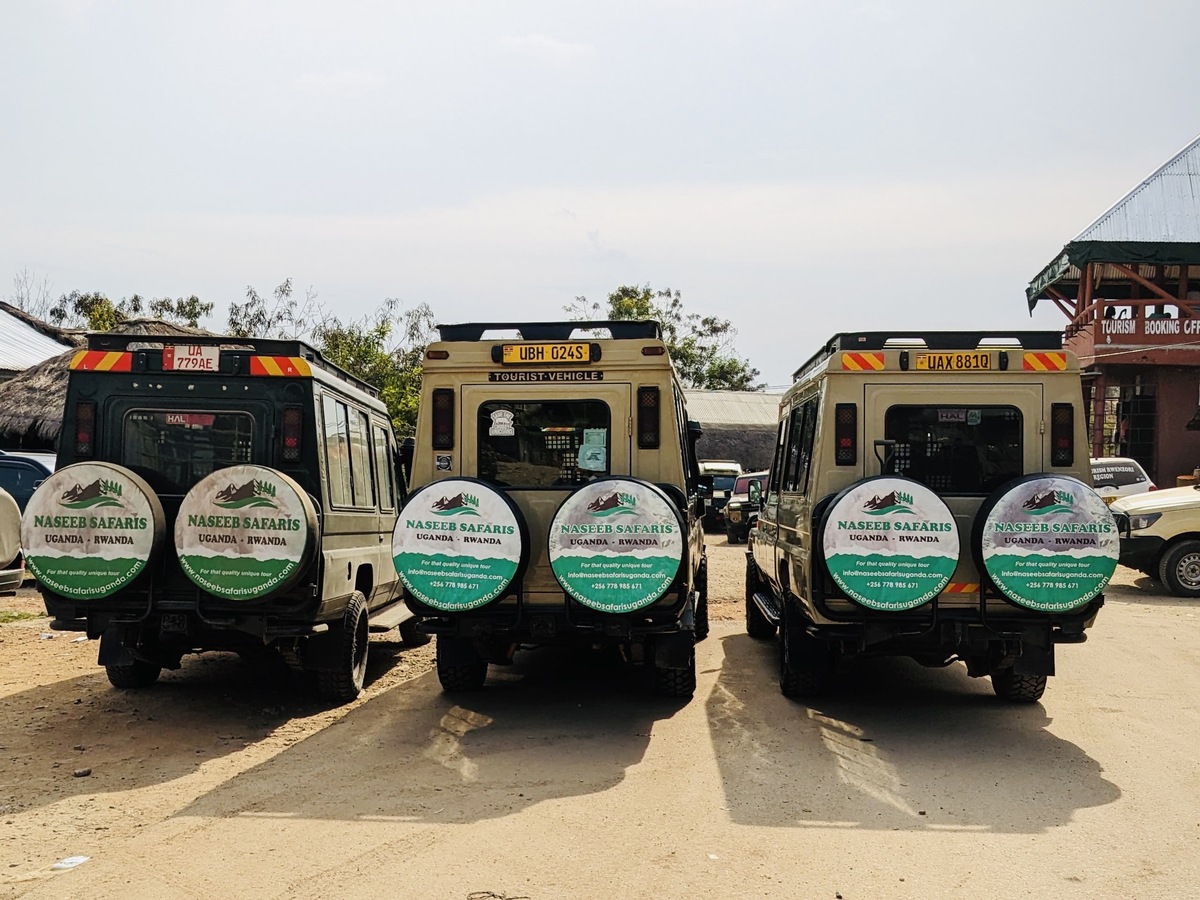
If you are planning a Uganda safari and would like to include Kalinzu, Naseeb Safaris can help you compare chimpanzee-tracking options, choose suitable accommodation and build a practical itinerary around your travel dates, interests and budget.