
Best Places to Visit in Uganda for Wildlife
Best Places to Visit in Uganda for Wildlife, Uganda is one of Africa’s most diverse safari destinations, where rainforest, savannah, mountain ranges, and vast lakes exist within a relatively compact country. For travelers planning their first visit, the challenge is not whether Uganda is worth visiting, it is deciding which national parks best match their interests, travel time, and comfort level.
This guide brings together Uganda’s most important national parks, explaining what each one is like in real travel terms: what you will actually do there, what wildlife you can realistically expect to see, and how to plan a trip that fits together smoothly.
Why Uganda Works So Well as a Safari Destination
Uganda stands out because it doesn’t rely on a single type of safari experience. Instead, it combines several in one journey.
You can move from misty rainforest trekking with gorillas to open savannah game drives, then continue to river cruises and crater lake landscapes, all within a few days of travel.
What makes Uganda different from other safari countries
- Mountain gorilla trekking in ancient forest ecosystems
- High primate diversity, including chimpanzees in multiple locations
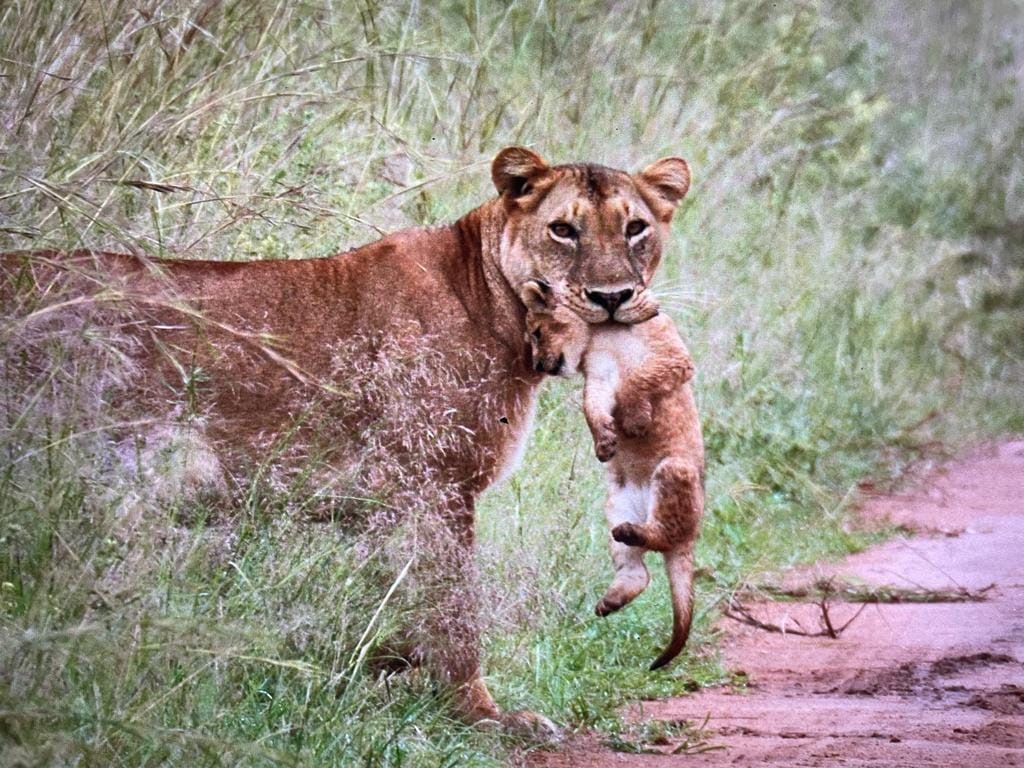
- Classic savannah wildlife including lions, elephants, giraffes, and buffalo
- Strong birdlife, including rare species such as the shoebill
- Fewer vehicles in many parks compared to more commercial safari destinations
- Short travel distances between very different ecosystems
Uganda is definitely a layered safari destination, each park adds a different experience rather than repeating the same one.
Uganda’s Best National Parks for Safari Travel
-
Bwindi Impenetrable National Park (Gorilla Trekking)
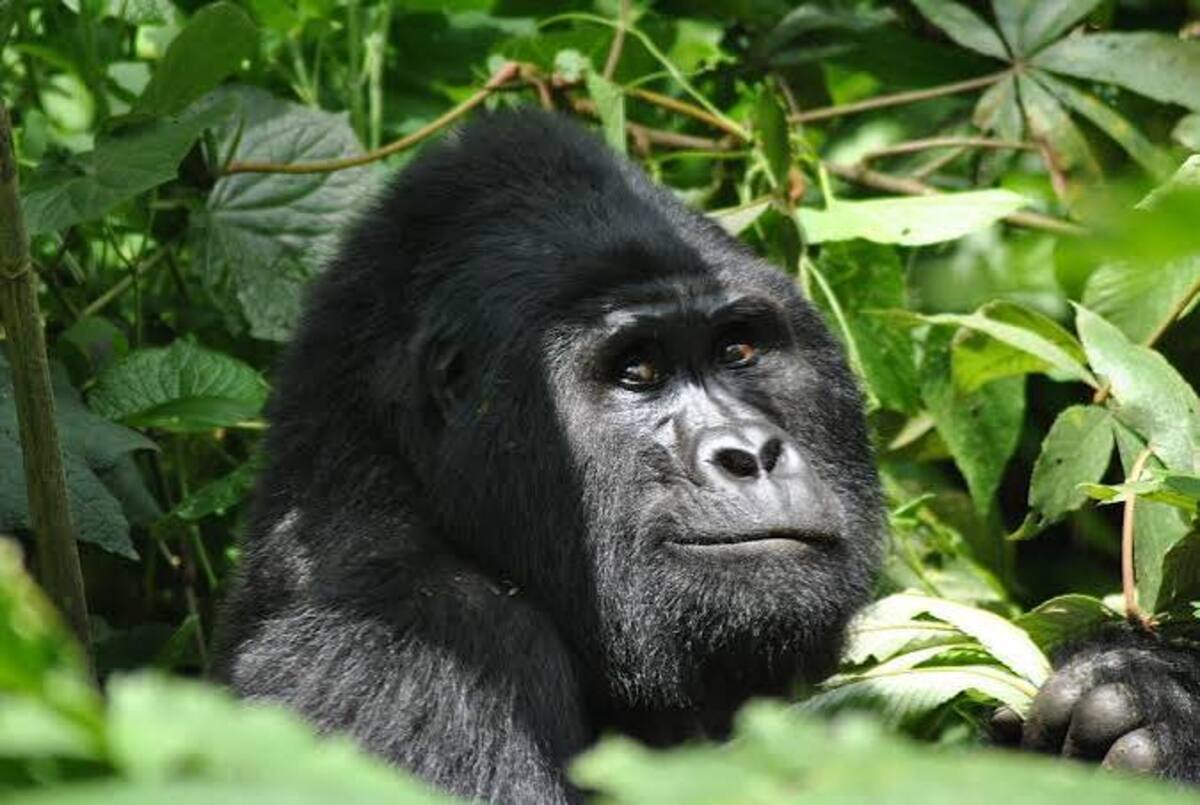
Bwindi Impenetrable National Park is Uganda’s most famous gorilla trekking destination and one of the most important conservation areas in Africa. The forest is dense, steep, and ancient, creating a trekking environment that feels raw and physically immersive rather than staged or simplified.
What gorilla trekking is really like
Gorilla trekking starts early in the morning with a briefing before groups are assigned to different gorilla families. The trek itself is unpredictable. Some groups are found within an hour, others require several hours of hiking through thick vegetation, uneven terrain, and steep slopes.
The forest changes as you walk deeper in. Paths narrow, humidity increases, and visibility shifts constantly between open clearings and dense green walls of vegetation.
Wildlife sightings along the way may include eforest elephants, forest birds, butterflies, and occasionally primates moving through the canopy, but the focus is the search itself.
Meeting a gorilla family
Once the gorillas are located, visitors spend a strictly limited time observing them at close range under ranger supervision. The experience is quiet and controlled to protect the animals.
Expect to see:
- Feeding behavior
- Grooming and social bonding
- Young gorillas playing
- The dominant silverback observing the group
Gorilla habituation experience
For travelers who want more time in the forest, the gorilla habituation experience allows extended observation of groups still becoming accustomed to human presence. It is physically demanding and less predictable, but offers a deeper understanding of gorilla behavior.
Practical considerations
- Trekking is physically demanding and may not suit all fitness levels
- Weather can change quickly; rain is common
- Porters are available and strongly recommended for support
- Permits must be booked well in advance due to limited daily availability
Internal link suggestion: Gorilla Trekking Packing List
-
Queen Elizabeth National Park (Classic Safari Variety)
Queen Elizabeth National Park is one of Uganda’s most versatile safari destinations, combining savannah, wetlands, lakes, and forested areas in a single landscape.
This is the park where travelers often get their “classic safari rhythm”—game drives in the morning, boat safaris in the afternoon, and chimpanzee trekking in forested gorges.
Wildlife you can realistically expect
- Elephants and buffalo in open grasslands
- Lions, including the tree-climbing lions in Ishasha
- Leopards (sightings are possible but not guaranteed)
- Uganda kob, warthogs, and various antelope species
- Hippos and crocodiles in waterways
- Large bird populations along wetlands and lakes
Kazinga Channel boat safari
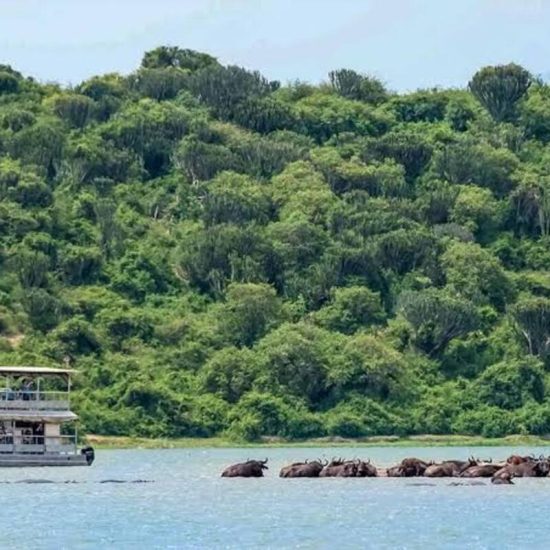
The Kazinga Channel boat cruise is one of the most reliable wildlife viewing experiences in Uganda. Animals gather along the shoreline in large numbers, especially during dry periods.
You may see:
- Hippos clustered in the water
- Buffalo cooling at the banks
- Elephants coming to drink
- Dense bird activity along the shoreline
Chimpanzee tracking in Kyambura Gorge
Kyambura Gorge offers a contrasting landscape, lush, forested, and enclosed compared to the surrounding savannah. Chimpanzee tracking here is less predictable than Kibale but adds variety to the park.
Internal link suggestion: Gorilla Trekking vs Chimpanzee Tracking
-
Murchison Falls National Park (River and Savannah Combined)
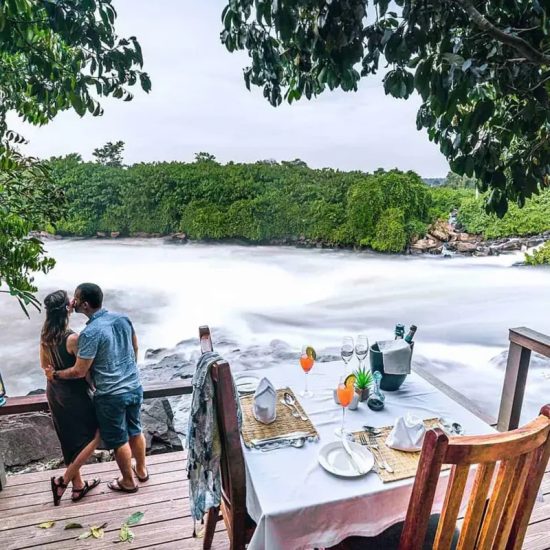
Murchison Falls National Park is Uganda’s largest protected area and one of its most visually dramatic landscapes. It is defined by the Nile River forcing its way through a narrow gorge before dropping into a powerful waterfall system.
The landscape experience
The northern sector offers open savannah ideal for game drives, while the Nile section brings water-based wildlife viewing into the experience. This combination makes the park feel diverse rather than single-layered.
Wildlife expectations
- Lions, elephants, and giraffes
- Buffalo and large herbivore herds
- Hippos and crocodiles along the Nile
- Various antelope species
- Strong birdlife along riverbanks and wetlands
Nile boat safari
The boat trip toward Murchison Falls is one of the most consistent wildlife viewing activities in Uganda. Animals like Hippos, crocodiles are often seen in concentrated numbers along the river.
Hiking to the top of the falls
A short hike leads to viewpoints above the waterfall where the Nile squeezes through a narrow rock formation. The sound and pressure of the water here give a clear sense of the river’s force before it continues downstream.
-
Kibale National Park (Chimpanzee Capital)
Kibale National Park is one of Africa’s best locations for chimpanzee tracking due to its high primate density and relatively accessible forest terrain.
What chimpanzee tracking involves
Unlike vehicle-based safaris, chimpanzee tracking is active and on foot. Visitors follow ranger teams through forest trails, guided by calls, nesting signs, and movement in the canopy.
When chimpanzees are located, they may be seen:
- Feeding in trees
- Grooming within social groups
- Moving quickly between branches
- Vocalising and interacting constantly
Habituation experience
This option allows longer time with chimpanzees that are still being accustomed to human presence. It is more immersive and requires more time in the forest.
Bigodi Wetland experience
Nearby wetlands offer guided walks through community-managed conservation areas, with strong birdwatching opportunities and cultural interaction.
-
Kidepo Valley National Park (Remote Wilderness)
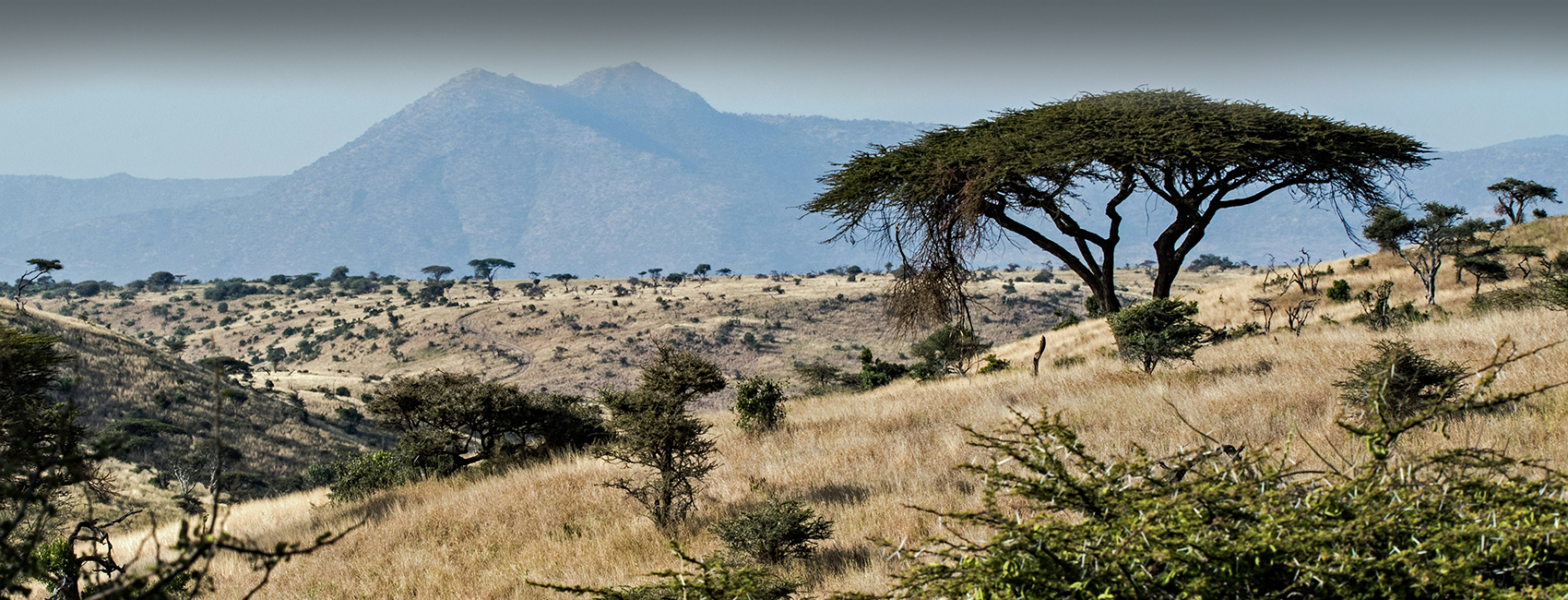
Kidepo Valley National Park is one of Uganda’s most isolated and visually striking safari destinations. Located near the borders of South Sudan and Kenya, it feels geographically and culturally distinct from the rest of the country.
What makes it different
- Wide open plains with minimal vehicle traffic
- Mountain backdrops framing wildlife scenes
- Strong sense of isolation and space
- Wildlife often visible across long distances
Wildlife highlights
- Lions and leopards
- Large buffalo herds
- Zebras, giraffes, and ostriches
- Antelopes like elands, waterbucks
- Occasional sightings of cheetahs and wild painted dogs
Cultural experiences
Visits to nearby communities, including the Karamojong, add context to the region’s pastoral lifestyle and traditions.
-
Lake Mburo National Park (Short Safari Option)
Lake Mburo National Park is the closest savannah park to Kampala and works well for shorter trips or as a final stop before departure.
Why travelers choose it
- Short driving distance from Kampala
- Good introduction to savannah wildlife
- Less crowded compared to larger parks
Wildlife and activities
- Zebras, impalas, and giraffes
- Hippos and crocodiles in lake areas
- Guided walking safaris (rare in Uganda)
- Boat trips on Lake Mburo
- Horseback safaris in designated areas
-
Mgahinga Gorilla National Park (Quiet Gorilla Trekking)
Mgahinga Gorilla National Park is Uganda’s smallest national park but sits within the Virunga volcanic region, offering dramatic scenery and fewer visitors than Bwindi.
What to expect
- Gorilla trekking in a quieter environment
- Golden monkey tracking in bamboo forests
- Volcano hiking on extinct volcanic peaks
The experience here feels more open and less crowded, though wildlife encounters depend on movement patterns similar to Bwindi.
How to Choose the Right National Park in Uganda
If you want gorilla trekking
- Bwindi Impenetrable National Park
- Mgahinga Gorilla National Park
If you want chimpanzees
- Kibale National Park (most reliable)
If you want classic safari game drives
- Queen Elizabeth National Park
- Murchison Falls National Park
If you want remote wilderness
- Kidepo Valley National Park
If you have limited time
- Lake Mburo National Park
Practical Planning Advice
Best time to visit Uganda’s national parks
Uganda can be visited year-round, but conditions vary.
Dry seasons
- Easier trekking conditions
- Better wildlife visibility near water sources
- More predictable road access
Wet seasons
- Fewer visitors
- Greener landscapes
- Excellent birdwatching
- More challenging trekking conditions
Safari logistics to understand
- Road travel between parks can take several hours
- Some routes involve unpaved or uneven roads
- Domestic flights are available for longer distances
- Gorilla and chimpanzee permits must be booked in advance
- Porters are available for trekking support
Responsible travel expectations
- Maintain distance from wildlife at all times
- Follow ranger instructions without deviation
- Avoid littering in protected areas
- Respect local communities and cultural practices
- Limit noise in forest environments
FAQs About Uganda National Parks
How fit do I need to be for gorilla trekking?
Moderate fitness is usually enough, but treks can involve steep and muddy terrain.
Will I definitely see gorillas or chimpanzees?
Sightings are highly likely with ranger tracking, but wildlife remains unpredictable.
Can I hire a porter?
Yes, and it is strongly recommended for carrying bags and supporting balance on steep trails.
What happens if it rains during trekking?
Trekking continues unless conditions become unsafe. Rain is common in forest environments.
Can seniors do gorilla trekking?
Yes, with proper pacing and porter support. Trek difficulty varies by group allocation.
Is photography allowed?
Yes, but flash photography is not permitted near primates.
How much should I tip?
Tipping is not fixed but is generally given to guides, porters, and lodge staff based on service.
Uganda’s national parks are not identical safari stops, they are different environments that together create a complete picture of the country’s landscapes and wildlife. From rainforest trekking with gorillas to open savannah game drives and river-based wildlife viewing, each park contributes a distinct part of the journey.
What stays with most travelers is not just the wildlife itself, but the contrast between places: the silence of a forest trail, the openness of savannah plains, and the movement of life along the Nile.
For anyone planning a safari, the key is not trying to see everything at once, but choosing a combination that matches how you like to travel and how much time you have.
For tailored safari planning, permits, and itinerary design, Naseeb Safaris can help structure a journey that fits your schedule, interests, and travel style without rushing the experience.