
Gorilla Families in Bwindi Impenetrable & Mgahinga National Parks
Gorilla Families in Bwindi Impenetrable & Mgahinga National Parks, Few wildlife encounters inspire as much anticipation as meeting a family of wild mountain gorillas. The experience is remarkably quiet. After hours of following forest trails, listening to your guide interpret broken branches and fresh footprints, you finally arrive at a clearing where a gorilla family is feeding, resting, or grooming one another. The forest carries on around them as though your presence barely matters.
That sense of witnessing daily life rather than a staged wildlife show is what makes gorilla trekking in Uganda so distinctive.
Uganda protects more than half of the world’s remaining mountain gorillas, offering visitors the chance to observe these endangered primates in two protected areas: Bwindi Impenetrable National Park and Mgahinga Gorilla National Park. Together, these parks are home to 26 habituated gorilla families that can be visited under carefully managed tourism programs.
Understanding how these families are organised and what makes each trekking region different can help you choose the right permit, prepare for the trek, and set realistic expectations before you arrive.
This guide explains Uganda’s gorilla families, where they live, what makes each trekking sector unique, and what first-time visitors should know before planning their safari.
Why Uganda Is One of the Best Places to See Mountain Gorillas
Mountain gorillas survive naturally in only two regions on Earth: the Virunga Massif, shared by Uganda, Rwanda, and the Democratic Republic of Congo, and the ancient forests of Bwindi Impenetrable National Park.
Uganda stands apart because it offers both.
Bwindi alone protects the largest single population of mountain gorillas anywhere, while nearby Mgahinga forms part of the wider Virunga ecosystem. For travellers, this means more trekking permits, more habituated families, and a wider range of trekking experiences than almost anywhere else.
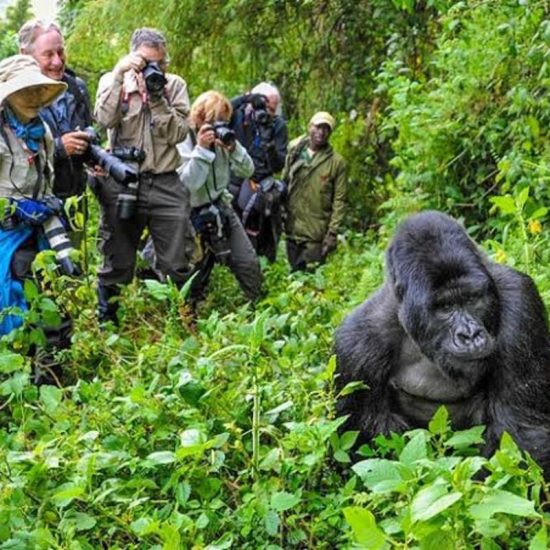
Unlike many wildlife safaris, gorilla trekking isn’t about searching vast landscapes from a vehicle. Every trek is on foot. Rangers and trackers head into the forest at first light, locating each habituated family before visitors begin hiking. Once your group reaches the gorillas, you will spend one carefully regulated hour observing them from a respectful distance.
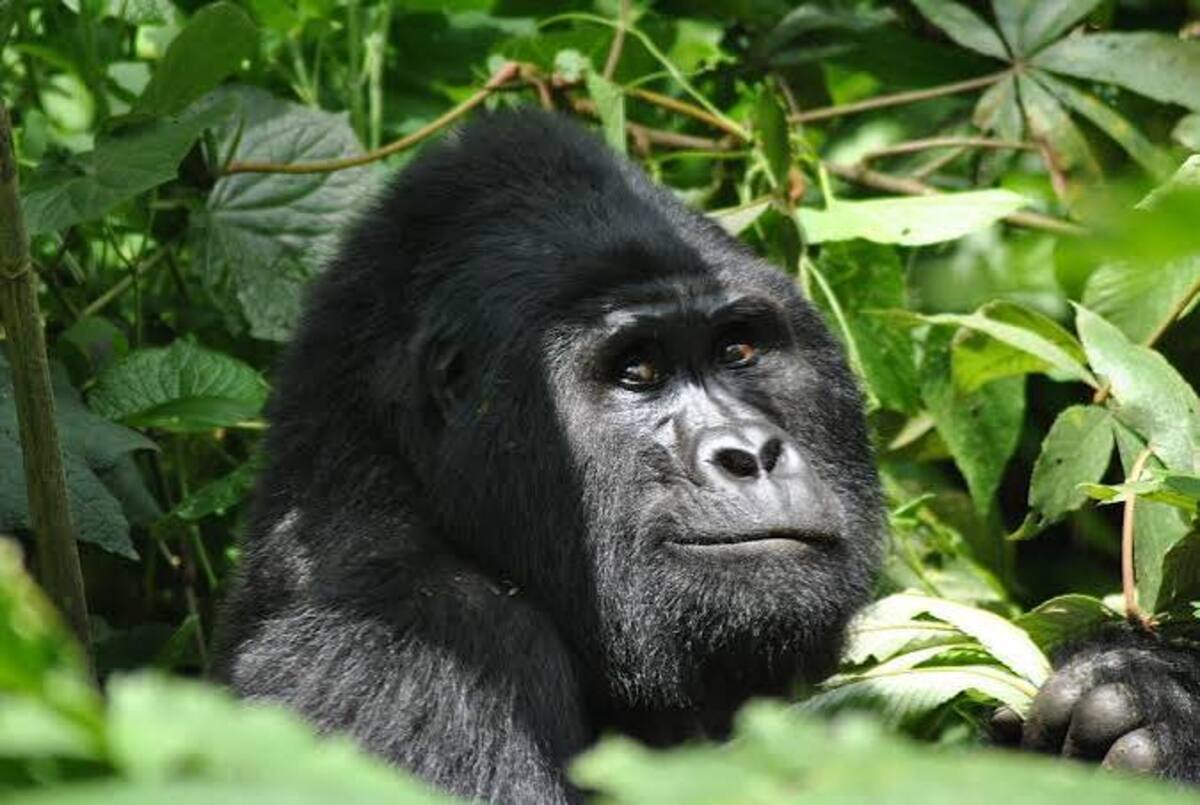
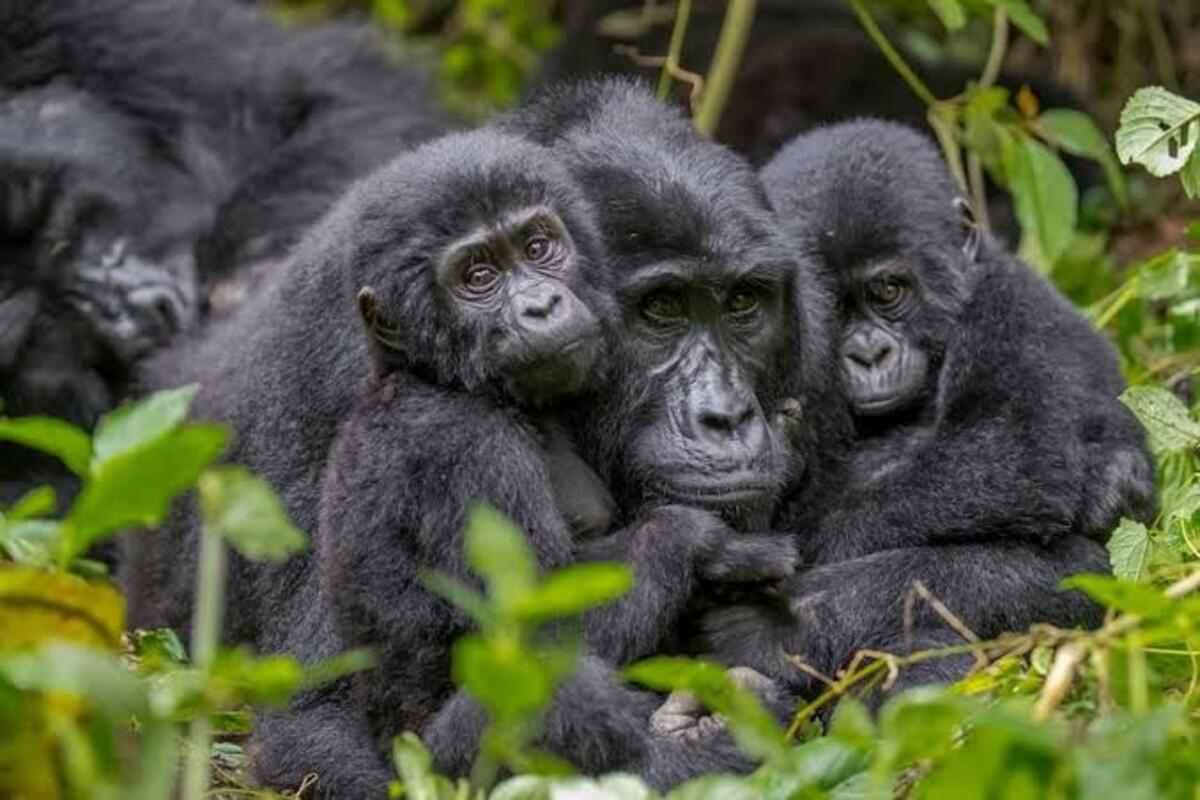
The encounter may involve watching infants tumble through vines, mothers nursing young, or a silverback quietly supervising the family. Every visit is different because the gorillas remain completely wild and continue their daily routines regardless of who is watching.
Why gorilla tourism matters
Gorilla trekking is also one of Africa’s strongest examples of conservation supported by tourism.
Revenue from trekking permits helps fund:
- ranger patrols
- veterinary care
- habitat protection
- scientific monitoring
- community development projects around the parks
The system deliberately limits visitor numbers. Only eight people may visit a habituated gorilla family each day, reducing stress on the animals while creating a more intimate experience for visitors.
Understanding Uganda’s Gorilla Families
Mountain gorillas live in stable social groups, often referred to as families. Each family has its own hierarchy, relationships, and history, many of which have been documented by researchers for decades.
Although visitors often focus on the dominant silverback, every member plays an important role within the group.
The silverback
The silverback is the group’s leader.
Recognisable by the band of silver hair across his back, he makes decisions about where the family feeds, rests, and travels. He also settles conflicts within the group and defends family members if threatened.
Some families have more than one silverback living together peacefully, while others have experienced dramatic changes after younger males left to establish their own groups.
Adult females
Female gorillas spend much of their day feeding, caring for infants, and interacting with other members of the family.
Many visitors are surprised by how gentle and patient these mothers appear, particularly when young gorillas climb over them or demand attention.
Blackbacks
Blackbacks are adolescent males that have not yet developed the distinctive silver hair of mature males.
Some eventually remain within their family, while others leave to form new groups, often taking females with them.
Many of today’s habituated gorilla families began when an ambitious blackback challenged the dominant silverback or chose to establish a new family elsewhere in the forest.
Juveniles and infants
For many visitors, the youngest gorillas become the highlight of the trek.
Juveniles spend much of their time wrestling, climbing trees, chasing one another, and testing boundaries under the watchful eyes of adults.
Infants rarely stray far from their mothers during their first years, often clinging to their backs as the family moves through dense vegetation.
What Does “Habituated” Mean?
One of the most common questions first-time visitors ask is whether gorillas are trained.
They are not.
Instead, they undergo a long process known as habituation, during which researchers and rangers gradually help a wild gorilla family become accustomed to the quiet presence of humans.
This process typically takes several years.
Throughout habituation, conservation teams slowly reduce the gorillas’ natural fear of people without changing their wild behaviour. The goal is not to tame them but to allow visitors and researchers to observe them safely while minimising stress.
Even after habituation, gorillas remain entirely wild.
They choose where they travel each day, how long they remain in one place, and whether they continue feeding or move deeper into the forest.
This unpredictability is part of what makes each trek unique.
Where Can You See Gorilla Families in Uganda?
Uganda offers gorilla trekking in two protected areas.
Bwindi Impenetrable National Park
Most trekking permits are issued here.
The park covers steep hillsides draped in ancient rainforest, with elevations ranging from approximately 1,160 to over 2,600 metres. Thick vegetation, narrow trails, and changing terrain mean no two hikes are exactly alike.
To help manage tourism, Bwindi is divided into four trekking sectors:
- Buhoma
- Ruhija
- Rushaga
- Nkuringo
Each sector has its own entrance gate, accommodation options, and habituated gorilla families.
When you book a permit, it is assigned to one of these sectors rather than to the park as a whole.
Mgahinga Gorilla National Park
Smaller than Bwindi, Mgahinga lies within Uganda’s portion of the Virunga Mountains.
Only one habituated gorilla family is available for tourism here, creating a quieter trekking experience with fewer daily visitors.
The volcanic scenery also differs significantly from Bwindi’s dense rainforest, giving travellers a distinctly different atmosphere.
Bwindi’s Four Gorilla Trekking Sectors Explained
Many first-time visitors assume that all gorilla treks in Bwindi are similar.
In reality, each sector offers a different combination of landscape, hiking difficulty, accommodation, and gorilla families.
Your trekking permit determines where your adventure begins, so understanding these regions can help you choose the experience that best suits your interests and fitness level.
Buhoma Sector
Located in the northern part of the park, Buhoma was Uganda’s original gorilla trekking destination and remains one of the most popular areas for first-time visitors.
The village around the park headquarters has developed gradually over many years, offering a good selection of lodges, restaurants, and community tourism projects.
Although no trek can be guaranteed to be easy, some routes from Buhoma tend to involve gentler terrain than parts of southern Bwindi.
Mubare Family
Mubare holds a special place in Uganda’s conservation history.
Opened for tourism in 1993, it became the country’s first habituated gorilla family available to visitors.
Over the years, the group has experienced natural changes in leadership and membership, illustrating how gorilla societies evolve over time.
Trekkers assigned to Mubare often appreciate both its historical significance and the opportunity to observe one of Uganda’s longest-monitored families.
Habinyanja Family
Habinyanja takes its name from a swamp where the family was first observed.
The group has a fascinating social history, having grown, divided, and reorganised as younger males established their own families elsewhere in the forest.
Today, it remains one of Buhoma’s most established trekking groups.
Rushegura Family
Rushegura formed after separating from Habinyanja, a reminder that gorilla families are dynamic rather than fixed.
This family has earned a reputation among guides for being relatively relaxed around visitors, although every encounter depends on the gorillas’ behaviour on the day.
Because the family sometimes ranges near the edge of the forest, hiking distances can vary considerably from one trek to another.
Katwe Family
Katwe is among the newer habituated families available in Buhoma.
With fewer individuals than some of the older groups, visitors often find it easier to observe interactions between family members without needing to scan a large area of forest.
Muyambi Family
One of Bwindi’s newest habituated groups, Muyambi reflects Uganda’s ongoing commitment to expanding sustainable gorilla tourism while reducing pressure on older trekking families.
Because recently opened groups often attract fewer visitors initially, permits here may occasionally be easier to secure during busy travel seasons.
Binyindo Family
Named after its dominant silverback, Binyindo has become another welcome addition to Buhoma’s growing list of trekking options.
Its formation also demonstrates how gorilla families naturally change over time as younger males establish independent groups.
Kanyanyi Family
The smallest of Buhoma’s current trekking families, Kanyanyi offers visitors the opportunity to observe a close-knit social group.
Smaller families often move differently through the forest than larger troops, creating a different rhythm during the trekking experience.
Ruhija Sector
East of Buhoma, Ruhija sits at one of the highest elevations in the park.
Morning temperatures here can feel noticeably cooler, and the surrounding ridges often provide sweeping views across the forest before the day’s mist begins to lift.
Birdwatchers frequently choose Ruhija because it also offers excellent opportunities to spot several of the Albertine Rift’s endemic bird species.
The hiking here ranges from moderate to demanding, depending on where the gorillas have travelled overnight.
Bitukura Family
Bitukura became known among researchers for adapting unusually quickly during the habituation process.
Visitors often describe the family as calm, making it easier to spend time observing subtle social interactions rather than constant movement.
Oruzogo Family
One of Ruhija’s liveliest groups, Oruzogo has long been popular with photographers thanks to its energetic juveniles.
If young gorillas are feeling playful, they may spend much of the hour climbing trees, tumbling through vegetation, or chasing siblings around the adults.
These moments are impossible to predict, but they often become lasting memories for visitors fortunate enough to witness them.
Mukiza Family
Mukiza emerged after splitting from the larger Kyaguriro family.
Like many breakaway groups, it illustrates how gorilla society naturally evolves as younger silverbacks mature and establish their own leadership.
Because the family is relatively compact, many trekkers find it easier to follow interactions between individual members.
Kyaguriro B
Unlike the other families in Ruhija, Kyaguriro B has traditionally been managed primarily for research rather than regular tourism.
Access policies can change over time, so visitors should not expect permits for this group unless officially released by the Uganda Wildlife Authority.
Its continued role in scientific research contributes valuable knowledge about mountain gorilla behaviour, health, and long-term conservation.
Rushaga Sector: The Greatest Choice of Gorilla Families
If flexibility is your priority, Rushaga is often the easiest place to begin your search for a gorilla permit.
Located in the southern part of Bwindi Impenetrable National Park, this sector has the largest number of habituated gorilla families available for tourism. More families means more permits each day, which can make Rushaga a practical choice during busy travel periods when other sectors are fully booked.
The landscape here is varied. Some trails descend into valleys before climbing steep ridges, while others follow gentler forest paths. It’s impossible to predict exactly how demanding your trek will be because the gorillas may have moved overnight, but visitors should be prepared for uneven ground and changing elevations.
Rushaga is also the only place in Uganda where visitors can take part in the Gorilla Habituation Experience, a longer encounter that allows up to four hours with a semi-habituated gorilla family.
Gorilla Families in Rushaga
Nshongi Family
Named after the Nshongi River, this family was once recognised as the largest habituated mountain gorilla group in the world.
Although its numbers have changed over the years as younger silverbacks formed their own families, Nshongi remains one of the park’s most influential groups. Its history reflects the natural way gorilla societies expand, divide, and reorganise over time.
Large families can be especially rewarding because several members may be visible at once, offering opportunities to observe a range of behaviours, from grooming and feeding to playful interactions between juveniles.
Mishaya Family
Mishaya was established when its dominant silverback left the Nshongi family with several females.
This kind of separation is a normal part of mountain gorilla life. As younger males mature, some choose to create independent groups rather than remain under another silverback’s leadership.
Today, Mishaya has become one of the best-known families in the southern sector.
Bweza Family
Bweza also traces its origins to Nshongi.
The family is generally smaller than its predecessor, allowing visitors to follow interactions more easily as the group feeds through the forest.
Depending on the day’s movements, treks to Bweza may range from relatively moderate to physically demanding.
Kahungye Family
Kahungye is one of the larger groups in Rushaga and is often spread across a wider section of forest while feeding.
Rather than gathering in one open space, visitors may notice smaller clusters of individuals moving independently before gradually coming together again.
Watching these shifting social dynamics offers a fascinating glimpse into everyday gorilla behaviour.
Busingye Family
The Busingye family was formed after its dominant silverback separated from Kahungye.
Its story illustrates an important aspect of gorilla conservation: family structures are never static.
As leadership changes naturally, new groups emerge, increasing genetic diversity and contributing to the long-term health of the population.
Bikingi Family
Bikingi is closely associated with the Gorilla Habituation Experience.
Unlike fully habituated families, these gorillas are still becoming accustomed to human observers through a gradual process that takes several years.
Visitors who choose the habituation experience spend significantly more time observing researchers and rangers as they monitor behaviour, record observations, and continue building trust with the group.
Muchunguzi Family
Muchunguzi is another family that formed following changes within the larger Kahungye group.
Because its home range can include steeper sections of forest, hiking distances and difficulty vary considerably.
As with every gorilla trek, your ranger will brief you on expected conditions before departure, but nature always has the final say.
Rwigi Family
Rwigi is a relatively young family led by a silverback that established his own group after leaving Bweza.
Although smaller in size, the family offers the same one-hour viewing experience as every other habituated group.
Visitors often discover that smaller groups provide an easier opportunity to observe individual personalities rather than trying to follow many gorillas at once.
Tindatine Family
Tindatine emerged from Kahungye and has become another important addition to Rushaga’s growing list of trekking families.
Like many younger groups, its membership may continue changing naturally as offspring mature and new social relationships develop.
Kutu Family
Among the newest habituated families available for trekking, Kutu represents Uganda’s continued efforts to balance tourism with conservation.
Introducing additional families helps distribute visitor pressure across the park rather than concentrating tourism around a handful of long-established groups.
Nkuringo Sector: Steeper Trails, Smaller Crowds
South-western Bwindi feels noticeably different from the park’s northern sectors.
The roads leading here wind through terraced hillsides, farming communities, and dramatic viewpoints overlooking the Albertine Rift. The scenery alone is one reason many travellers choose this part of the park.
Historically, Nkuringo developed a reputation for physically demanding treks because many routes begin at higher elevations before descending into valleys where the gorillas spend much of their time. However, this isn’t always the case. Gorilla movements change daily, meaning today’s challenging hike could become tomorrow’s shorter walk.
Travellers who stay in Nkuringo are often rewarded with quieter lodges, panoramic views, and fewer visitors compared with some of the busier trekking sectors.
Gorilla Families in Nkuringo
Nkuringo Family
The Nkuringo family is one of the park’s most recognised groups and played an important role in opening tourism within this part of Bwindi.
Over the years, leadership has changed naturally as older silverbacks died and younger males assumed responsibility for the family.
Like many long-established groups, its history reflects decades of successful conservation and monitoring.
Christmas Family
Named after its dominant silverback, Christmas, this family traces its roots to the original Nkuringo group.
Visitors often appreciate the relatively open forest in parts of its home range, where natural light can make photography slightly easier than in denser sections of the park.
As always, lighting depends entirely on weather and forest conditions.
Bushaho Family
Bushaho was created when members of the Nkuringo family established a new group.
The family frequently ranges across steep hillsides where bamboo, shrubs, and mature forest meet, creating varied scenery throughout the trek.
Because the gorillas travel freely, hiking distances vary from day to day.
Posho Family
Posho became one of Uganda’s newest fully habituated gorilla families after completing the lengthy habituation process.
Its inclusion has increased permit availability in Nkuringo while helping reduce visitor pressure on older groups.
Newly opened families remain just as wild as every other habituated group. The difference is simply that they have reached the stage where they can safely tolerate carefully managed tourism.
Mgahinga Gorilla National Park and the Nyakagezi Family
Although most visitors associate gorilla trekking with Bwindi, Uganda’s second gorilla destination offers an experience that feels distinctly different.
Mgahinga Gorilla National Park covers a much smaller area and forms part of the larger Virunga Mountains shared with Rwanda and the Democratic Republic of Congo.
Instead of dense rainforest stretching across rolling hills, the landscape here is dominated by volcanic slopes, bamboo forest, and dramatic mountain scenery.
The park currently offers trekking with one habituated family.
The Nyakagezi Family
Nyakagezi is the only gorilla family available for tourism in Mgahinga.
For many years the family was known for occasionally crossing international borders within the Virunga ecosystem, reflecting the fact that mountain gorillas pay no attention to political boundaries.
In recent years, however, the family has remained largely within Uganda, making trekking opportunities much more consistent than they once were.
Nyakagezi has attracted scientific interest because it has, at times, included several adult silverbacks living together peacefully, an arrangement that is relatively uncommon among mountain gorillas.
Visitors often describe the experience here as quieter than Bwindi, simply because the park receives fewer trekkers each day.
Is One Gorilla Family Better Than Another?
This is perhaps the question guides hear most often.
The honest answer is no.
Every habituated gorilla family offers the same amount of viewing time, follows the same conservation rules, and provides the opportunity to observe mountain gorillas living naturally in the wild.
What changes is the setting and the behaviour you happen to witness that day.
One family may spend much of the hour feeding quietly in thick vegetation.
Another might include energetic juveniles chasing one another through the undergrowth.
A silverback may choose to sit only a few metres away, while on another trek the family gradually moves through the forest for the entire hour.
These differences are impossible to predict, and that’s precisely what makes each encounter authentic.
Choosing a trekking sector is usually more important than trying to choose a specific gorilla family.
Factors worth considering include:
- Your preferred accommodation.
- Road access from the rest of your itinerary.
- Your overall fitness.
- Permit availability for your travel dates.
- Whether you want to combine trekking with the Gorilla Habituation Experience.
Your safari planner can explain these differences, but the Uganda Wildlife Authority ultimately assigns visitors to specific families based on permit allocation, group size, age, and expected hiking difficulty.
Planning Your Gorilla Trek: Practical Information Every Traveller Should Know
Seeing mountain gorillas requires more planning than most wildlife experiences in Africa. Visitor numbers are intentionally limited, permits are issued for specific dates and park sectors, and the logistics of reaching the forest often influence your itinerary as much as the trek itself.
Taking time to understand the practical details before you book can help you avoid common mistakes and make the experience far more enjoyable.
Gorilla Permit Costs
Every visitor must have a valid permit issued by the Uganda Wildlife Authority (UWA) before joining a trek.
At the time of writing:
- Gorilla Trekking Permit: US$800 per person for foreign non-residents
- Gorilla Habituation Experience: US$1,500 per person
- Discounted rates are available for East African citizens and some resident categories.
Permit prices occasionally change, so always confirm the latest rates before making travel plans.
It’s worth remembering that permit fees contribute directly to conservation, ranger operations, veterinary care, research, and community development around the parks.
When Should You Book?
One of the biggest misconceptions is that permits can easily be arranged at the last minute.
During peak travel seasons, that is rarely the case.
If you’re travelling between June and September or December and February, booking six to twelve months in advance is advisable, particularly if you have fixed travel dates or prefer a specific trekking sector.
Outside these periods, availability is often better, although popular dates can still sell out.
Book early if you:
- Are travelling during school holidays.
- Need several permits for the same group.
- Want to stay at a particular lodge.
- Plan to combine gorilla trekking with chimpanzee tracking or a wildlife safari.
Choosing Where to Stay
Accommodation is spread across each trekking sector rather than in one central location.
For this reason, it’s important to book a lodge close to the sector where your permit is issued. Travelling between sectors on trekking morning often isn’t practical because mountain roads can be slow.
Most areas offer three broad categories of accommodation:
Budget
Simple guesthouses and safari camps with private or shared facilities.
Suitable for travellers who prioritise the trekking experience over luxury.
Mid-range
Comfortable lodges with ensuite rooms, good meals, and attractive forest settings.
This category suits many first-time visitors seeking comfort without premium pricing.
Luxury
High-end safari lodges offering spacious cottages, fine dining, personalised service, and panoramic forest views.
Some luxury properties also arrange spa treatments, private guiding, or cultural activities before and after the trek.
Regardless of your budget, choosing accommodation close to your trekking sector is usually more important than selecting the most luxurious property.
Getting to Bwindi and Mgahinga
Most international visitors arrive through Entebbe International Airport before continuing southwest to the gorilla parks.
There are two main ways to reach the trekking regions.
By Road
Driving from Entebbe or Kampala takes approximately 8–9 hours, depending on traffic, weather, and your chosen sector.
Many visitors break the journey with an overnight stay at locations such as Lake Mburo National Park.
Road conditions have improved considerably in recent years, although the final approach to many lodges still involves winding mountain roads that can become muddy after heavy rain.
By Domestic Flight
Scheduled flights connect Entebbe with nearby airstrips including:
- Kihihi
- Kisoro
Flights significantly reduce travel time but still require a road transfer to your lodge.
They are particularly useful for shorter itineraries or travellers combining gorilla trekking with other safari destinations.
When Is the Best Time to Visit?
Gorilla trekking is available throughout the year.
Unlike seasonal wildlife migrations elsewhere in Africa, mountain gorillas remain in the forest every month.
However, weather influences trail conditions.
Dry Seasons
- June to September
- December to February
These months generally offer firmer trails and more comfortable hiking conditions.
They also coincide with higher visitor numbers and stronger demand for permits.
Rainy Seasons
- March to May
- October to November
Rain often makes trails muddier and steeper sections more slippery.
On the other hand, forests appear especially lush, photography can be beautifully atmospheric, and permit availability is often better.
Because the forest creates its own microclimate, rain is possible at any time of year.
Packing waterproof clothing is advisable regardless of the season.
How Fit Do You Need to Be?
This is perhaps the question first-time visitors worry about most.
There is no single answer because every trek is different.
Some visitors locate their assigned gorilla family within an hour.
Others spend several hours hiking before reaching the group.
Factors affecting difficulty include:
- where the gorillas spent the previous night
- weather conditions
- trail conditions
- elevation changes
- individual walking pace
You don’t need to be an athlete, but a reasonable level of fitness will help you enjoy the experience.
Walking regularly before your trip, especially on hills or uneven ground, is worthwhile preparation.
If you have mobility concerns, discuss them when booking.
The Uganda Wildlife Authority often allocates shorter treks to older visitors or those with medical considerations whenever possible, although this cannot be guaranteed.
Should You Hire a Porter?
Many first-time visitors assume porters are only for people carrying heavy bags.
In reality, they assist trekkers of all ages and fitness levels.
Porters can:
- carry backpacks
- offer support on steep slopes
- help maintain balance in muddy conditions
- reduce fatigue during longer hikes
Hiring a porter also provides valuable income for local communities, many of whom were previously involved in activities that threatened the forest before tourism created alternative livelihoods.
For many visitors, it becomes one of the best decisions of the day.
Photography Tips
Photographing mountain gorillas presents unique challenges.
The forest is often shaded, gorillas move unpredictably, and flash photography is not permitted.
To improve your chances of good images:
- Use a fast lens if possible.
- Increase ISO rather than relying on flash.
- Keep shutter speeds high enough for movement.
- Pause occasionally to enjoy the experience without your camera.
Many visitors discover that some of their strongest memories come from simply watching rather than photographing every moment.
What Should You Pack?
Packing for gorilla trekking is less about style than comfort and practicality.
Essential items include:
- Waterproof hiking boots
- Long trousers
- Long-sleeved shirt
- Lightweight rain jacket
- Gardening or trekking gloves
- Small backpack
- Refillable water bottle
- Energy snacks
- Sunscreen
- Insect repellent
- Camera with spare batteries
Neutral-coloured clothing generally blends better into the forest than bright colours.
Responsible Gorilla Tourism
The success of Uganda’s gorilla conservation programme depends on visitors following a few important rules.
These guidelines help protect both gorillas and people.
During your trek:
- Stay with your guide at all times.
- Maintain the recommended viewing distance whenever possible.
- Never touch the gorillas.
- Speak quietly.
- Do not eat near the gorillas.
- Flash photography is prohibited.
- If you are feeling unwell, inform your guide before the trek.
Mountain gorillas are genetically very similar to humans and are vulnerable to many of the same respiratory illnesses.
These simple precautions play an important role in protecting the population.
Common Mistakes First-Time Visitors Make
A little preparation can prevent many of the frustrations first-time trekkers experience.
Some of the most common mistakes include:
- Waiting too long to reserve permits.
- Underestimating the physical demands of the hike.
- Wearing new hiking boots that haven’t been broken in.
- Forgetting waterproof clothing.
- Expecting every trek to last the same amount of time.
- Focusing only on photographs instead of enjoying the encounter.
- Declining a porter because they assume they won’t need one.
Frequently Asked Questions
Will I definitely see gorillas?
Sightings are never guaranteed because the animals are wild.
However, Uganda has an exceptionally high success rate because experienced trackers locate each habituated family before visitors begin trekking.
Can seniors take part?
Yes! Many visitors in their 60s, 70s, and beyond successfully complete gorilla treks.
Discuss any mobility concerns before booking so the most suitable permit can be requested.
Can children go gorilla trekking?
The minimum age is 15 years.
This rule protects both young visitors and the gorillas.
What happens if it rains?
The trek continues unless conditions become unsafe.
Rain is part of life in a tropical rainforest, so waterproof clothing is always recommended.
Can I wear shorts?
Long trousers are strongly recommended.
They provide better protection against stinging plants, insects, and scratches from vegetation.
Are there toilets at the starting point?
Yes.
Park headquarters have restroom facilities before the trek begins.
Once inside the forest, facilities are extremely limited.
Can I take photographs?
Yes.
Photography is encouraged, but flash photography is prohibited.
How much should I tip?
Tipping is voluntary but appreciated.
Many visitors choose to tip:
- Ranger guides
- Trackers
- Porters
- Lodge staff
Amounts vary according to group size, service, and personal preference.
Is there a luggage limit on domestic flights?
Yes! Most scheduled safari flights operate with relatively small aircraft and impose luggage limits, often around 15 kilograms, including hand luggage.
Soft-sided bags are generally preferred over hard suitcases.
Always confirm current baggage policies with your airline before travelling.
Final Thoughts
Meeting a mountain gorilla family isn’t memorable because the animals perform for visitors. Quite the opposite.
For one hour, you are allowed to observe a society that has evolved over generations within one of Africa’s oldest forests. There are no feeding demonstrations, no staged encounters, and no guarantees about what you will see. Some families spend the morning quietly feeding, while others move steadily through the undergrowth, pausing only briefly before continuing on their way.
That unpredictability is part of the experience. It reminds us that these are wild animals living on their own terms, and that tourism succeeds here because it respects that reality.
Whether you trek in Buhoma, Ruhija, Rushaga, Nkuringo, or Mgahinga, the encounter is less about finding the “best” gorilla family than about spending time in one of the few places on Earth where mountain gorillas continue to thrive.
Planning Your Gorilla Trek with Naseeb Safaris
Every gorilla safari is shaped by factors such as permit availability, travel dates, fitness level, accommodation preferences, and the type of experience you are looking for. If you are unsure which trekking sector best suits your itinerary, the team at Naseeb Safaris can help you compare options, arrange permits, recommend suitable lodges, and build an itinerary that fits your interests and travel pace.
Whether you are planning a dedicated gorilla trekking holiday or combining it with Uganda’s savannah parks, chimpanzee tracking, or cultural experiences, thoughtful planning makes all the difference.