
Planning Chimpanzee Trekking in Kibale National Park Uganda
Planning Chimpanzee Trekking in Kibale National Park Uganda, Chimpanzee trekking in Kibale National Park is one of Uganda’s most rewarding wildlife experiences. It combines the excitement of tracking wild primates with the quiet immersion of walking through one of East Africa’s largest remaining tropical rainforests. Unlike a traditional game drive, where much of the wildlife viewing happens from a vehicle, this is an active experience. You follow forest trails on foot, listen for distant calls, and watch experienced rangers interpret subtle signs left behind by a community moving through the trees.
For many travellers, it becomes one of the defining moments of a Uganda safari, not because sightings are staged or guaranteed, but because they unfold naturally. A morning in the forest can include the booming calls of chimpanzees echoing through the canopy, flashes of black-and-white colobus monkeys overhead, and birds hidden among towering fig trees. Every trek follows a different route and every encounter tells a slightly different story.
This guide is designed to help you decide whether chimpanzee trekking is right for you and, if it is, how to prepare for it. You will find practical advice on permits, accommodation, transport, fitness, packing, and responsible travel, alongside insights into what you can realistically expect from a visit.
Why Visit Kibale National Park?
In western Uganda, about 320 kilometres from Kampala, Kibale National Park protects 766 square kilometres of tropical rainforest, woodland, and swamp. The park forms part of an important wildlife corridor that links with Queen Elizabeth National Park, creating one of the country’s richest ecosystems.
Although Uganda is best known internationally for mountain gorillas, Kibale has earned a reputation as the country’s leading destination for primate viewing. 13 primate species live here, including black-and-white colobus monkeys, red-tailed monkeys, L’Hoest’s monkeys, grey-cheeked mangabeys, olive baboons, and blue monkeys.
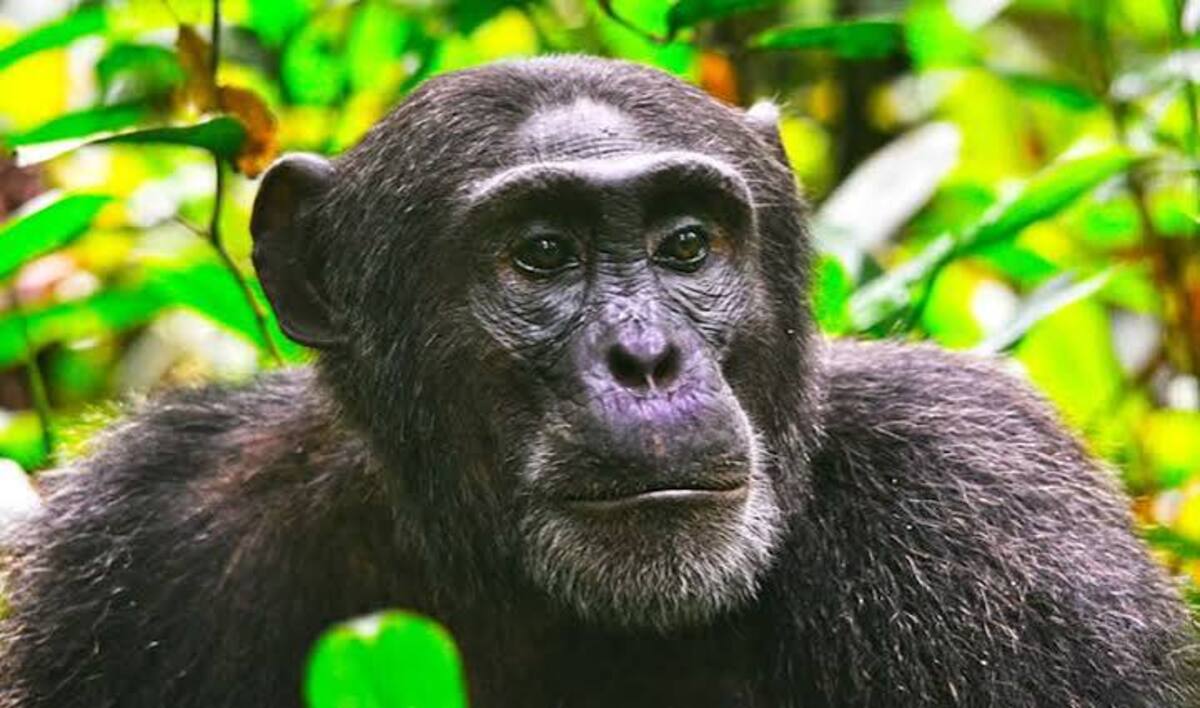
Its greatest attraction, however, is its population of wild eastern chimpanzees. Researchers estimate that more than 1,500 chimpanzees live within the park, making it one of the most reliable places in Africa to observe them in their natural habitat.
Unlike animals living in enclosed reserves or sanctuaries, these chimpanzees move freely through the forest. Rangers monitor several habituated communities that have gradually become accustomed to human observers without changing their natural behaviour. This allows visitors to watch them feeding, grooming, resting, playing, or communicating while maintaining strict wildlife viewing guidelines.
What Makes Chimpanzee Trekking Different?
Visitors often compare chimpanzee trekking with gorilla trekking, but the experiences are quite different.
Mountain gorillas generally spend much of their day feeding or resting on the ground, allowing visitors to observe them at relatively close range. Chimpanzees are more energetic. They spend much of their time moving through the forest canopy, climbing, foraging, and interacting with other members of their community.
That means your hour with them is rarely static.
You might arrive beneath a fruiting fig tree where several chimpanzees are feeding quietly above. Minutes later, the group may descend briefly before disappearing deeper into the forest. Youngsters often chase one another between branches while adults communicate with expressive vocalisations that can carry surprisingly long distances.
The experience is dynamic rather than predictable, and that’s part of its appeal.
Rather than watching wildlife from a fixed viewpoint, you are observing animals whose daily routines continue regardless of your presence.
A Rainforest That Rewards Slow Travel
The chimpanzees may be the reason most people visit, but they are only one part of what makes the forest interesting.
Walking beneath the canopy encourages visitors to notice details that would be easy to overlook from a safari vehicle.
The air feels cooler beneath mature mahogany and fig trees. Ferns line shaded paths. Butterflies drift through shafts of sunlight where the canopy opens. Somewhere in the distance, a hornbill calls before falling silent again.
Even without seeing a chimpanzee immediately, the forest rarely feels empty.
Experienced Uganda Wildlife Authority rangers frequently stop to explain how particular tree species support wildlife, point out medicinal plants traditionally used by nearby communities, or identify the calls of birds hidden high above.
The result is less like ticking animals off a checklist and more like understanding how an entire rainforest ecosystem functions.
Getting to Kibale National Park
Most visitors reach Kibale as part of a longer safari through western Uganda.
By Road
Driving from Kampala or Entebbe typically takes between five and six hours, depending on traffic and road conditions. The journey follows paved highways for most of the route before reaching the rolling hills and tea-growing landscapes surrounding Fort Portal, Uganda’s tourism city.
While the drive is long, many travellers appreciate that it offers a gradual introduction to rural Uganda. Small trading centres, banana plantations, roadside markets, and tea estates replace the capital’s busy streets, providing a changing picture of daily life outside the cities.
Road conditions are generally good on the main highways, although the final approach to some lodges may involve gravel roads that become muddy after heavy rain.
By Domestic Flight
Travellers with limited time sometimes choose scheduled domestic flights to nearby airstrips before continuing by road to the park. This reduces travel time considerably but usually increases overall trip costs.
For most visitors combining several national parks, travelling by road remains the more practical option as it gives more Uganda experiences.
Where to Stay
Accommodation around the park caters to a wide range of budgets, from simple guesthouses to high-end forest lodges.
Budget Accommodation
Budget travellers will find guesthouses and basic safari lodges offering clean rooms, local meals, and convenient access to the park headquarters.
These are suitable for visitors prioritising wildlife experiences over luxury facilities, examples include Kibale forest camp, chimpanzee capital lodge, little monkey camp.
Mid-range Lodges
Mid-range accommodation is often the most popular choice.
Expect comfortable private rooms, ensuite bathrooms, restaurant facilities, and landscaped grounds where monkeys and birds frequently visit. Examples include turaco treetops, chimpanzee forest lodge
Luxury Lodges
Luxury lodges focus on privacy, personalised service, and locations overlooking the forest or nearby crater lakes.
Many include spacious cottages, fine dining, guided nature walks, and excellent opportunities for birdwatching directly from the property. Examples include Tabebuia spa & resort, mirima lodge, chimpundu lodge
Regardless of where you stay, it’s worth choosing accommodation close to the Kanyanchu Visitor Centre if chimpanzee trekking is your main priority, as this reduces travel time on the morning of your trek.
When Should You Visit?
Chimpanzee trekking takes place throughout the year, but weather influences the experience.
Dry Seasons
The periods from December to February and June to September are generally considered the easiest months for trekking.
Trails are usually drier, making walking more comfortable, especially for visitors who are less confident on uneven ground.
These months are also the busiest, so permits and accommodation should be booked well in advance.
Rainy Seasons
The wetter months, particularly March to May and October to November, bring heavier rainfall and muddier trails.
However, they also transform the forest. Vegetation becomes especially lush, streams flow strongly, and birdlife is often at its most active.
Rain rarely falls continuously all day, but waterproof clothing becomes much more important.
For photographers, soft light after rainfall can produce particularly atmospheric forest images.
How Far in Advance Should You Book?
Chimpanzee trekking permits are issued in limited numbers each day by the Uganda Wildlife Authority.
During peak travel periods, permits can sell out weeks or even months ahead, especially when international tour operators reserve allocations.
If you are travelling during the dry season or planning a safari around fixed flight dates, booking several months in advance is the safest approach.
Leaving arrangements until the last minute may limit your choice of trekking dates or accommodation, particularly if you are combining Kibale with gorilla trekking in Bwindi.
Is Chimpanzee Trekking Right for You?
Many first-time visitors assume trekking requires exceptional fitness.
In reality, most people with average mobility can participate comfortably.
The challenge depends less on distance and more on where the chimpanzees happen to be that morning.
Some groups locate them within an hour of entering the forest. Others spend considerably longer walking before reaching the community.
Trails can include uneven ground, exposed tree roots, muddy sections, and gentle to moderately steep slopes.
Visitors who regularly enjoy walking, hiking, or other outdoor activities usually find the trek manageable.
Those with mobility concerns should discuss their circumstances before booking, as guides can often recommend suitable options or advise on what to expect.
Why Travellers Often Combine Kibale with Other Parks
Few visitors travel to western Uganda solely for chimpanzee trekking.
The park sits within easy reach of several of the country’s best-known safari destinations, making it a natural stop on longer itineraries.
Many travellers continue south to Bwindi Impenetrable National Park for mountain gorilla trekking or east to Queen Elizabeth National Park for classic game drives and boat safaris along the Kazinga Channel.
Others include Lake Mburo National Park or Murchison Falls National Park, creating a journey that combines rainforest, savannah, wetlands, and river landscapes within a single trip.
This variety is one of Uganda’s greatest strengths as a safari destination.
What to Expect on the Day of Your Chimpanzee Trek
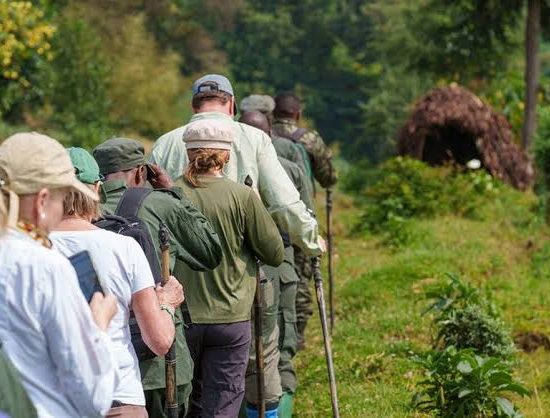
The morning of your trek begins well before you enter the forest. Most visitors leave their lodge shortly after sunrise and make their way to the Kanyanchu Visitor Centre, the main starting point for chimpanzee trekking in the park.
Arriving early gives you time to check in, use the facilities, and meet fellow travellers. Groups are usually small about 8 people per group, helping to reduce disturbance to the chimpanzees and allowing everyone a better viewing experience.
The atmosphere is often a mixture of anticipation and curiosity. Some visitors are seasoned wildlife enthusiasts; others are experiencing their first African rainforest. Either way, everyone starts the morning with the same question: Where are the chimpanzees today?
The Ranger Briefing
Before setting off, Uganda Wildlife Authority (UWA) rangers provide a briefing covering safety, conservation rules, and what to expect during the trek.
This is more than a formality. The guidelines are designed to protect both visitors and chimpanzees, which are highly susceptible to many human illnesses.
Topics typically include:
- Maintaining the required viewing distance
- Speaking quietly while near wildlife
- What to do if chimpanzees move close to the trail
- Photography guidelines
- Staying with your group
- Basic forest safety
- Wearing a face mask when you get into sight with the chimpanzees
If you are feeling uncertain about the hike or have a medical condition that may affect your pace, this is also a good opportunity to speak with your ranger.
Walking Into the Forest
The transition from the visitor centre to the forest is gradual.
At first, the trails are relatively open. As you continue, the canopy becomes denser, filtering the sunlight into shifting patterns across the forest floor.
The sounds begin to change.
Instead of traffic or conversation, you’ll notice birds calling from high above, insects buzzing beneath the undergrowth, and the occasional rustle of leaves as monkeys move through the branches.
One of the pleasures of trekking here is that there is no pressure to rush.
Your guide frequently pauses to explain features that many visitors would otherwise overlook, towering fig trees, strangler vines, medicinal plants, termite mounds, or the distinctive calls of different monkey species.
Even before you encounter chimpanzees, the walk itself becomes part of the experience.
How Rangers Find Chimpanzees
Unlike game drives across open savannah, chimpanzee trekking involves following wildlife that moves freely through dense forest.
Tracking teams monitor habituated chimpanzee communities throughout the day. Rangers remain in contact with these teams and use a combination of fresh signs to narrow down the group’s location.
These signs may include:
- Recent vocalisations
- Fresh feeding remains beneath fruiting trees
- Newly built sleeping nests
- Broken branches
- Fresh footprints
- Reports from trackers already following the group
The amount of walking required varies from day to day.
Sometimes chimpanzees are located within 30 to 45 minutes.
On other mornings, visitors may spend two or more hours searching before making contact.
This unpredictability is part of responsible wildlife tourism. The forest sets the schedule, not the visitors.
The Moment You Find Them
The first indication is often not visual.
You may hear a series of loud pant-hoots echoing through the trees or the sound of branches shaking high above. Rangers usually signal the group to slow down and move quietly.
Then, almost without warning, the forest seems to come alive.
Perhaps an adult chimpanzee is sitting in a fig tree, methodically eating fruit. A youngster swings between branches before disappearing into the foliage. Nearby, two adults pause to groom one another while another individual calls to members of the group hidden deeper in the canopy.
Unlike gorillas, chimpanzees rarely stay in one place for long.
Visitors should be prepared to look up frequently and move with the group as the animals continue their daily routine.
The official viewing time begins once the chimpanzees are located, giving visitors approximately one hour to observe them while following ranger instructions.
Understanding Chimpanzee Behaviour
Watching chimpanzees becomes much more rewarding once you understand some of the behaviours you are seeing.
Rangers often explain interactions as they happen.
You may notice:
- Adults grooming one another to strengthen social bonds.
- Mothers carrying infants that cling tightly to their backs.
- Juveniles chasing each other through the trees in what appears to be play.
- Dominant males making loud displays to reinforce their status.
- Individuals pausing to crack open fruit or inspect branches for insects.
Because chimpanzees share a close evolutionary relationship with humans, many visitors find these interactions surprisingly familiar.
The similarities are fascinating, but they also reinforce the importance of keeping a respectful distance to minimise disease transmission.
Wildlife You May See Along the Way
Although chimpanzees are the main attraction, the forest offers far more than a single species.
Keep an eye out for other primates, including:
- Black-and-white colobus monkeys
- Red-tailed monkeys
- Grey-cheeked mangabeys
- L’Hoest’s monkeys
- Blue monkeys
- Olive baboons
Birdwatchers have even more to discover.
The park supports more than 370 recorded bird species, including several sought-after forest specialists.
Depending on the season and your luck, you may spot:
- Great Blue Turaco
- African Grey Parrot
- Crowned Eagle
- Black Bee-eater
- Green-breasted Pitta
- Yellow-spotted Barbet
Larger mammals such as forest elephants or buffalo do live within the park, but sightings during chimpanzee treks are relatively uncommon.
Managing expectations helps visitors appreciate whatever the forest chooses to reveal.
How Difficult Is the Trek?
This is one of the questions visitors ask most frequently.
The honest answer is that there is no single answer.
Chimpanzees move every day, so trekking distances vary.
Some visitors spend relatively little time walking before locating them.
Others may cover several kilometres over uneven forest terrain.
Conditions also depend on recent weather.
During wetter months, sections of trail may become muddy and slippery. Good footwear makes a significant difference.
You do not need to be an experienced hiker, but you should be comfortable walking for several hours over natural trails.
If you have knee problems, limited mobility, or another health concern, discuss this with Naseeb safaris consultantsbefore travelling. They can advise whether chimpanzee trekking is appropriate or suggest ways to make the experience more comfortable.
What Should You Pack?
Packing for a rainforest is slightly different from packing for a savannah safari.
Lightweight clothing that covers your arms and legs provides protection from insects and thorny vegetation while remaining comfortable in humid conditions.
A practical packing list includes:
- Waterproof hiking boots with good grip
- Long-sleeved shirt
- Lightweight trekking trousers
- Waterproof rain jacket
- Small daypack
- Refillable water bottle
- Insect repellent
- Sun hat
- Snacks
- Gardening or trekking gloves for steep sections
- Camera with spare batteries and memory cards
- Binoculars
Avoid brightly coloured clothing and camouflage patterns, which are generally discouraged for civilian visitors in Uganda.
Photography Tips
Rainforest photography presents different challenges from photographing wildlife on open plains.
Light levels beneath the canopy change constantly, and chimpanzees rarely stay still for long.
To improve your chances of capturing natural images:
- Use a fast shutter speed where possible.
- Increase your ISO rather than relying on flash.
- Keep your camera ready instead of packed away.
- Focus on behaviour rather than close-up portraits alone.
- Take time to enjoy the experience without viewing everything through a lens.
Remember that flash photography is not permitted because it may disturb wildlife.
Can You Hire a Porter?
Unlike gorilla trekking, hiring a porter for chimpanzee trekking is less common because of a more flat landscape compared to Bwindi, although availability porters are always available.
If carrying your camera equipment or backpack is likely to reduce your enjoyment, ask your tour operator or the visitor centre for porter services before your trek.
Using local porter services, where offered, also provides direct income for nearby communities.
Safety in the Forest
Chimpanzee trekking has an excellent safety record when visitors follow ranger instructions.
The key rules are simple:
- Stay with your group.
- Follow your ranger’s guidance at all times.
- Never attempt to approach or touch wildlife.
- Avoid eating near chimpanzees.
- Wear a face mask when you spot the chimpanzees
- Inform your guide if you feel unwell before the trek begins.
Visitors showing symptoms of contagious illness may be advised not to participate, as respiratory infections can spread rapidly among great apes.
These precautions are an important part of responsible wildlife tourism rather than an inconvenience.
Common Mistakes First-Time Visitors Make
Many first-time visitors enjoy their trek even more when they arrive with realistic expectations.
Some of the most common mistakes include:
- Expecting chimpanzees to remain still for photographs.
- Underestimating how humid the forest can feel.
- Wearing new hiking boots that haven’t been broken in.
- Forgetting rain gear during the dry season.
- Spending the entire hour taking photographs instead of simply observing.
A flexible mindset often leads to the most rewarding experience.
Every trek is different, and that’s exactly what makes it memorable.
Responsible Tourism Matters
Chimpanzee trekking depends on a careful balance between tourism and conservation.
Permit fees contribute to wildlife protection, ranger training, habitat management, and community development around the park.
Visitors also play an important role.
Choosing local guides, respecting wildlife regulations, staying on designated trails, and supporting responsible tourism businesses all help ensure future generations can experience the forest much as it exists today.
Rather than seeing tourism as separate from conservation, Kibale demonstrates how the two can work together when carefully managed.
Planning Your Visit: Permits, Costs and Practical Information
A little preparation goes a long way when planning a chimpanzee trekking safari. Permits are limited, accommodation near the park fills quickly during peak travel periods, and travel times between Uganda’s national parks are often longer than visitors expect.
Planning ahead gives you more flexibility and allows you to build an itinerary that matches your interests, whether youare focusing on primates, classic wildlife viewing, birdwatching, or a combination of all three.
Chimpanzee Trekking Permits
Every visitor taking part in chimpanzee trekking must hold a valid permit issued by the Uganda Wildlife Authority (UWA).
Permit fees contribute directly to conservation work, ranger salaries, park management, research, and community projects around protected areas.
Permit prices occasionally change, so it’s always worth confirming the latest rates before making travel plans. As a guide:
- Foreign Non-Residents:currently US$250 (effective January 2027 $ 300 p.p)
- Foreign Residents: reduced resident rate
- East African Citizens: discounted regional rate
Your tour operator will usually arrange permits as part of your safari package.
When should you book?
If you are travelling between June and September or December and February, booking at least three to six months in advance is recommended.
During quieter months, availability is generally better, although early booking is still advisable if your itinerary includes gorilla trekking or other permit-based activities.
Best Time to Visit Kibale National Park
Chimpanzee trekking is available throughout the year, but each season offers slightly different conditions.
Dry Seasons
June to September and December to February generally bring easier walking conditions.
Advantages include:
- Less muddy trails
- More comfortable hiking
- Better road access
- Clearer conditions for photography
These are also the busiest travel periods.
Rainy Seasons
Rain falls more frequently from March to May and October to November.
Visitors shouldn’t expect continuous downpours every day, but afternoon showers are common.
Many experienced travellers actually enjoy visiting during these months because:
- The forest is exceptionally green.
- Bird activity increases.
- Visitor numbers are lower.
- Accommodation may offer better availability.
The main trade-off is muddier trails.
Where to Stay
The area around Kibale offers accommodation for almost every budget.
Budget Options
Ideal for backpackers and travellers prioritising wildlife experiences over luxury.
Expect:
- Comfortable but simple rooms
- Home-cooked meals
- Friendly local hospitality
Mid-range Lodges
The most popular choice for many visitors.
These typically offer:
- Private ensuite rooms
- Restaurant facilities
- Forest or garden settings
- Easy access to the park headquarters
Luxury Lodges
Luxury properties focus on comfort without losing their connection to nature.
Many include:
- Spacious cottages
- Excellent dining
- Forest views
- Guided walks
- Birdwatching opportunities
- Personalised service
Choosing accommodation close to the Kanyanchu Visitor Centre can make for a more relaxed start on trekking morning.
Can You Combine Kibale with Other Destinations?
Absolutely.
In fact, most visitors include Kibale as part of a broader Uganda itinerary.
Popular combinations include:
Queen Elizabeth National Park
Only 3 hours away, Queen Elizabeth National Park offers a completely different landscape.
Visitors often combine chimpanzee trekking with:
- Lion tracking
- Boat cruises on the Kazinga Channel
- Classic wildlife game drives
- Buffalo, antelope, and hippo viewing
Bwindi Impenetrable National Park
Many travellers continue south for mountain gorilla trekking.
Chimpanzees and gorillas provide two very different primate experiences, making them an excellent combination.
Murchison Falls National Park
Northern Uganda offers classic savannah safaris together with one of Africa’s most dramatic waterfalls.
Game drives here often include giraffes, elephants, lions, leopards,buffalo, and numerous bird species like African fish eagle.
Lake Mburo National Park
A good final stop before returning to Kampala or Entebbe.
Walking safaris, cycling, horseback riding, and excellent zebra sightings make it very different from Uganda’s larger parks.
Responsible Tourism
Chimpanzees face ongoing threats from habitat loss, disease, and human activity.
Tourism helps protect them but only when it is managed responsibly.
As a visitor, you can contribute by:
- Following ranger instructions.
- Keeping the required distance.
- Avoiding flash photography.
- Never feeding wildlife.
- Staying home if you’re unwell.
- Supporting locally owned businesses where possible.
Small decisions made by individual travellers collectively make a significant difference to conservation.
Frequently Asked Questions
Will I definitely see chimpanzees?
No wildlife sighting can ever be guaranteed.
However, Kibale has one of Africa’s highest chimpanzee sighting success rates because several habituated communities are monitored daily.
How fit do I need to be?
Average fitness is sufficient for most visitors.
Some walks are relatively easy, while others involve longer distances over uneven ground.
Can seniors participate?
Yes! Many older travellers successfully complete chimpanzee trekking each year.
If you have concerns about mobility or medical conditions, discuss them with your tour operator before booking.
What happens if it rains?
Treks usually continue unless weather conditions become unsafe.
Rain is part of the rainforest environment, which is why waterproof clothing is recommended throughout the year.
Can I wear shorts?
Long trousers are generally a better choice.
They provide protection from insects, stinging plants, and thorny vegetation.
Can I take photographs?
Yes! Photography is encouraged, but flash photography is prohibited.
A camera with good low-light performance is helpful because the forest canopy can be quite dark.
Is there a luggage limit?
There is no luggage restriction for trekking itself, although domestic flights within Uganda often have baggage limits if your itinerary includes air transfers.
How much should I tip?
Tipping is optional but appreciated.
Many visitors choose to tip:
- UWA ranger guides
- Driver-guides
- Lodge staff
- Porters (where used)
Your tour operator can provide current guidance on local tipping customs.
Final Thoughts
Chimpanzee trekking is not simply about reaching a destination or adding another species to a travel list.
It is an opportunity to slow down and experience a rainforest on its own terms.
The forest rewards patience. Sometimes that means standing quietly beneath towering trees while listening for distant calls. At other times, it means watching a family of chimpanzees move effortlessly through the canopy, seemingly unaware of the people observing below.
Equally memorable are the quieter moments: hearing birds hidden in the canopy, learning how local communities have lived alongside these forests for generations, or understanding the conservation work that protects one of Africa’s richest ecosystems.
For travellers looking beyond the traditional safari, Kibale offers something different. It replaces long hours in a vehicle with time on foot, encourages curiosity over speed, and leaves many visitors with a deeper appreciation of the connections between people, wildlife, and forests.
If you are considering a Uganda safari and would like help deciding how chimpanzee trekking fits into your itinerary, the team at Naseeb Safaris can provide personalised advice based on your travel dates, interests, budget, and pace of travel. Whether you are combining Kibale with gorilla trekking, a classic wildlife safari, or a broader East African journey, thoughtful planning can make all the difference. contact us to start planning