
The Complete Guide to Planning a Safe Uganda Family Safari With Children
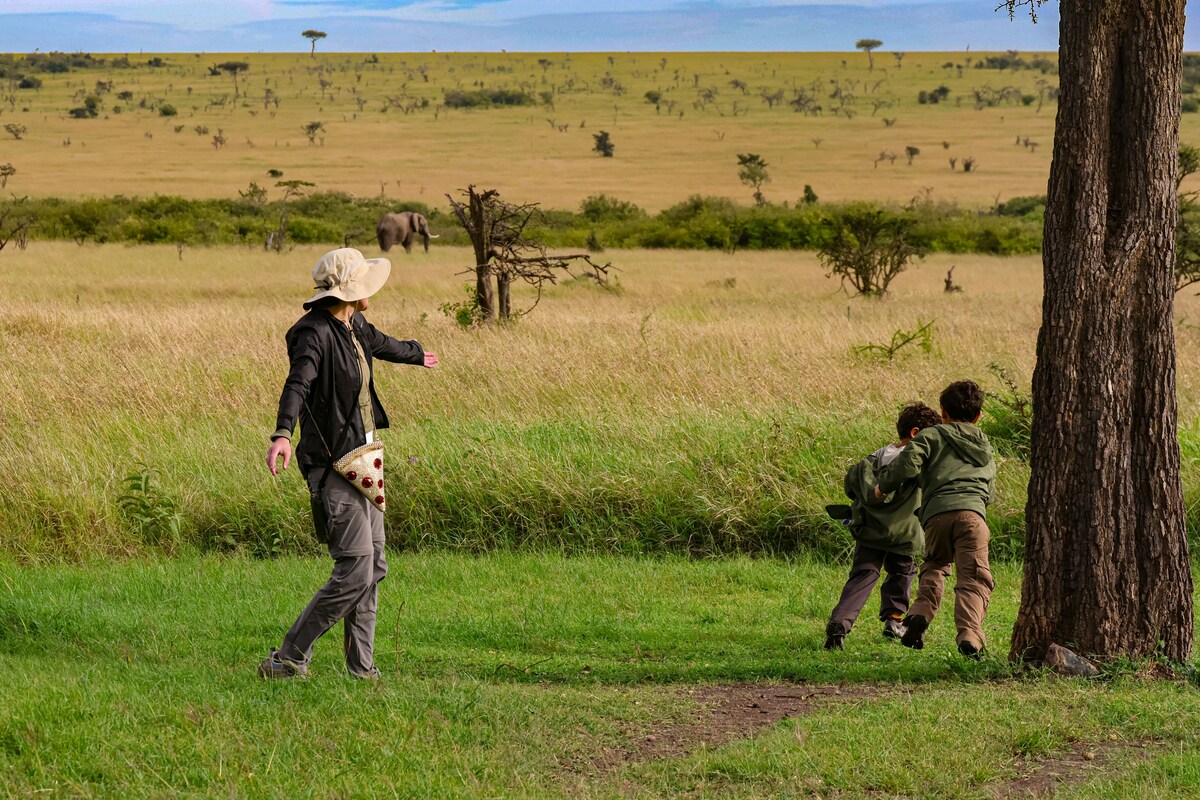
A Uganda safari with children is not just about seeing animals, it is about helping young travelers understand how nature works in real time. For many families, it becomes a rare chance to step away from screens and routines and experience landscapes where wildlife still follows ancient rhythms: elephants moving at dawn, hippos surfacing in quiet channels, and forests alive with sound.
This guide is written for parents planning their first safari in Uganda and trying to answer a simple but important question: Is this the right trip for my family, and how do we prepare for it properly?
It covers what to expect on the ground, where to go with children, how safe the experience is, and how to plan a realistic itinerary that keeps both adults and kids engaged.
Why Uganda Works Well for Family Safaris
Uganda stands out in East Africa because it offers variety within relatively short travel distances. Families can move from savannah to rainforest to crater lakes without needing long internal flights or complicated logistics.
Unlike destinations that focus mainly on game drives, here the experience is more layered:
- Wildlife viewing in open savannah parks
- Boat safaris on major rivers and lakes
- Forest walks in primate habitats
- Cultural visits to local communities
- Scenic drives through highlands and crater lakes
For children, this variety matters. Attention spans are different, energy levels change quickly, and the ability to mix activities helps keep the journey enjoyable rather than tiring.
What Children Gain From a Uganda Safari
Wildlife becomes real, not abstract
Most children know animals from books or documentaries. In the savannah, those same animals behave unpredictably and independently. That difference is often what makes the experience memorable.
Common sightings in Uganda include:
- Elephants moving in family groups
- Lions resting in the shade (including tree-climbing lions in the Ishasha sector)
- Buffalo herds crossing open plains
- Giraffes browsing acacia trees
- Hippos in rivers and channels
- Zebras, antelopes, and warthogs
- Primates such as baboons, vervet monkeys, and colobus monkeys
- Over 1,000 bird species, including the shoebill stork in wetland areas
Instead of being “learned about,” animals become observed and understood in real time.
Learning happens naturally in the field
Before most game drives, guides explain three simple rules to children: stay seated, keep voices low when animals are close, and never lean outside the vehicle. Parents are often surprised by how quickly children adapt to these routines. Guides explain:
- How predators hunt and conserve energy
- Why herbivores form herds
- How ecosystems depend on seasonal rainfall
- How human communities coexist with wildlife
- Why conservation areas are protected
Children tend to engage more deeply when learning is tied to something they can see happening in front of them.
Cultural encounters add perspective
Beyond wildlife, Uganda offers accessible cultural experiences that help children understand life beyond their usual environment.
Families may encounter:
- Traditional music and dance performances
- Village visits and homestead tours
- Craft demonstrations such as basket weaving
- Local cooking experiences
- Storytelling sessions with community members
These are not staged attractions in most cases, but everyday life shared in a respectful, guided way.
Is Uganda Safe for a Family Safari?
Safety is one of the most important considerations for parents and rightly so.
In general, Uganda is considered a stable safari destination, and thousands of international families visit each year. However, safety on safari is not accidental; it depends on planning, guiding, and behavior in wildlife areas.
Key safety elements include:
- Traveling with a licensed tour operator
- Staying in established safari lodges and camps
- Following park rules and ranger instructions
- Maintaining safe distances from wildlife
- Using reliable road transport between parks
Children are usually briefed in simple terms: stay close to adults, remain quiet near animals, and never approach wildlife.
In practice, most safari-related risks are minimized by experienced guides who understand animal behavior and terrain conditions.
Best National Parks in Uganda for Families
Queen Elizabeth National Park: Best all-round introduction
This is one of Uganda’s most versatile safari parks and a strong choice for first-time family travelers.
The landscape includes open savannah, volcanic crater salty lakes, wetlands, and forested sections. This diversity increases the chances of varied wildlife sightings without long drives.
Animals commonly seen include:
- African savanna Elephants
- Lions (including tree-climbing lions in Ishasha)
- Cape Buffaloes
- Hippos
- Uganda kobs
- Warthogs
- Baboons and vervet monkeys
Kazinga Channel boat cruise
For many families, this is a highlight because it removes the need for long game drives while still delivering close wildlife encounters.
Along the water, you may see:
- Large hippo pods
- Crocodiles along the banks
- Monitor lizards
- Elephants drinking at the shoreline
- Buffalo herds
- Kingfishers, fish eagles, and pelicans
The slow pace makes it especially suitable for younger children.
Lake Mburo National Park: Best for shorter attention spans and younger kids
Lake Mburo is smaller, easier to access, and less tiring in terms of driving time. It often fits well at the start or end of a Uganda itinerary.
Wildlife includes:
- Zebras
- Impalas
- Elands
- Buffaloes
- Warthogs
- Rothschild Giraffes
What makes this park particularly family-friendly is the variety of ways to explore it.
Activities include:
- Guided walking safaris
- Boat rides on Lake Mburo
- Optional horseback safaris for older children
- Bicycle riding or safaris
Murchison Falls National Park: Wildlife and dramatic landscapes
This is Uganda’s largest national park and combines classic safari scenery with one of the strongest river systems in Africa.
The Nile forces its way through a narrow gorge, creating Murchison Falls, where the river compresses dramatically before continuing downstream.
Wildlife commonly seen:
- Elephants
- Lions
- Giraffes
- Buffaloes
- Hippos and crocodiles along the Nile
- Numerous bird species, including the African fish eagle
Nile boat safari
This section of the trip is often easier for children than long game drives. Wildlife is concentrated along the riverbanks, and sightings are frequent.
Top of the Falls
A short hike leads to viewpoints above the waterfall, where the sound and force of the river becomes immediately noticeable. It also offers a simple way to introduce children to how landscapes are shaped over time.
Kibale National Park: Forest wildlife and chimpanzees
Kibale is best suited for families with older children who enjoy walking and nature observation.
The forest is known for its high density of primates, especially chimpanzees.
Species include:
- Chimpanzees
- Red colobus monkeys
- L’Hoest’s monkeys
- Grey-cheeked mangabeys
- A wide variety of forest birds like pittas, turacos and butterflies
Chimpanzee tracking is guided and structured, but it involves hiking through uneven terrain. For this reason, it is generally recommended for teenagers(15 years) rather than young children.
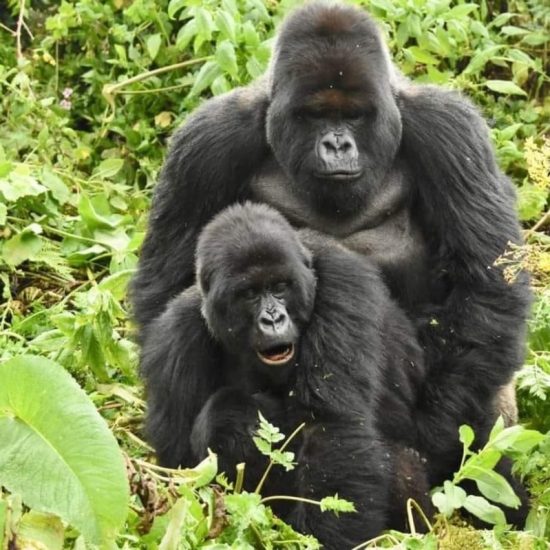
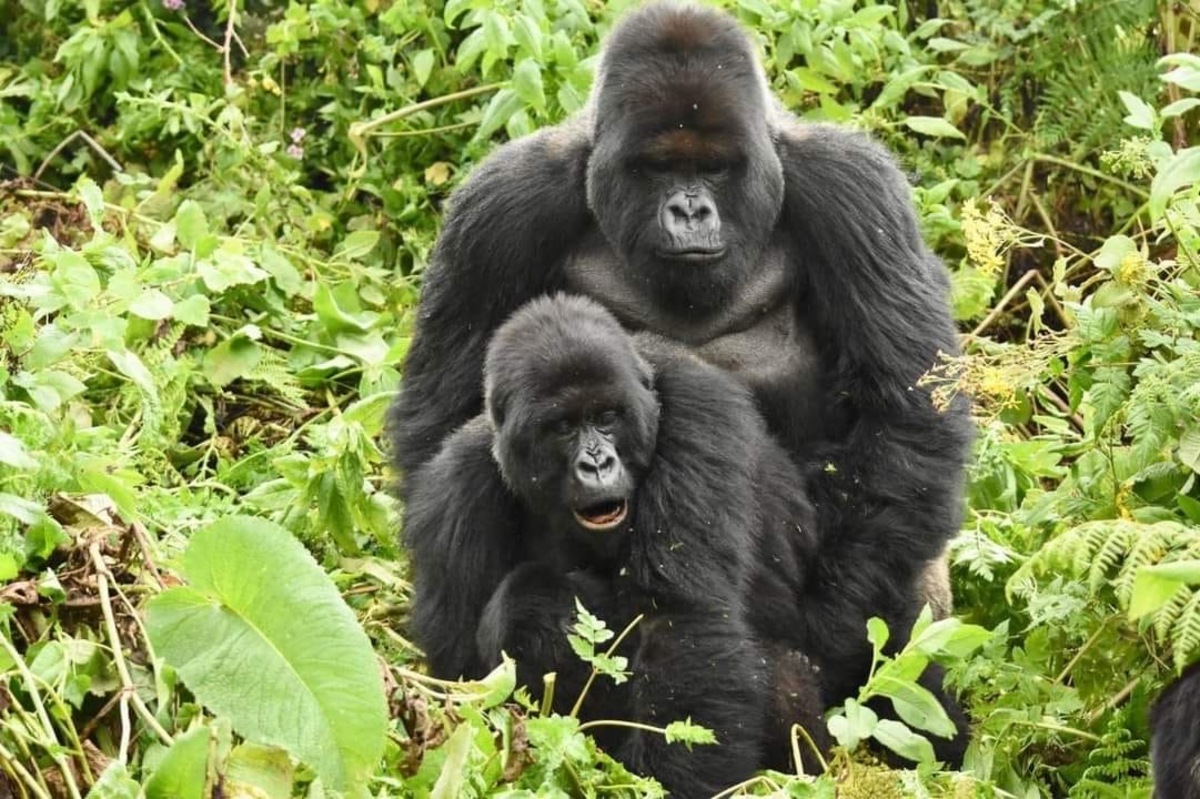
Bwindi Impenetrable National Park: Gorilla trekking for older families
Bwindi is home to mountain gorillas, one of the most closely protected wildlife populations in the world.
Gorilla trekking is a physically demanding activity involving forest hikes that can last several hours depending on the group location.
Important note for families:
- Minimum age for gorilla trekking is 15 years
- Fitness levels vary by trail conditions
- Weather can make paths muddy and slippery
Despite the challenge, it is one of the most significant wildlife experiences available in Africa, particularly for older teenagers.
Suggested Uganda Family Safari Itineraries
5-Day Family Safari (short introduction)
- Entebbe arrival
- Lake Mburo National Park
- Queen Elizabeth National Park
- Kazinga Channel cruise
- Return to Entebbe
7-Day Wildlife Focused Trip
- Kibale Forest (chimpanzees)
- Queen Elizabeth National Park
- Boat safari on Kazinga Channel
- Game drives
10-Day Complete Family Circuit
- Murchison Falls National Park
- Kibale Forest
- Queen Elizabeth National Park
- Lake Mburo National Park
- Optional gorilla trekking (15+ only in Bwindi)
Best Time to Visit Uganda With Children
Dry seasons (most recommended)
- June to August
- December to February
Expect:
- Easier road conditions
- More predictable game viewing
- Comfortable walking conditions
Wet seasons
- March to May
- September to November
Expect:
- Lush landscapes and strong photography conditions
- Fewer visitors
- Discounted permit and accommodation rates
- Occasional travel delays due to rain
What to Pack for a Family Safari
Clothing
- Lightweight long trousers
- Breathable shirts
- A warm layer for early mornings
Essentials
- Sunscreen and hats
- Insect repellent
- Binoculars for children
- Reusable water bottles
For children specifically
- Snacks for long drives
- Small travel games or books
- Any required medication
- Comfortable walking shoes
Practical Tips for Families
- Keep daily driving distances short and realistic
- Schedule rest breaks during long transfers
- Choose lodges with family-friendly layouts
- Be flexible with daily plans
- Avoid overpacking the itinerary
FAQs: Uganda Family Safari With Children
How fit do children need to be?
Most game drives require no fitness level. Walking activities vary and are usually optional.
Will we definitely see wildlife?
Wildlife sightings are very likely in major parks, but animals are not guaranteed in fixed locations.
Can children go on game drives?
Yes, game drives are suitable for all ages.
What is the minimum age for gorilla trekking?
15 years and above.
Can we hire a porter during trekking?
Yes, porters are available for gorilla and chimpanzee trekking to assist with bags.
What happens if it rains?
Rain is common in Uganda. Activities usually continue with adjustments.
Are there toilets in parks?
Yes, but facilities are basic and located at designated points.
Can children take photos?
Yes, photography is allowed in most areas, but flash is discouraged near wildlife.
Is Uganda suitable for seniors and kids together?
Yes, but itineraries should be paced carefully with comfortable driving schedules.
A Uganda family safari is less about ticking off sightings and more about shared discovery. Children see wildlife behaving naturally, parents experience their children engaging with the world in a different way, and the journey itself becomes a series of connected learning moments rather than isolated activities.
The most successful trips are not the busiest ones, but the ones that allow time for observation, rest, and meaningful encounters with nature.
For families considering a safari in Uganda, careful planning makes all the difference in comfort, safety, and overall experience.
If you are ready to start shaping a family-friendly itinerary that matches your children’s ages, travel pace, and interests, Naseeb Safaris can help design a trip that feels balanced, realistic, and memorable from start to finish.